
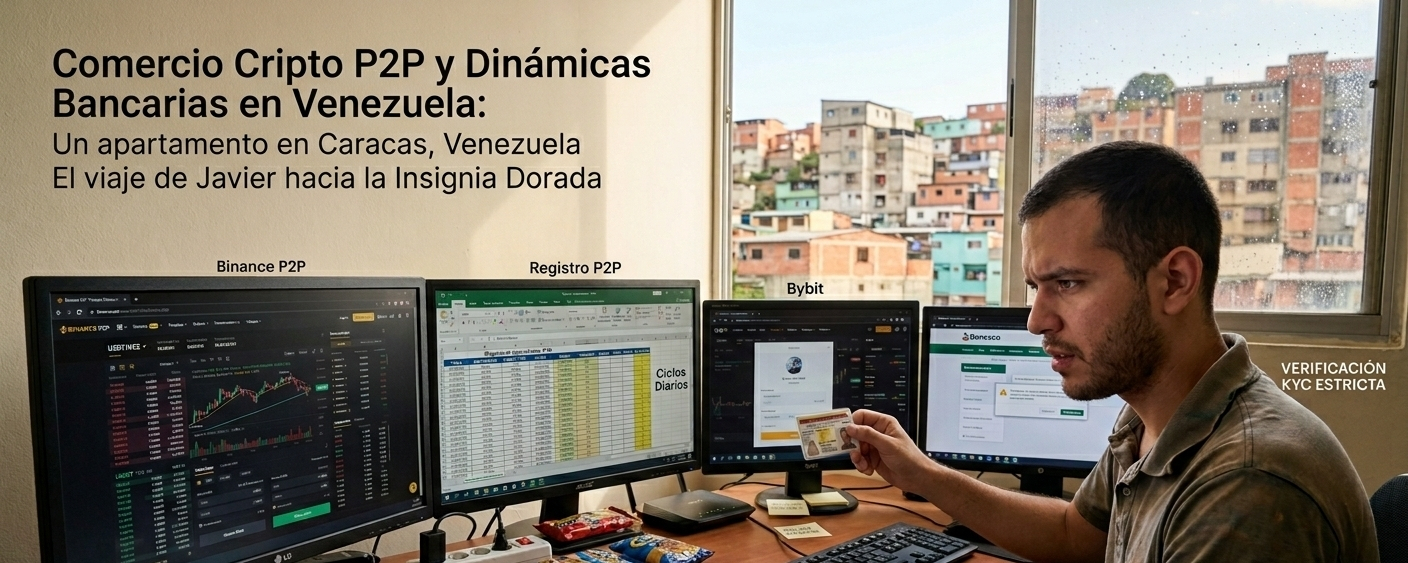
For many in Venezuela, Binance's P2P isn't just an app; it's a survival tool against an unrelenting economy. This is the story of Javier, a trader who started with 200 USDT and a dream: to achieve verification to "see the cheese on the toast."
The awakening in the "Jungle"
On Monday morning, Javier checks his phone. The market is "lit"; a sudden spike in USDT has left many with bolívares stuck and heavy losses. In the community chat, the golden advice echoes: "Whatever you sell, buy it back immediately" to protect capital from devaluation.
Javier remembers his first major mistake: using Banco de Venezuela (BDV). A preventive block for receiving just 10,000 bolívares left him with his capital frozen for months. "Stay away from public banking," they told him in the group; a lesson that almost cost him his initial trading career.
The ghost of "Triangulation"
One Tuesday, Javier receives a 500 USDT order. The buyer, a new user, insists on paying from their "aunt's" account. Javier feels the "chill" of banking psychoterror. He knows that if he accepts that payment from a third party, he exposes himself to a triangulation scam that could end with a summons from the CICPC.
To protect himself, Javier follows his security protocol: he asks for ID, simulates the transfer on the bank's website to confirm ownership, and demands that the name on Binance matches exactly with the bank account. "I'd rather have my order canceled than lose my account or end up in jail," he thinks while going through the negative comments from his counterpart.
The bureaucracy of success
Over time, Javier's volume grows. Moving more than $5,000 a month raises alarms at his private bank. He doesn't wait for a call; he heads to the agency with his "war dossier": a certified income statement that mentions "Digital Assets", an Explanatory Letter detailing that his activity is cyclical, and his registration in "Emprender Juntos" as legal backup.
"The bank doesn't block you for the amount, but for unusual movement," a friendly manager explained. Being transparent and declaring that he perceives a minimal margin (approx. 1%) is what keeps his account operational.
The final assault: Verification
After months of "ant work", Javier meets the requirement: 1 BTC in volume over the last 30 days. His first application is rejected for "high risk", a blow to morale that many in the community have felt. However, he doesn't give up. He adjusts his strategy, levels out his buy and sell orders (minimum lots of 20 USDT to avoid alerting the system), and improves his completion rate to over 97%.
Finally, the Merchant badge shows up on your profile. Now you're playing in the "big leagues", where the spreads are wider, the clients are more serious, and the capital flows like a Swiss clock.
In conclusion for the Binance Square community: P2P in Venezuela isn't about who runs the fastest, but who operates with greater intelligence and security. As they say in the trenches: "If you're going to play with fire (the Venezuelan market), make sure to have the extinguisher of legality and caution at hand."
Let's keep raking in profits with awareness! 🚀🛰️