
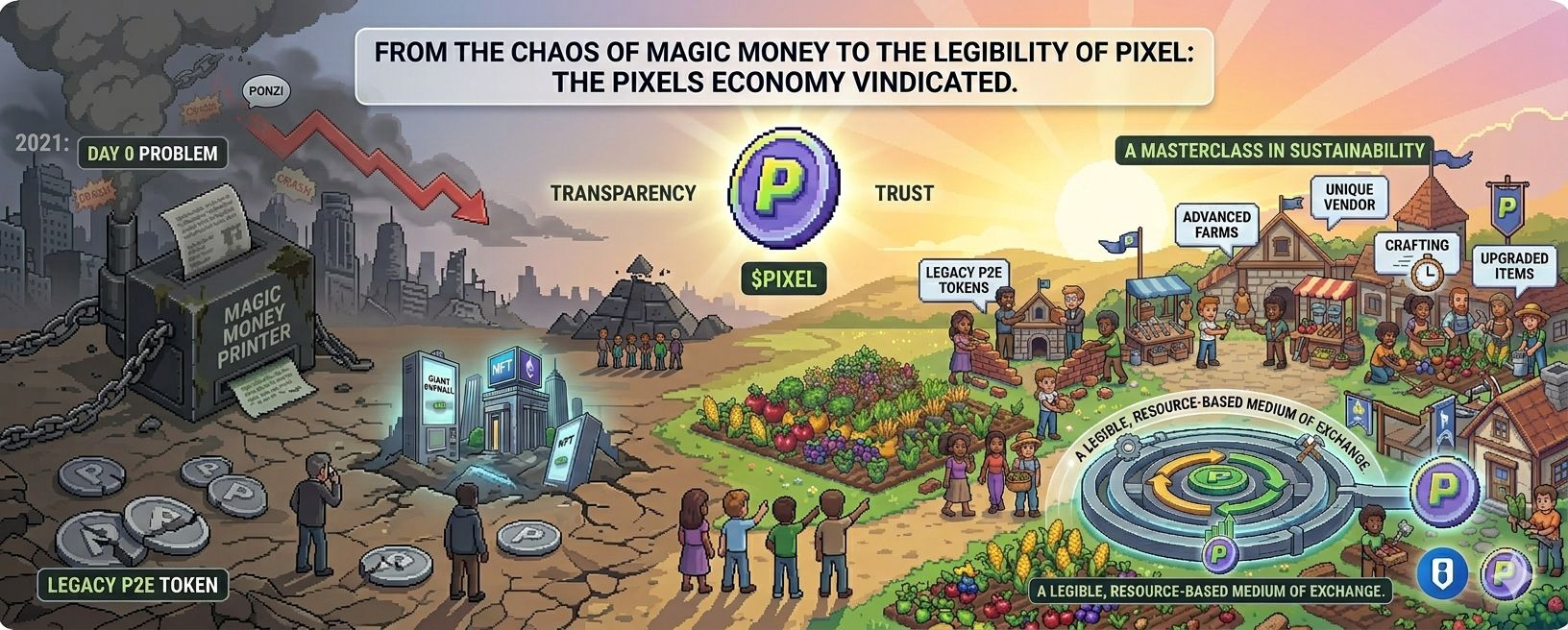

@Pixels The year was 2021. The "Play-to-Earn" (P2E) craze was hitting a fever pitch. We were all staring at spreadsheets disguised as games, clicking buttons to generate tokens that had no purpose other than to be sold to the next person in line. It was a digital gold rush built on sand.
Fast forward to today, and while the wreckage of those hyper-inflated economies still litters the blockchain, one project stands as a masterclass in sustainability: Pixels.
If you’ve spent five minutes in Terravilla, you know it feels different. It doesn’t feel like a bank—it feels like a world. Here is why I believe #pixel has created the most "legible" (understandable, transparent, and logical) economy in the Web3 space.
1. The Death of the "Magic Money" Printer
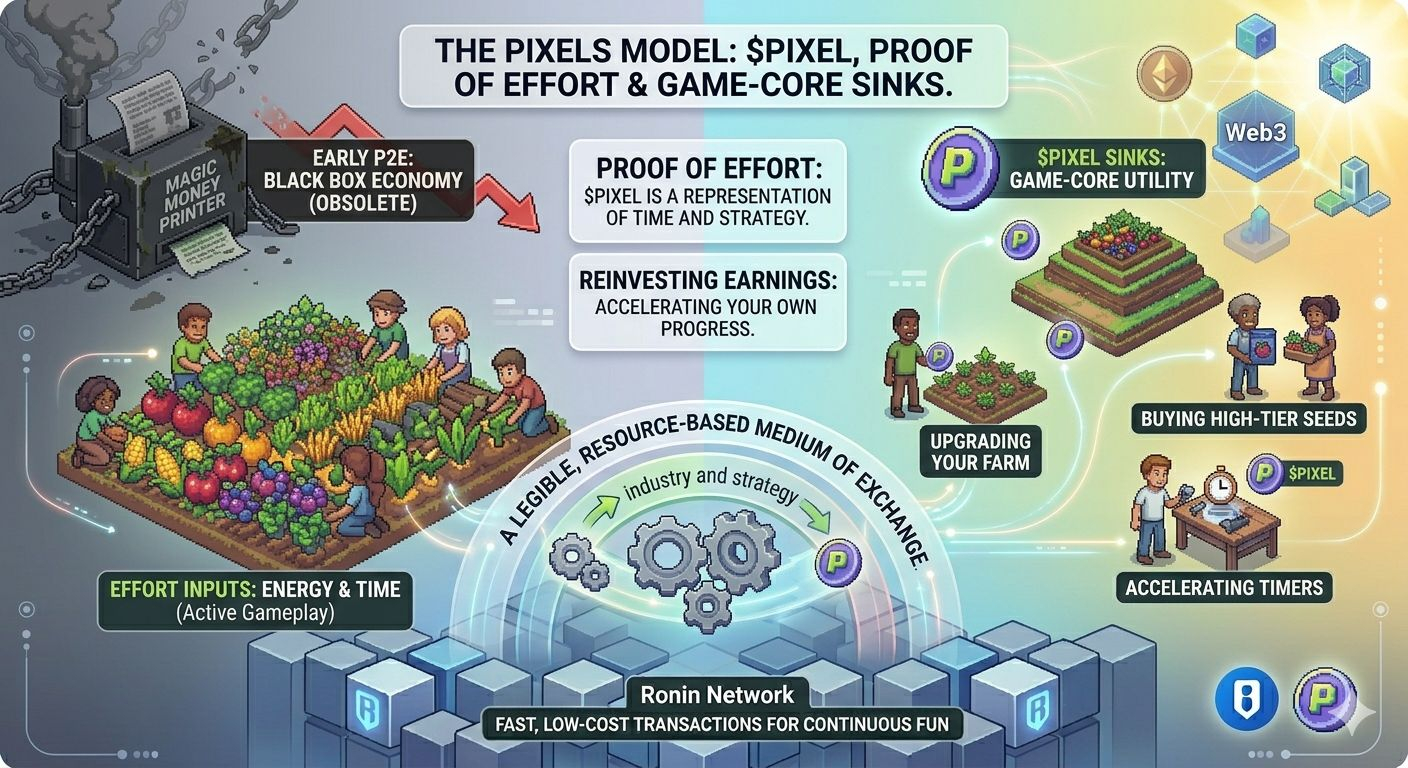
In early Web3 games, the economy was a "black box." You played, you got tokens, and you prayed the price went up. Pixels took a different path by focusing on Proof of Effort.
In Pixels, $PIXEL isn’t just a ticker symbol; it’s a representation of time and strategy. The economy is built around a simple, legible loop:
Input: Energy and Time.
Action: Farming, crafting, and industry.
Output: Resources that have actual utility within the game’s ecosystem.
The genius lies in the Sinks. Most games fail because they don’t have enough ways to remove tokens from circulation. Pixels integrates $PIXEL into the core gameplay—upgrading your farm, buying high-tier seeds, and accelerating timers. You aren't just selling your earnings; you're reinvesting them because the game is actually fun to progress in.
2. Asymmetric Information vs. Radical Transparency
Most Web3 economies suffer from "opaque complexity." You need a PhD in DeFi to understand the yield curves. Pixels, however, uses a Resource-Based Economy that even a casual gamer can grasp.
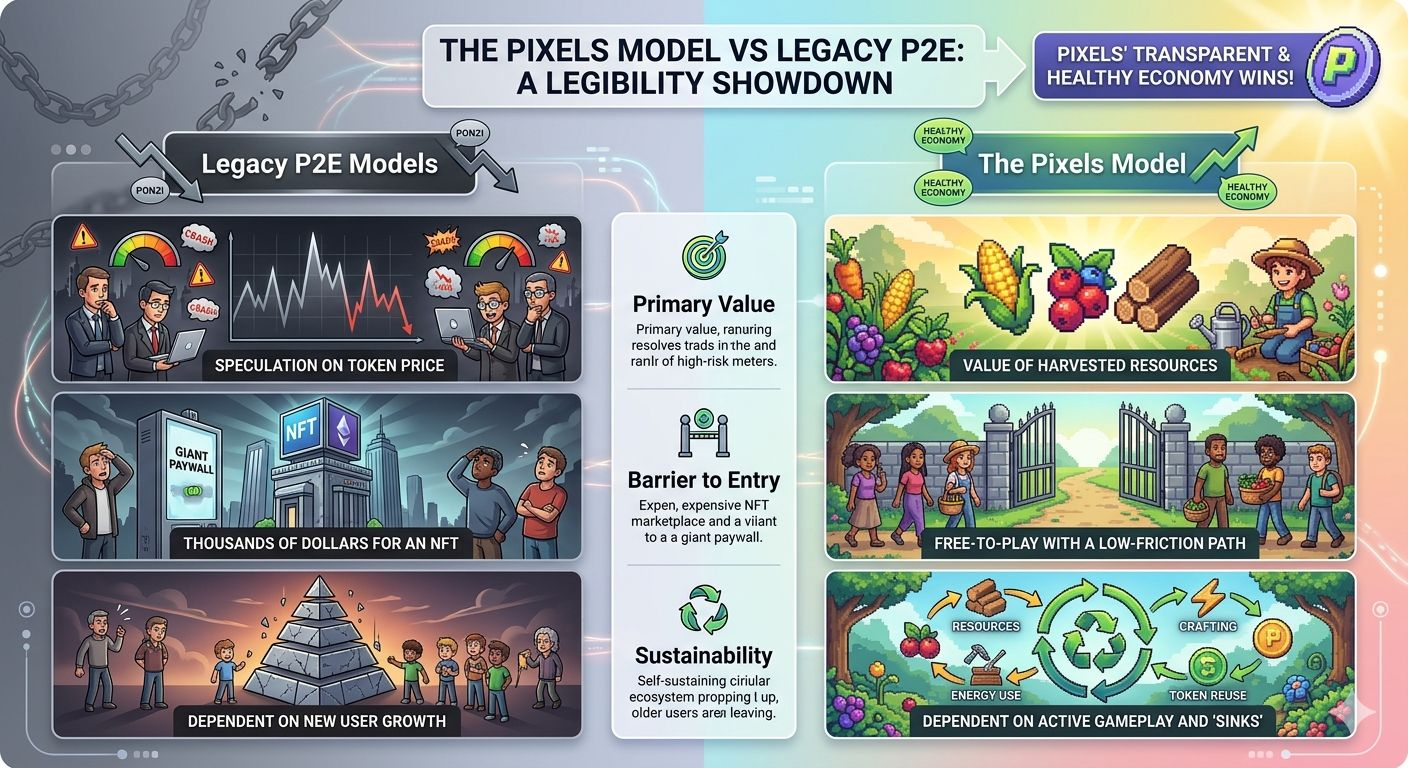
Because the recipes and resource requirements are public and intuitive (e.g., you need wood to build a stool), the market finds its equilibrium naturally. The "legibility" comes from the fact that players can look at the marketplace and understand why a price is moving. It’s supply and demand in its purest, digital form.
3. The "Social Layer" as an Economic Stabilizer
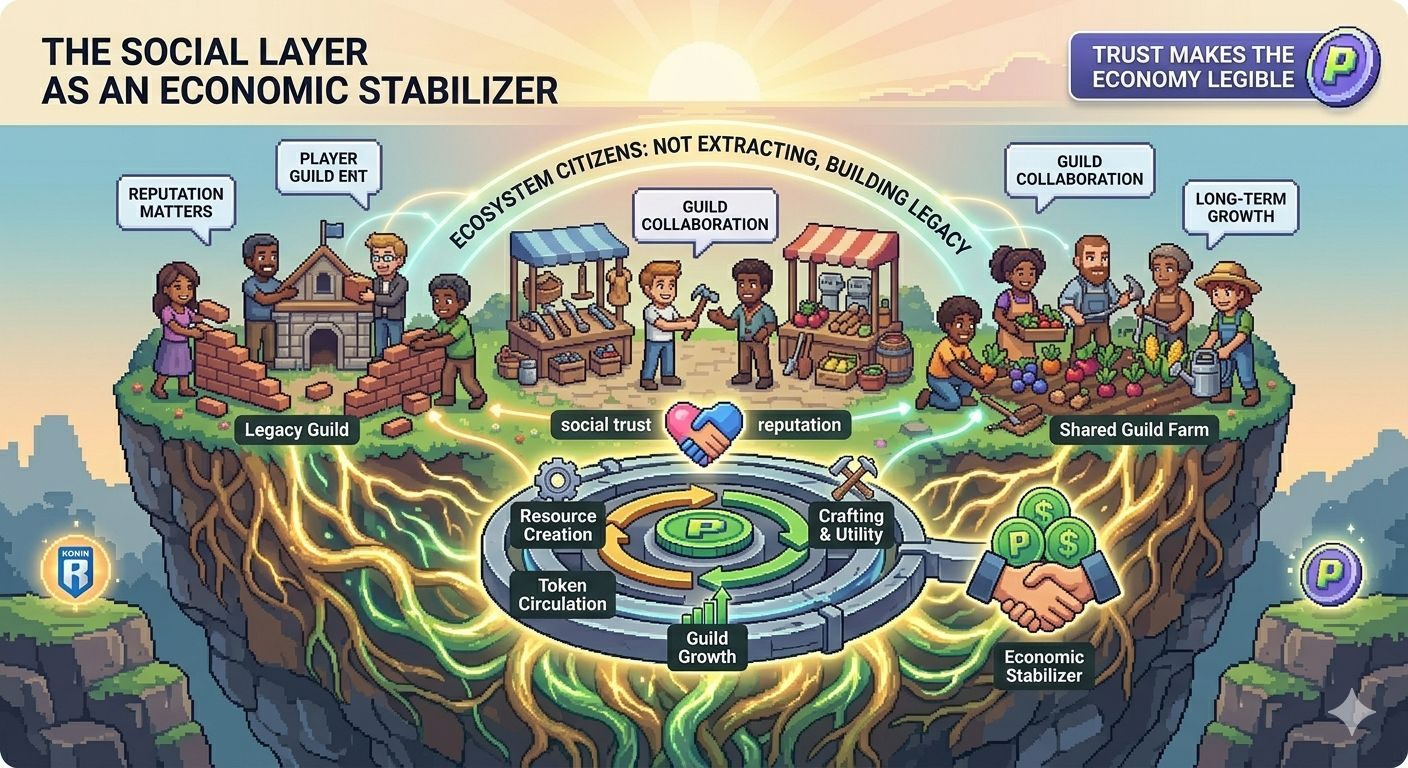
Economics isn't just about math; it's about psychology. One of the most overlooked aspects of the PIXEL economy is the Community.
In Pixels, your reputation and your guild matter. We’ve moved away from "extractive" players who just want to dump tokens. Instead, the game incentivizes "ecosystem citizens." When people care about the world they inhabit, they don't treat the currency like a hot potato. They treat it like a tool for building their digital legacy.
"A legible economy is one where the participants understand the rules of the game well enough to trust the outcome."
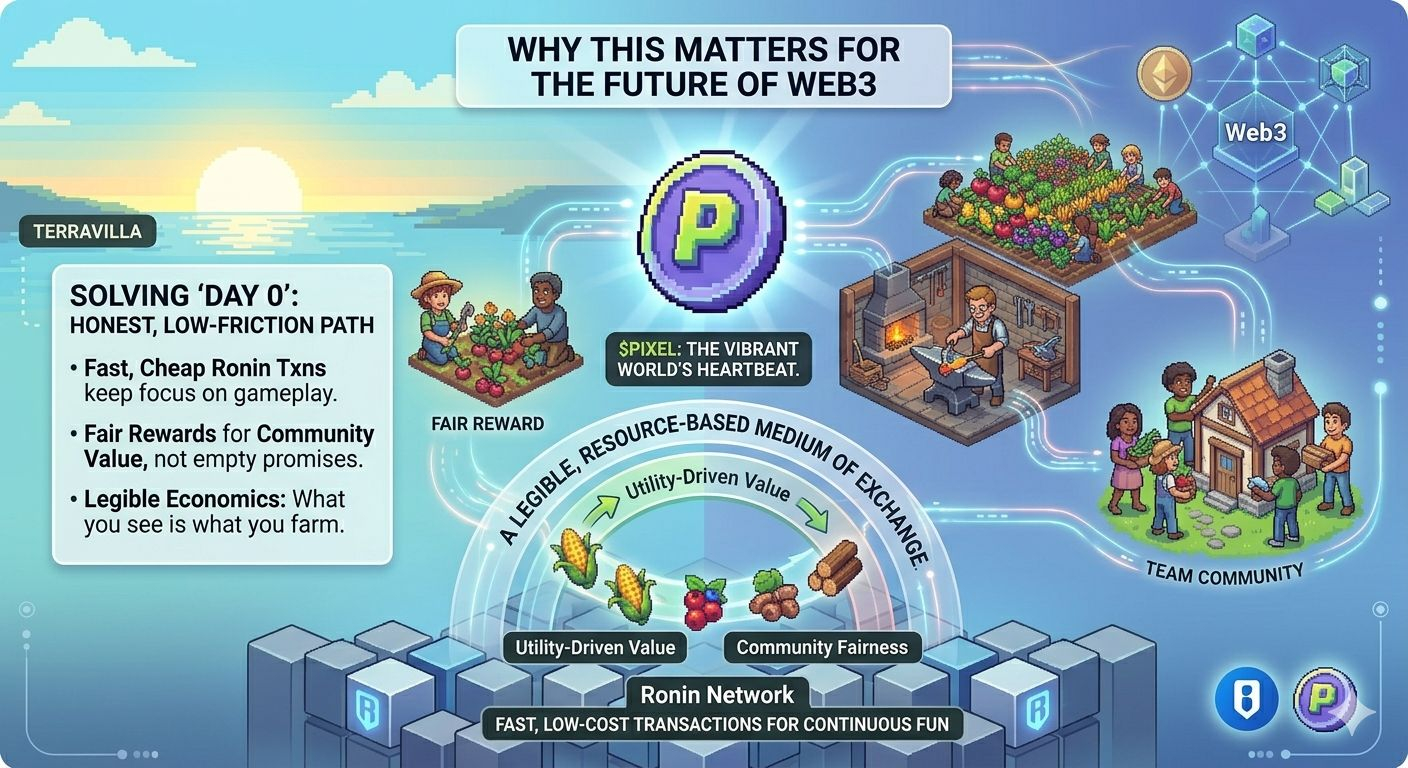
4. Why This Matters for the Future of Web3
Pixels has effectively solved the "Day 0" problem of crypto gaming. By building on the Ronin Network, they’ve ensured that transactions are fast and cheap enough to stay out of the way of the fun.
The $PIXEL token is the heartbeat of this system. It isn't trying to be a global reserve currency; it’s trying to be the best possible medium of exchange for a vibrant, pixelated world. It works because it’s honest. It doesn't promise you a Lambo for clicking a potato; it promises you a fair reward for the value you bring to the community.
The Bottom Line
Pixels is the most legible economy in Web3 because it went back to the basics: Supply, Demand, and Utility. In a world of complex "Ponzinomics," the simplicity of planting a seed, harvesting a crop, and participating in a transparent market is the ultimate flex.
The sun is rising over Terravilla, and the economy has never looked clearer. See you in the fields.