
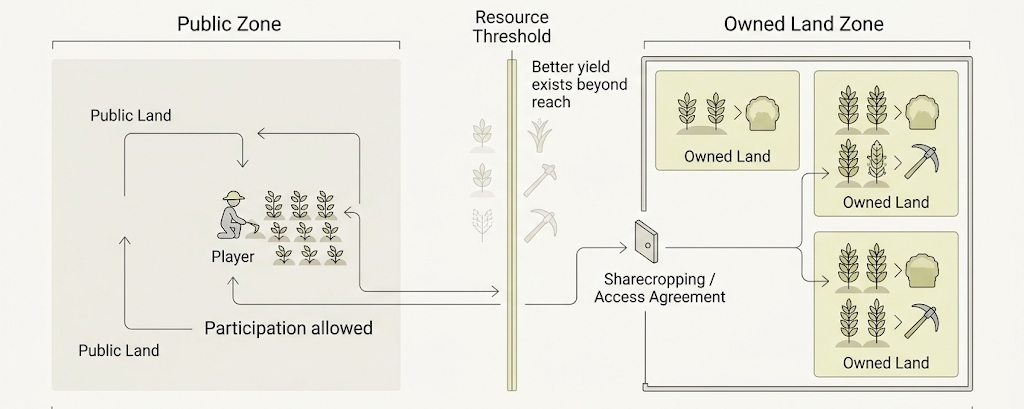
The split does not feel important at first.
You are just in Pixels. Farming, clearing tasks, moving through the day the way the game wants you to move. Coins cover the ordinary rhythm. Buy a little, craft a little, keep the loop warm. Pixels’ own FAQ says Coins are the off-chain in-game currency and that players can convert PIXEL into Coins at the Bank, which makes the everyday layer feel simple on purpose. Simple enough that you can stay inside it for hours without needing to think too hard about where the harder edge of the economy actually begins.
Then PIXEL starts showing up differently.
Not as “the same thing but shinier.” More like a second floor the game keeps above the ordinary loop. The docs describe PIXEL as the premium in-game currency, used for upgrades, boosts, cosmetics, recipes, pets, and other things outside the core gameplay loop, and they say its supply is meant to be heavily controlled and predictable, with 100,000 new PIXEL minted daily and distributed to active players showing desired behavior patterns. Allocation is decided off-chain, then approved on-chain. That is not just a currency design choice. That is Pixels deciding that some participation deserves a more expensive kind of hearing than other participation does.
And once you read the RORS page, the mood shifts again.
Because now the premium layer stops looking like prestige and starts looking like judgment. Pixels says Return on Reward Spend measures rewards distributed against revenue returned in fees, compares it explicitly to ROAS, and aims to push above 1.0 so rewards become net-positive for the ecosystem. The whitepaper also says Pixels uses large-scale data analysis and machine learning to identify the player actions that genuinely drive long-term value and direct rewards accordingly. So two players can both be active, both be present, both be “playing,” and still not matter equally once the system starts asking which activity patterns are economically worth backing harder.
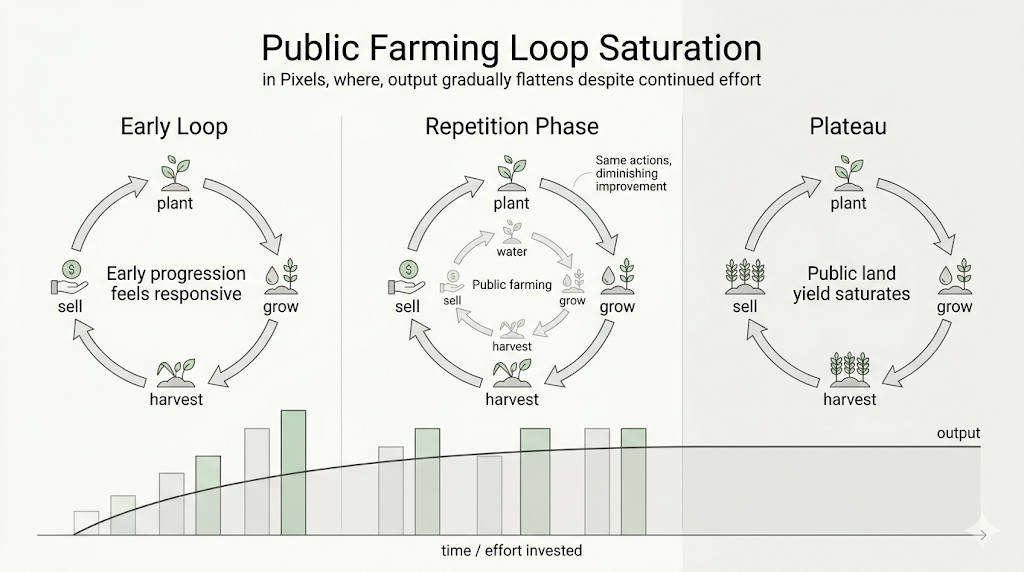
That is where the anti-bot side , or the trust-score side, or whatever you want to call the same disciplinary instinct wearing different clothes, stops feeling secondary.
Pixels’ help docs say Reputation exists to distinguish genuine good players from bad actors, and that low scores can mean low or zero trade limits, no marketplace access, and low or zero withdrawal limits. The FAQ gives actual thresholds: 700 reputation for balanced P2P trades, 1200 for marketplace access, 2000 to withdraw. So the economy is not merely split between Coins and PIXEL. It is also split between activity that stays inside the managed soft loop and activity trusted enough to touch extraction, trade, and broader market expression.
Which leaves Pixels in a very strange, very deliberate place.
Coins make the world smoother. PIXEL makes value scarcer, more selective, more governable. Reputation decides whether your activity can leave the supervised layer and speak in harder-value terms. RORS keeps asking whether reward spend on people like you should even survive. So yes, Pixels can absolutely look like one lively player economy when you are standing inside it. But the deeper design feels less democratic than that. It feels like a world where everyone can participate, while only certain kinds of participation get amplified, extracted, or taken seriously enough to shape what the economy does next.