
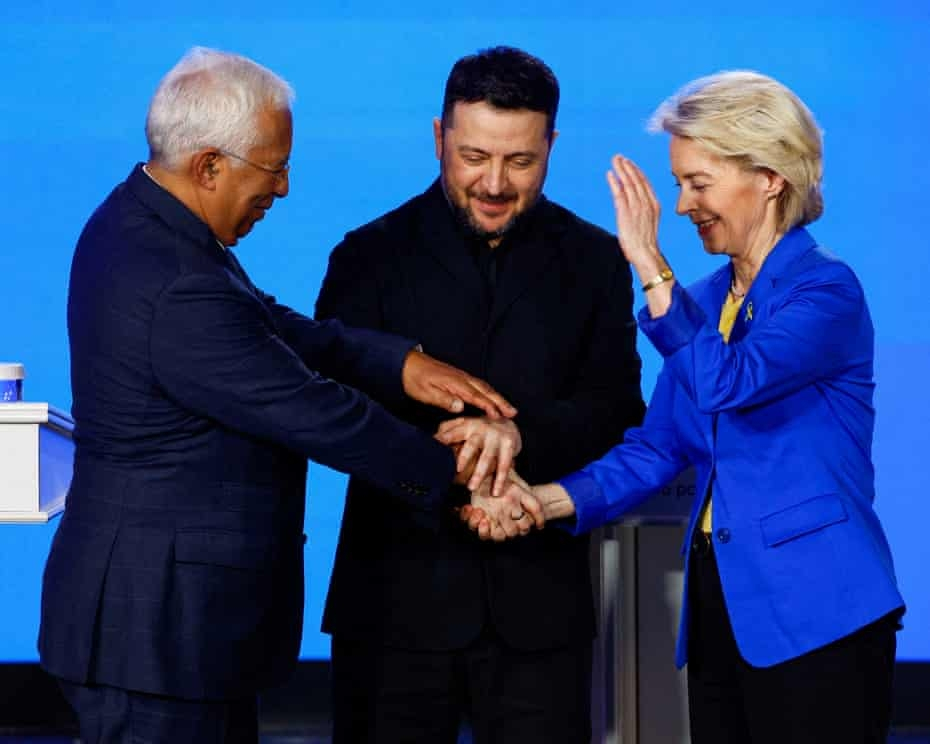
The European Union has officially approved a €90 billion financial support package for Ukraine, alongside its 20th round of sanctions against Russia. The agreement marks a significant step forward after weeks of diplomatic delays, made possible when Hungary lifted its veto and allowed consensus among member states.
Ursula von der Leyen described the development as “good news,” emphasizing the EU’s continued commitment to supporting Ukraine amid ongoing conflict. The funding, expected to cover a substantial portion of Ukraine’s financial needs for 2026 and 2027, will be financed through EU borrowing, with plans to repay it using future Russian reparations.
A portion of the initial funding is expected to be released by the end of June, with a focus on strengthening Ukraine’s domestic capabilities, including drone production and defense infrastructure. Volodymyr Zelenskyy welcomed the agreement, highlighting its importance for economic stability, energy resilience, and military preparedness.
In parallel, the EU’s latest sanctions package targets Russian banks, energy companies, and entities in third countries accused of helping Moscow bypass restrictions. The measures also include export bans on high-tech equipment to countries suspected of re-exporting goods for military use in Russia.
The agreement comes at a critical time as EU leaders gather in Cyprus to discuss broader geopolitical challenges, including rising energy prices and the impact of ongoing conflicts in both Eastern Europe and the Middle East. The European Commission has also warned of continued dependence on fossil fuels, urging accelerated investment in renewable energy sources.
Additionally, the EU is expected to revisit discussions on Ukraine’s potential membership, signaling long-term political and economic alignment between Kyiv and the bloc. While progress has been made, member states remain cautious about fast-tracking accession.
Overall, the approval of the loan and expanded sanctions underscores the EU’s strategic approach to balancing financial support, political unity, and economic pressure in response to the ongoing war.
#EuropeanUnion #UkraineSupport #RussiaSanctions #Geopolitics #GlobalEconomy


