


I usually skip the 'pretty metrics' in GameFi - too often they come with a short-term spike that lacks sustainability. In the case of @Pixels the numbers are interesting because they describe not the hype, but the system load. 200M+ rewards - this isn't about scale for the sake of reporting, it's hundreds of millions of points where the economy could break: farming, bots, distribution skew, pressure on the token. Weak models collapse long before reaching such volumes.
This makes it clearer why they need Stacked as a separate layer. With such flow, manual management doesn't cut it - a system is needed that links payouts to results and continuously adjusts. The AI economist here isn't just 'analytics for the sake of it': it shows where rewards don't impact behavior, where retention is lost, and where money leaves without effect. Moving forward - it's not about cutting 'everyone off', but about targeted incentives and rapid iterations.
$25M in revenue is the second marker that only makes sense when paired with the first. In GameFi, there’s often either activity without profit or profit without stability. The chain is crucial: rewards → behavior → money. If it holds up, payouts stop being pure expenses and become a tool that recoups part of the costs through retention and engagement.


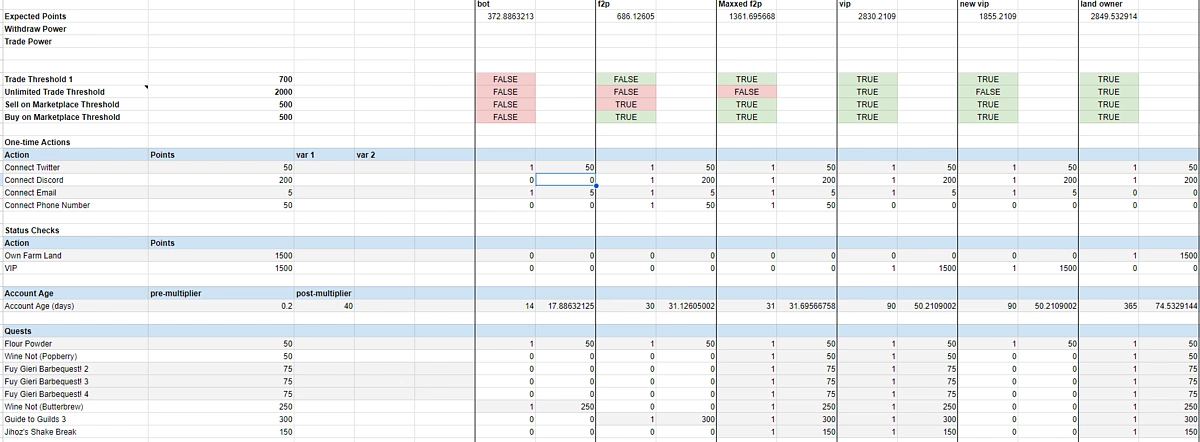
The critical factor underlying all this is protection against farming. Without it, any reward volumes turn into constant selling pressure on $PIXEL tokens that are handed out for mere actions and quickly flood the market. In @Pixels , protection is built into the economy: rewards depend not on the action itself but on its impact. This breaks the predictable schemes of 'do X → get Y' and reduces stable ROI on farming.
Hence, the role of $PiXEL changes. In the base model, it’s a consumable with accelerated issuance. In Stacked, it becomes a selective incentive: paid out where it impacts retention and return. This reduces the share of 'empty' payouts and slows liquidity drain. The pressure doesn’t vanish, but it becomes manageable because issuance is tied to metrics, not just the number of actions.
Risks remain and scale with volume. An error in the model can amplify the wrong incentives faster. Too aggressive rewards and players game the system. Too strict filters lead to a drop in motivation. Balance hinges on data quality and iteration speed.
My honest takeaway: the value of these numbers lies not in their size, but in the fact that the system has already undergone stress testing. If @Pixels maintains the link 'issuance $PIXEL → behavior → revenue' at such volumes, that’s stronger than any promise. It means rewards function as a tool, not as a leak.
