
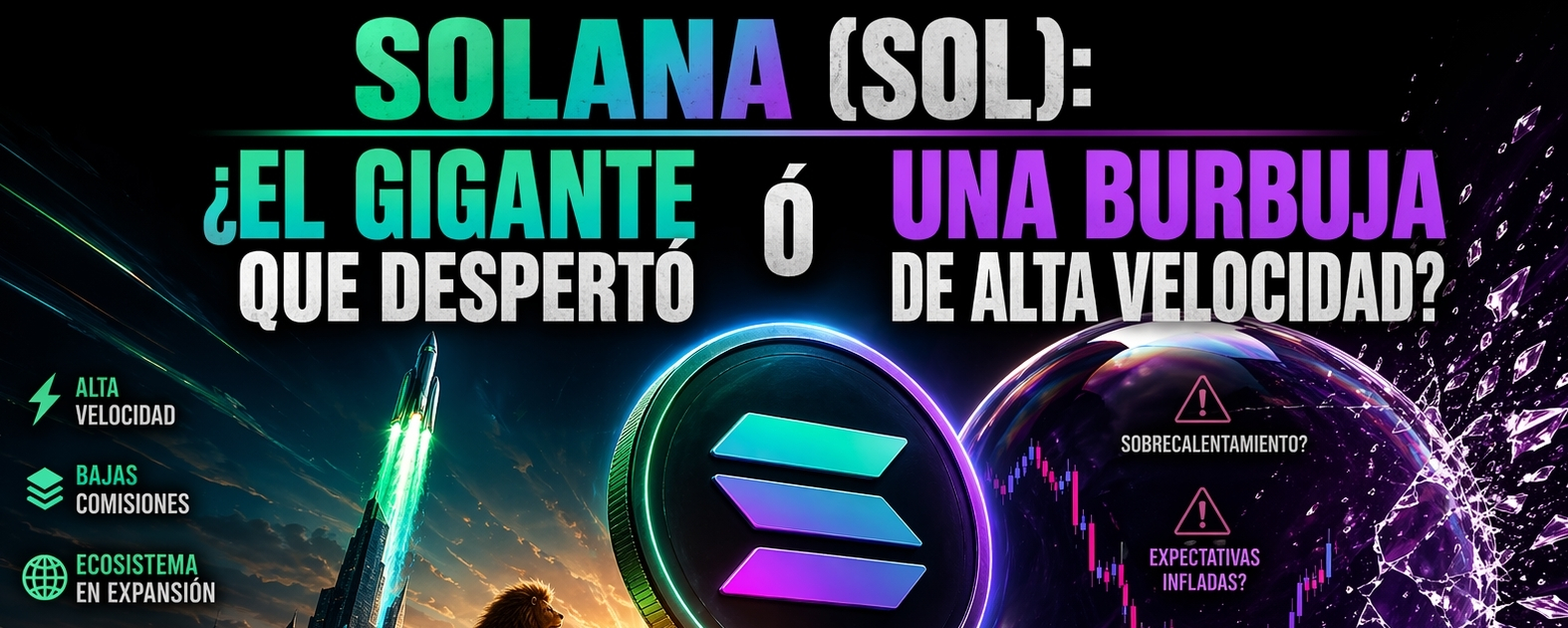
The Solana ecosystem has once again captured everyone's attention in the crypto market. After a period of uncertainty, the network has solidified itself not only as a low-latency alternative but also as the epicenter of retail activity in this cycle.
The current state of the ecosystem
Unlike previous cycles, Solana's current growth doesn't solely rely on price speculation but on tangible utility and mass adoption in key sectors:
Memecoin Dominance: Platforms like Pump.fun have turned Solana into the main network for launching new tokens, surpassing daily transaction volumes of traditionally dominant networks.
DePIN Sector: Solana is positioning itself as the preferred infrastructure for Decentralized Physical Infrastructure Projects (DePIN), thanks to its ability to process thousands of transactions per second at negligible costs.
Liquidity on DEX: Volume on decentralized exchanges (DEX) like Jupiter or Raydium has reached historical milestones, directly competing with the Ethereum ecosystem in 24-hour volume.
Challenges and Outlook
Despite the optimism, Solana faces critical challenges that investors need to monitor:
Network Congestion: Success has brought spikes in saturation. Although recent updates have improved stability, the network still needs to prove it can handle massive traffic without interruptions.
Layer 2 (L2) Competition: Ethereum's scalability solutions are reducing their costs, putting pressure on Solana to maintain its competitive edge in speed and UX.
Conclusion
Solana has stopped being "the Ethereum killer" to build its own identity. With a vibrant community and a steady flow of institutional and retail capital, $SOL it remains one of the assets with the strongest relative strength in the current ranking.
What do you think? Do you believe Solana will overcome its stability issues and reach a new all-time high this year, or will Ethereum's L2s take the lead?