
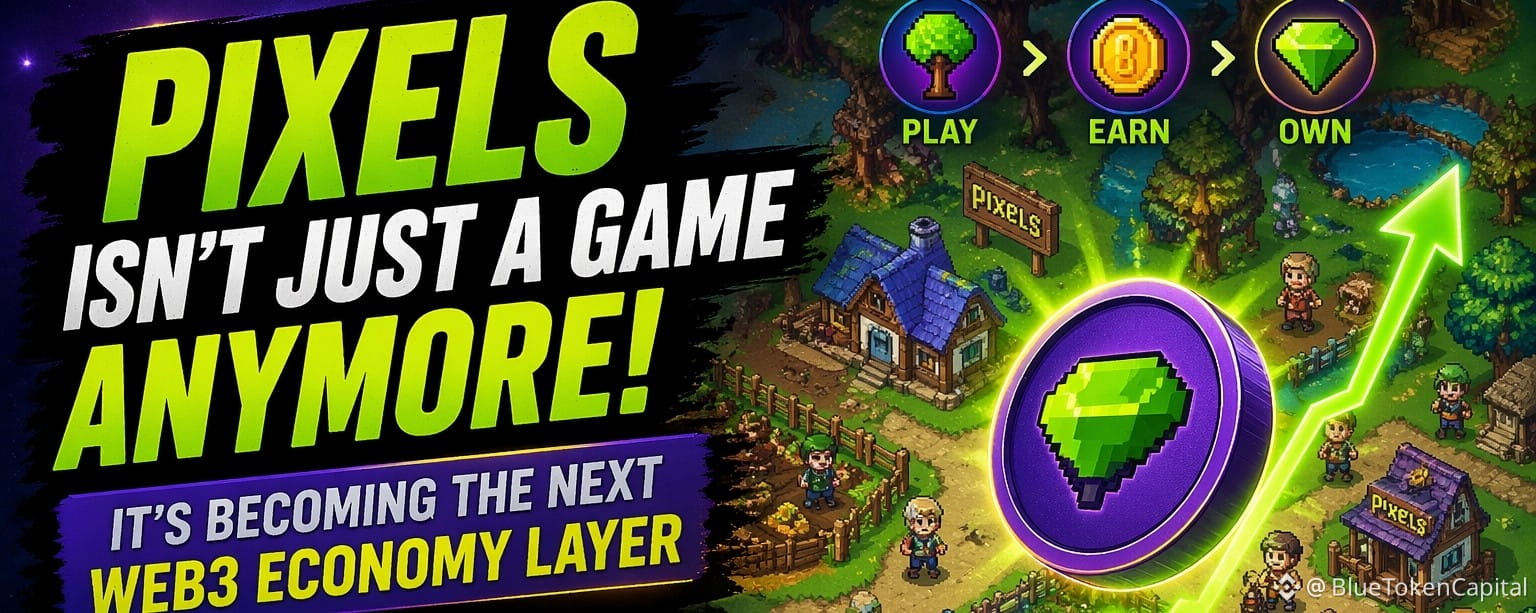
🚀 Pixels Isn’t Just a Game Anymore — It’s Quietly Becoming the Web3 Economy Layer
I didn’t expect to spend this much time inside Pixels.
At first, it looked like another pixel-style farming game riding the nostalgia wave. Simple mechanics. Familiar visuals. Easy onboarding.
But after digging deeper—especially into the recent updates—it became clear:
This isn’t just a game. It’s infrastructure disguised as gameplay.
🎮 From “Play-to-Earn” to “Play-and-Own”
Most GameFi projects failed because they optimized for extraction, not experience.
Players came for profit.
Left when rewards dropped.
And ecosystems collapsed under their own tokenomics.
Pixels is taking a different route.
Instead of screaming “earn money fast”, it builds something far more dangerous (and powerful):
👉 Retention-first design.
You don’t log in thinking about ROI.
You log in because there’s always something to do.
Farming loops that actually feel satisfying
Resource systems that create natural scarcity
Social layers that make progression visible
And then… almost subtly… the economy starts to matter.
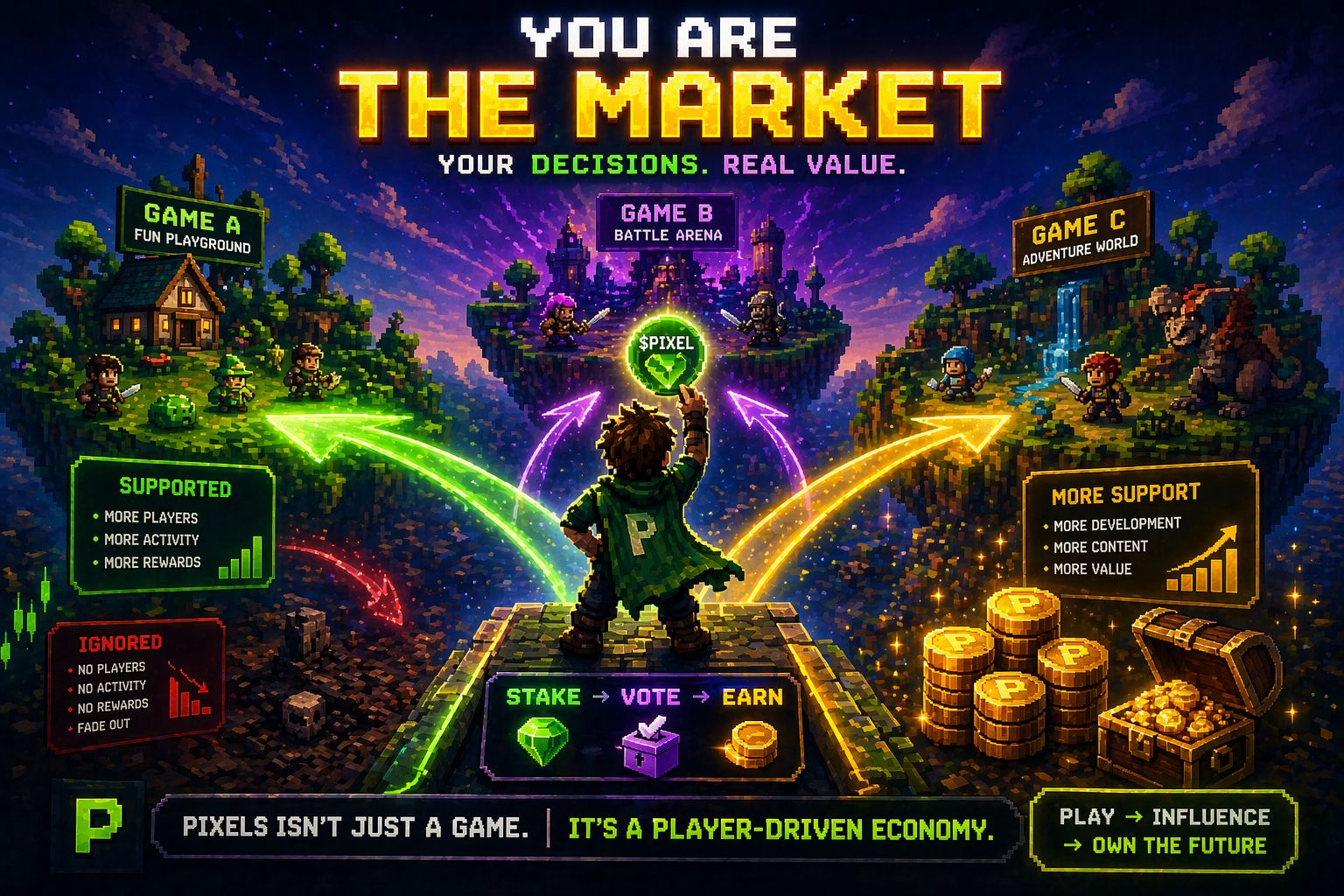
🧠 The Smart Layer: Economy > Hype
Where most projects inject token utility artificially, Pixels lets behavior drive value.
Everything loops back into the ecosystem:
Time → Resource production
Resources → Crafting / upgrades
Upgrades → Efficiency
Efficiency → Market advantage
And this is where things click:
💡 Players aren’t just users. They’re participants in a live economy.
That shift changes everything.
---
📈 Why This Model Actually Scales
Let’s compare it to something familiar:
Roblox = User-generated content economy
Pixels = On-chain player-driven economy
The difference?
Ownership.
In Roblox, you build inside a closed system.
In Pixels, your assets, time, and strategy translate into real, transferable value.
That’s a massive unlock.
And with its integration into the Ronin ecosystem, the game benefits from:
Lower friction onboarding
Existing Web3 gaming liquidity
Proven infrastructure from previous hits
This isn’t theory anymore.
It’s already happening.
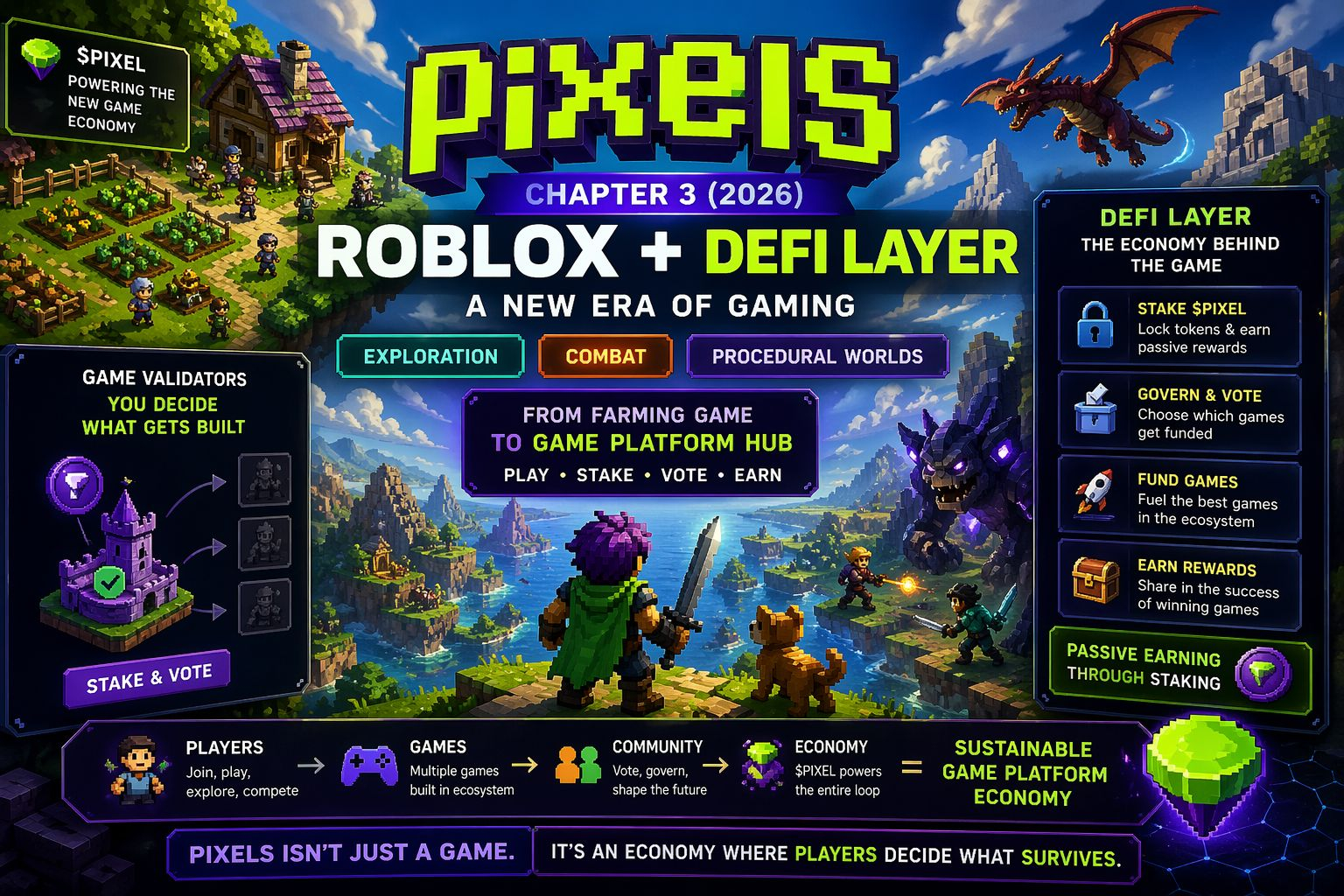
🔥 Chapter 3 Changed the Game (Literally)
The recent expansion pushed Pixels beyond “just farming.”
We’re now seeing:
Deeper progression systems
More meaningful resource sinks
Expanded gameplay loops beyond passive grinding
And most importantly:
👉 Less grind. More strategy.
That’s a critical evolution.
Because long-term economies don’t survive on repetition—they survive on decision-making depth.
---
💰 The $PIXEL Layer — Utility That Actually Connects
Let’s address the elephant in the room.
Yes, there’s a token.
But unlike typical GameFi design, $PIXEL isn’t just slapped on top.
It’s integrated into:
Crafting systems
Progression unlocks
Economic flow between players
Meaning:
👉 Demand is tied to activity, not speculation alone.
That’s the kind of structure most projects claim to have—but rarely execute well.
---
🧩 What Most People Are Still Missing
Here’s the part that isn’t obvious unless you spend time inside the system:
Pixels isn’t optimizing for short-term hype cycles.
It’s building:
👉 A behavior-driven economy that compounds over time.
The longer players stay, the stronger the ecosystem becomes.
And that’s exactly why it feels “quiet” compared to loud hype-driven projects.
But make no mistake:
Quiet accumulation > Loud speculation.
---
⚡ Final Thought
If you’re still looking at Pixels as “just another farming game,”
you’re missing the bigger picture.
This is:
A retention-first GameFi model
A functioning player economy
A scalable Web3 gaming layer
And most importantly…
👉 A system people actually want to spend time in.
That’s the rarest thing in this space.