
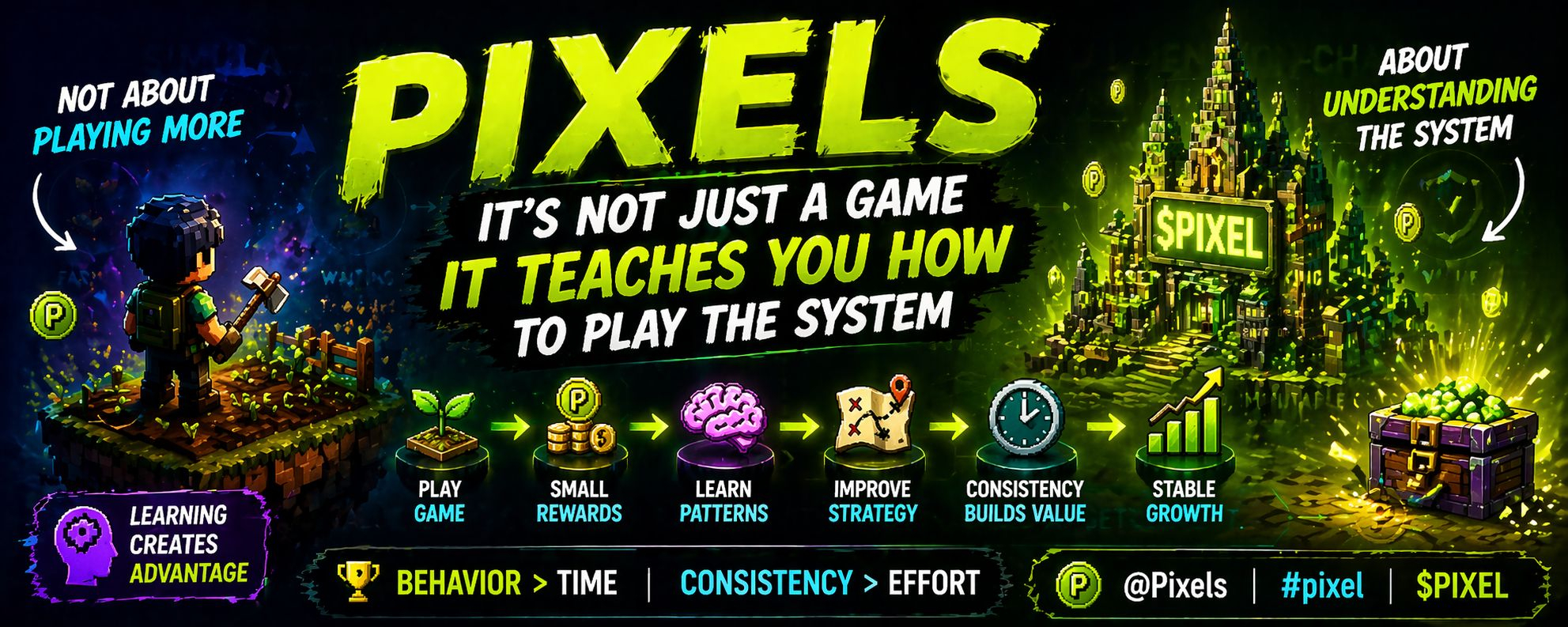
Most people enter @Pixels with a simple mindset: play more, earn more. That idea feels natural, especially in Web3 gaming where rewards often drive attention. But after spending real time inside the system, that assumption starts to break.
Pixels doesn’t reward time alone—it rewards understanding.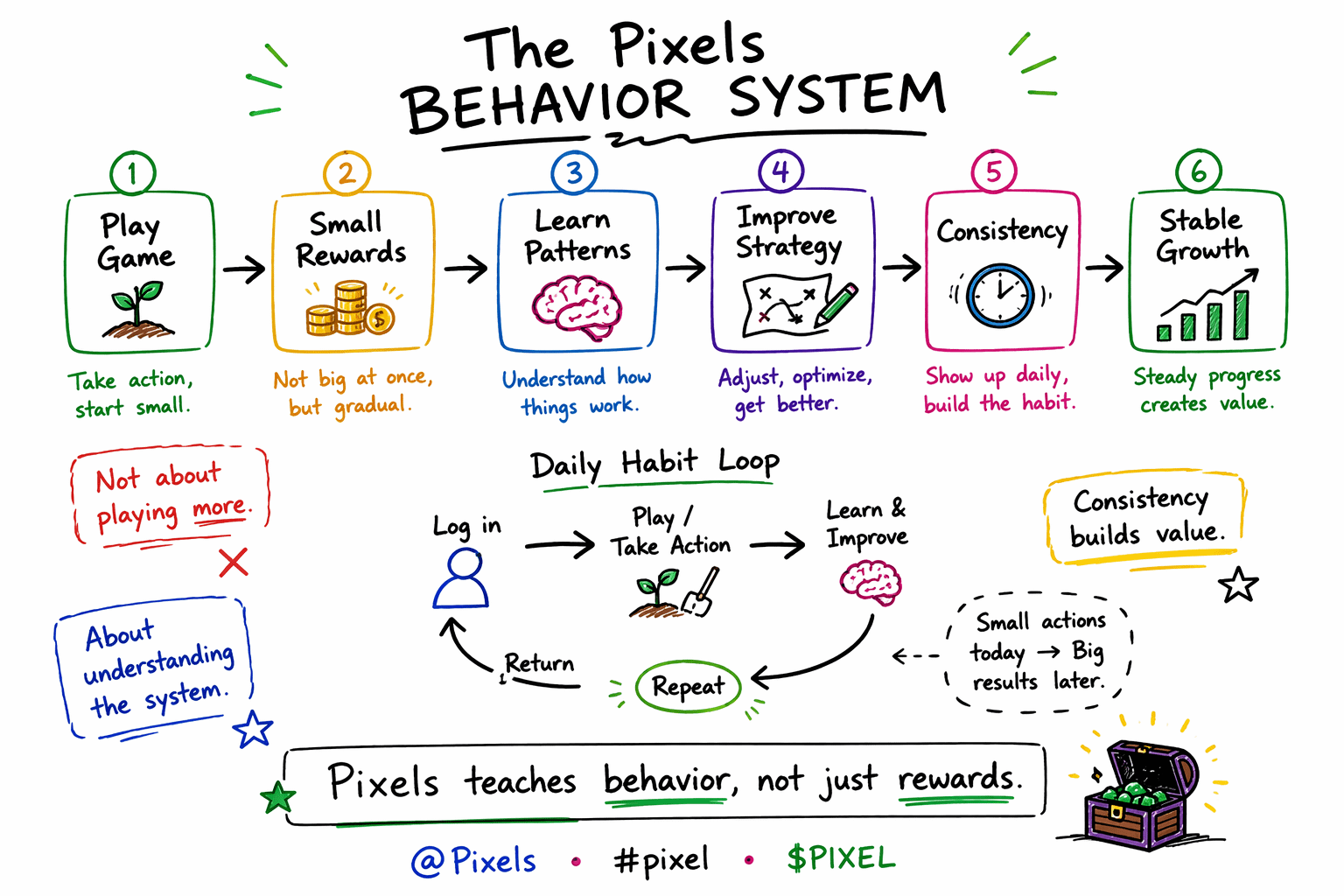
At first, progress feels slow. Rewards don’t come in large bursts, and that can confuse new players. But over time, a pattern becomes visible. The system is designed to guide behavior. Instead of asking “what did I earn today,” players begin asking “how can I improve my approach?”
That shift is important.
Fast-paced profit-seekers get lost. They bounce from one move to another without understanding the deeper loop. Meanwhile, consistent, slow-moving players start to stabilize. Their progress compounds—not instantly, but steadily.
This is where Pixels becomes more than just a game.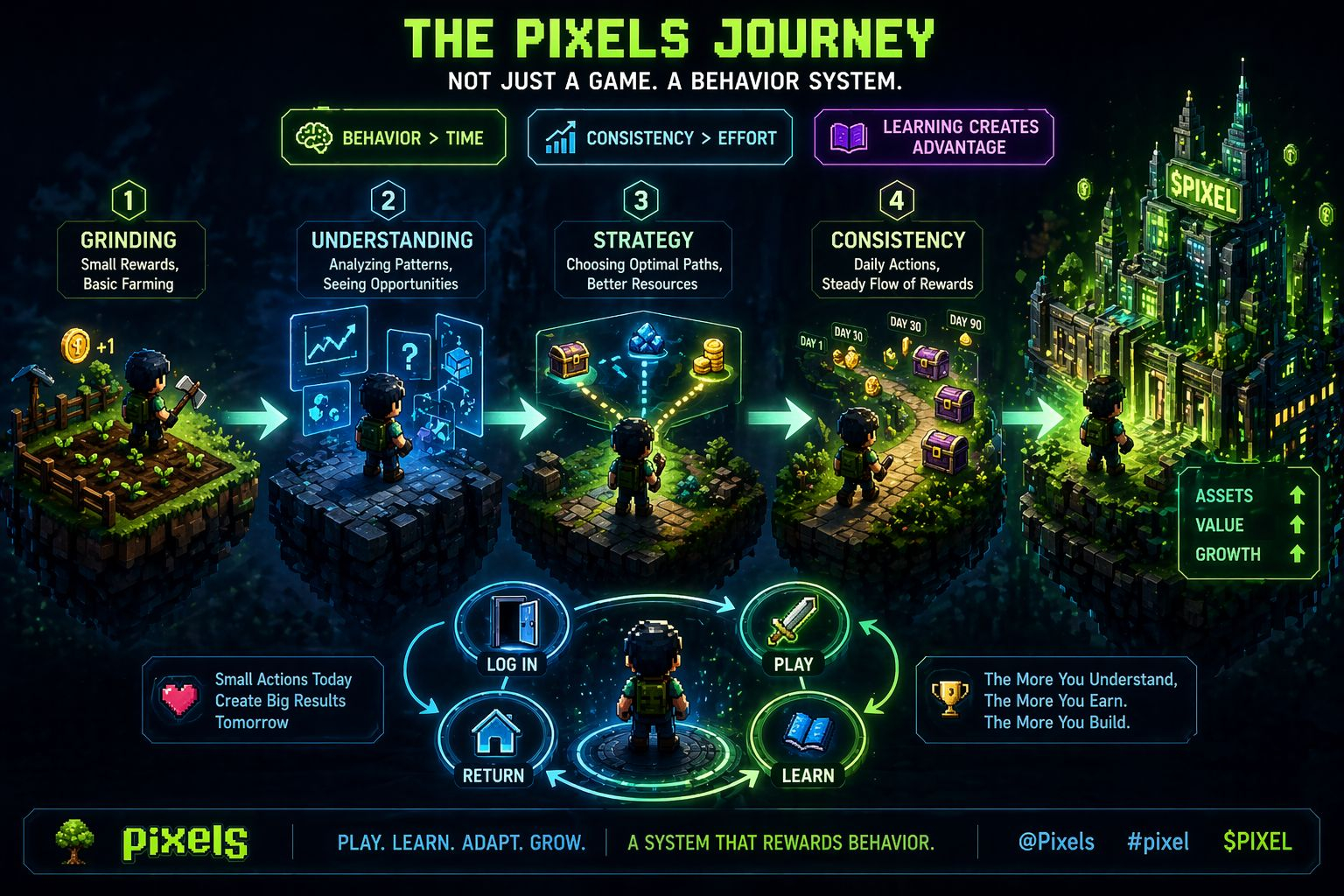
It builds habit. You log in, complete small actions, adjust your strategy, and return again. Over time, that rhythm creates engagement without forcing it. Retention doesn’t come from pressure—it comes from structure.
Eventually, the game starts to feel like a small economy. Your time, decisions, and consistency all begin to matter. Value is not just given—it is built.
It’s not a perfect system. But it signals something important: Web3 gaming is moving away from hype and toward design.
And those who understand that early won’t just play—they’ll position themselves inside the system.


