

I have a friend who's a classic example of a chain gamer.
The first half-hour is spent figuring out the gameplay, and the last half-hour is all about the exit strategy.
Which time to withdraw has the least slippage, what path saves on fees, and can we cash out from the game before hitting the market?
When you talk to him about the game, he always circles back to 'what's the most cost-effective way to cash out.'
At first, I thought it was just a personal habit, but after trading more, I realized it's the whole ecosystem training people this way.
Most blockchain games have a pretty straightforward logic:
Get it → Withdraw it → Sell it.
The system keeps hinting at you that the smoothest move is to exit.
After a while, even if you want to keep playing, that 'exit instinct' will pull you away.
So when I look at @Pixels this time, the most striking layer isn’t how many rewards it issued, but how it clearly changes this rhythm in several details.
After staking, if you want to withdraw, there's a 3-day waiting period;
If you make a move during the waiting period, the timer resets;
Reward claiming isn't just one exit— you can claim $PIXEL with a Farmer fee; or you can claim $vPIXEL, no fees, but it's better suited for staying in the ecosystem to spend, stake, and circulate through partner games.
I think this setup is valuable, not because it's 'complex', but because it finally starts addressing a problem in chain games that few are willing to touch:
Should the system default to you rushing out, or give 'those who stay' a smoother path?
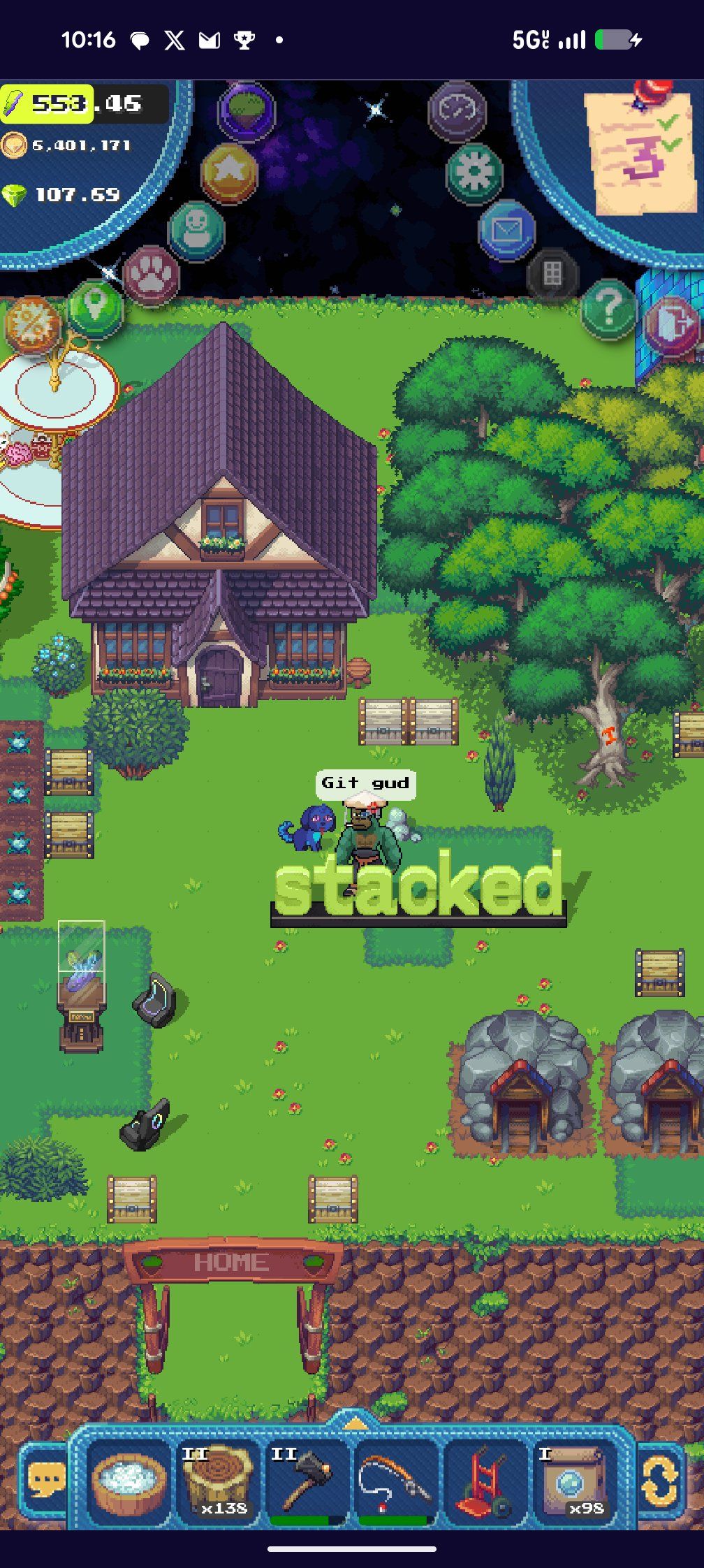
Don't underestimate 'smoother paths'.
A lot of projects, when they talk about controlling sell pressure, end up with really crude solutions.
Either lock it, card it, or just directly restrict it.
Users are definitely gonna get annoyed, because it feels like: you're not building an ecosystem, you're just forcing people to stay for the project.
Pixels has a relatively clever setup.
It doesn't say you can't leave,
It just doesn’t give 'leaving immediately' the highest priority.
Meanwhile, if you still want to spend, play, and circulate between partner games, it gives you an almost frictionless internal path— that's the point of the $vPIXEL design.
To put it bluntly, it's not about blocking the exit,
It's changing the default action.
In the past, the default move was 'grab it and go',
Now it wants to change to 'after grabbing it, staying in the system to go a bit further feels pretty smooth'.
These two psychological presets can take the same project in completely different directions.
And looking at this setup within the entire ecosystem is even more interesting.
Because it's not only effective in one game.
$vPIXEL will connect to partner games and future applications, and first-party products will integrate this model. In other words, Pixels aren’t just fixing a single button, but gradually adjusting how 'value flows' within the platform.
If this habit really gets ingrained, the project's vibe will be totally different.
When players see rewards, their first reaction isn't 'how to withdraw',
And it will start to raise another question:
'Should I keep using it for a bit longer?'
This is actually quite rare in today’s chain games.
Everyone is too eager for instant feedback.
The faster the button, the smoother the withdrawal, everything caters to short-term reactions.
But with more short-term reactions, the whole world will become increasingly shallow.
While you’re playing, you’ll realize this isn't just a place, it's just a passage in and out.
I have a clear view on @Pixels this point:
What it really needs to prove isn’t 'can we retain people more effectively', but 'can we make staying a natural choice'.
It's not about locking it up,
It's not about dragging it out,
But rather by designing a smoother internal path than 'leaving immediately'.
That's where the sophistication lies.
Of course, executing this won't be easy.
Less friction doesn’t change habits;
If you go long too much, users will feel like you're controlling them.
So I'll keep my eyes on this not because the rules are beautifully written, but because can the product level make this 'hold on, don't rush' not feel intrusive.
If it can truly achieve this, I’d say @Pixels is at least leading in a space where few are willing to take it seriously.
What do you hate more when playing chain games— being locked in, or the system assuming you should rush out from the start?