

I've always seen these web3 games as a temporary financial trap. A new token hits the market, pumps into the stratosphere, and then the supply balloons so much that the whole economy crashes hard. This morning, while I was sitting at my desk in Jetpur looking at the $PIXEL chart, its current live price was around $0.0075, roughly trading at 72 paise. In the previous market cycle, that price might have seemed a bit cool, but now the on-chain dynamics have completely shifted. Out of a total supply of 5 billion, about 66% of the circulating supply has already hit the market. Practically, this means that the heavy token unlocks for early investors have exited the market, removing a significant sell pressure. Now, the price will not just pump; it will move based on the platform's actual utility and real adoption.
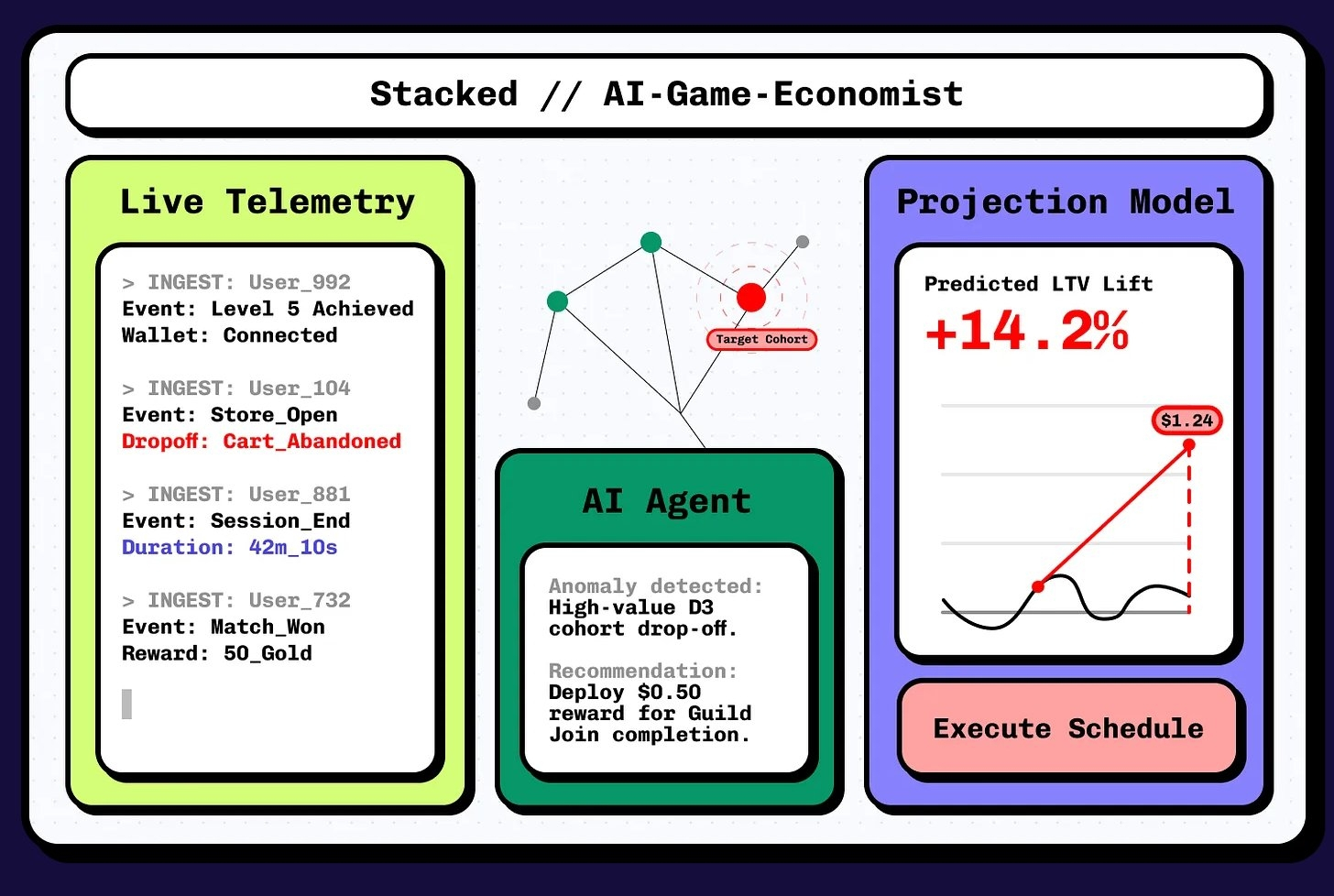
The real story lies behind the backend engine driving the token price @Pixels . Nowadays, the economy of any live game has become so complex that managing it manually on an Excel sheet is nearly impossible. Old crypto games made this mistake, allowing bots to siphon off all the funds. But Pixels has deployed the Stacked app's AI Game Economist engine to fix this problem. This tool is specifically designed for LiveOps teams that are actually running real games in production.
This AI system continuously analyzes live data in the background, identifies player behavior patterns, and recommends dynamic changes to the economy and reward experiments accordingly. This is not manual guesswork but a solid data-driven approach.
The most solid part of this LiveOps engine is the action-based value generation. No tokens are generated from random screen taps anymore. #pixel The system automatically focuses its incentives and rewards on specific player actions that genuinely add real value to the game's economy. If token emissions suddenly spike, the smart contract uses its in-game inflation balancing logic to adjust that emission rate.
 I personally tested this new system practically in the last few days. My wallet has accumulated a total balance of about 157 PIXEL, but the biggest win for me was receiving a direct USDC stablecoin payout in return for my actual game engagement. Getting dollars straight into your wallet from a farming game is solid on-chain proof that fraud bots are out, and marketing funds are finally coming into the pockets of regular players like us.
This entire new structure is also financially viable because PIXEL is no longer limited to just one game. This ecosystem has migrated to the Ronin network, effectively becoming a large decentralized publishing hub. Now, external game studios can host their new sub-games on this scalable layer, turning this token into a B2B cross-ecosystem currency. Their reward mechanism is also very transparent. Rewards of about 28 million monthly are dynamically split among various studios and new sub-games based on staked PIXEL, preventing supply from flooding the open market and giving serious investors a solid reason to lock up their tokens.
But as a crypto researcher, I don't see this as a flawless auto-pilot machine. While Stacked is allowing its complex AI engine to be integrated by external game studios, if those new LiveOps teams don't understand and configure this engine properly, their individual game economies could still easily bleed. No matter how smart the code is, human error in tuning is inevitable, and a small economic miscalculation could cause significant harm to the community.
Still, my direct and clear takeaway from this platform is that the era of just selling hype and hot air is over. We are witnessing a technical infrastructure in action where AI tools are properly mathematically balancing economies that could break. This model isn't just on pitch decks; it's live in actual production. In the coming months, how external studios can actually improve players' lifetime value with this AI engine will determine the long-term success of this platform.
#MarketRebound #Web3 #PIXEL! $PIXEL
