
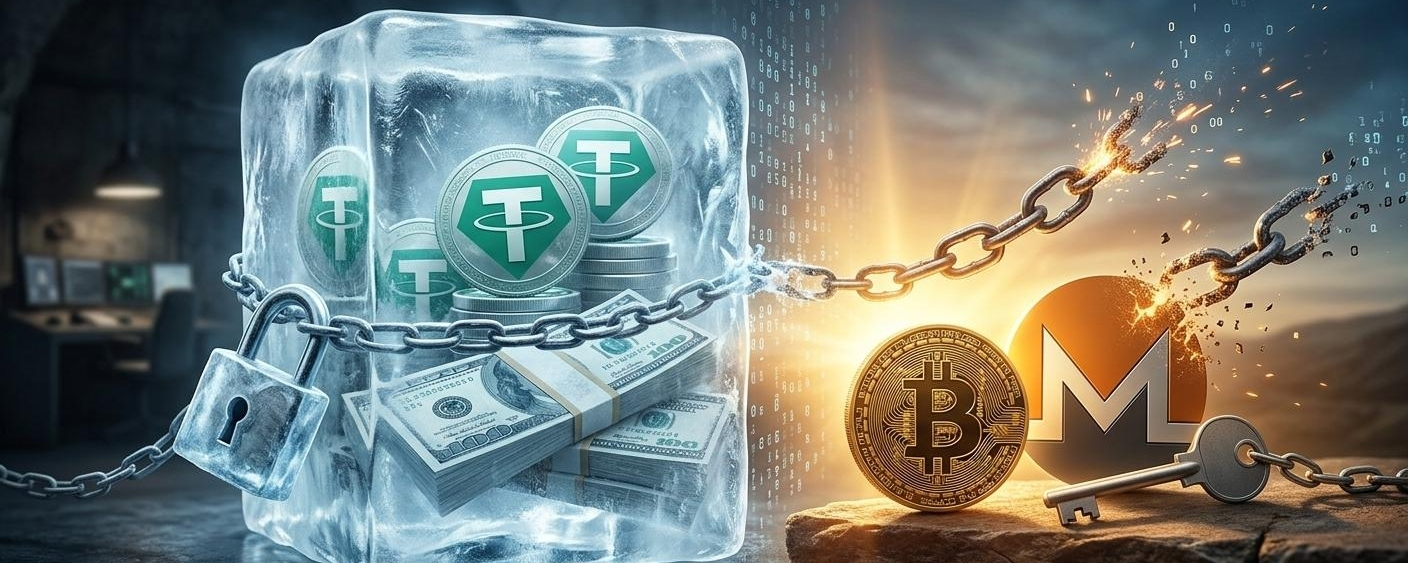
🧊 Tether has once again proven that USDT is not about anonymity or independence. At the official request of U.S. authorities (including OFAC), the issuer froze over $344 million across two wallets on the Tron network.
This is one of the largest one-time freezes in history. The official reason: connection to illegal activities and sanctions evasion. Tether's CEO Paolo Ardoino stated directly: "USDT is not a safe haven for illegal operations."
⚠️ The main risk is centralization.
If your assets are in USDT (or USDC), you need to understand: the smart contract of these tokens has a 'blacklist' function. This means that at the first call from the regulator, your funds could turn into 'digital dust' with no way to withdraw or swap them.
🛡️ What to replace it with? Assets that can't be blocked.
If you're on the hunt for true decentralization and censorship resistance, check out these tools:
1. LUSD (Liquity USD)
Probably the most resilient stablecoin. It’s fully decentralized, backed only by Ethereum, and has no mechanism to block individual addresses. The Liquity smart contract has no admin keys — no one can change the rules of the game.
2. RAI (Reflexer)
This is a ‘not-a-stablecoin’ that's not rigidly pegged to the dollar but aims for stability. It's managed solely by algorithms with no human intervention.
3. DAI (MakerDAO) — *with nuances*
Although DAI is decentralized, it is partially backed by USDC. So theoretically there's risk, but locking down your specific wallet at the protocol level is significantly harder than with USDT.
4. Monero (XMR)
When it comes to transaction privacy, Monero remains king. Blocking funds in a wallet on this network is technically impossible, as no one (besides you) can see the balance and transaction history.
Conclusion: For trading and liquidity, USDT is top-notch. But for long-term capital storage in a 'safe haven', it's better to diversify your funds into decentralized solutions.