
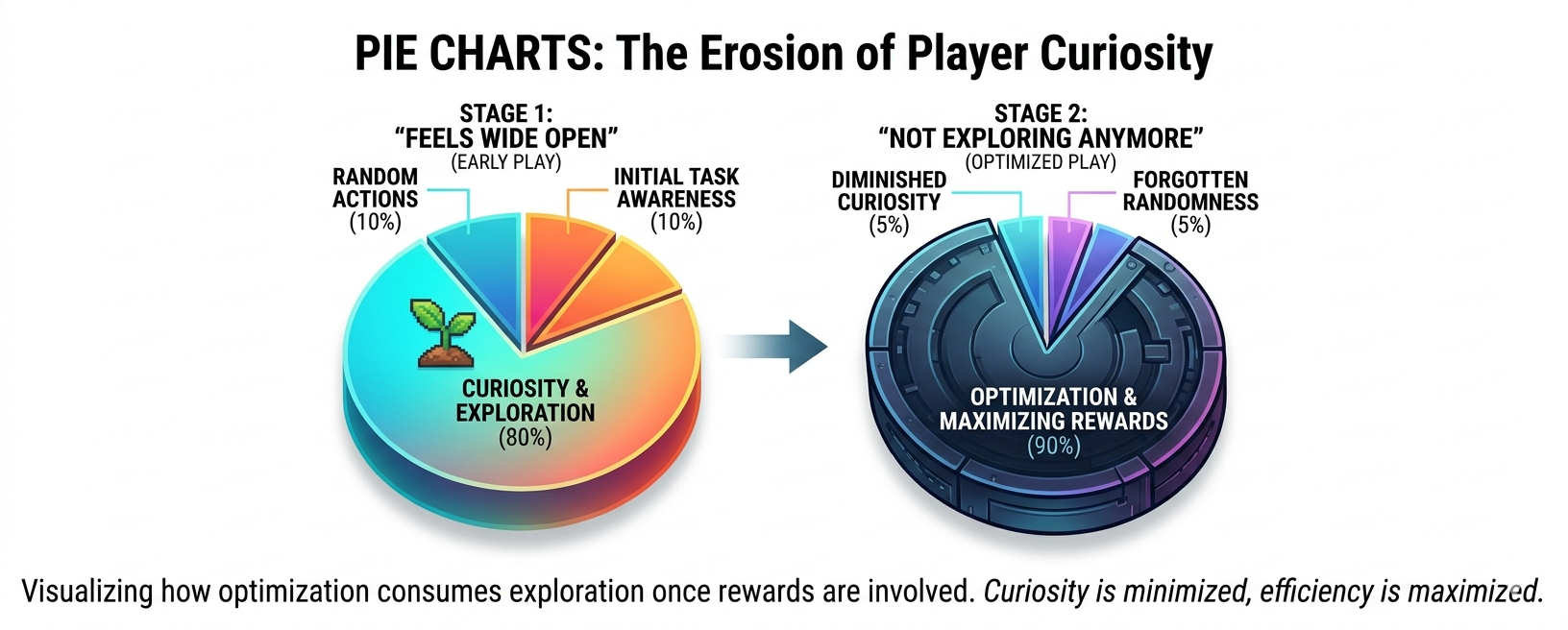
At the beginning, it feels wide open. Calm, even. You walk around, plant random stuff, poke at the map like you’ve got all the time in the world. No pressure. No “right way” to play. Just vibes.
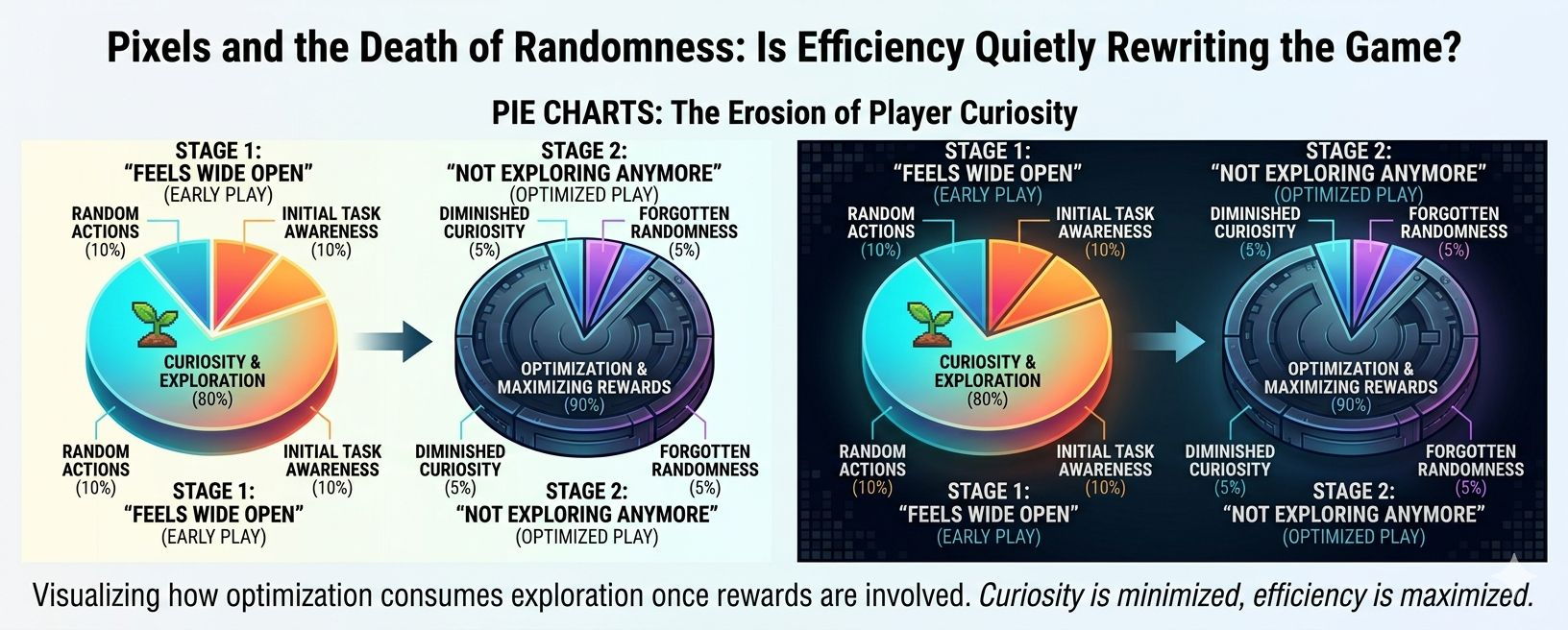
And honestly? That part works.
But it doesn’t last.
Here’s the thing. The game doesn’t slam doors in your face. It just… starts pointing. Gently. You notice some crops pay better. Some loops feel smoother. The Task Board sits there like it knows something you don’t. You follow it a little. Then a bit more.
And before you realize it, you’re not exploring anymore.
You’re optimizing.
That’s where things get tricky.
Because technically, yeah—you’re still free. The map didn’t shrink. The options didn’t disappear. You can still do whatever you want.
But let’s be real. Once rewards enter the picture, choices stop being equal. One path gives more. One strategy wins. And when that gap gets obvious, messing around starts to feel like wasting time.
So people stop messing around.
I’ve seen this before. Every system with rewards ends up here. Doesn’t matter if it’s a game, a market, whatever. If there’s a “best way,” people will find it. And then they’ll stick to it like glue.
That’s how you get the so-called “hive mind.”
Not because anyone told players what to do. Nobody’s forcing anything. It just happens. Quietly. Everyone starts running the same routes, farming the same way, chasing the same efficiency loop.
You don’t even notice when you join in.
One day you’re experimenting. Next day you’re checking what works and copying it.
And boom—you’re part of the machine.
Now here’s where it gets interesting.
The whole coins vs. token setup? That’s not just some random design choice. That’s the core of the system. Most of your grind lives in coins. You spend hours stacking them, building them up, feeling like you’re progressing.
But those coins? They don’t really leave the system.
Meanwhile, the $PIXEL token—the thing with actual external value—that’s handled way more carefully. Controlled. Limited. Protected.
You see what’s happening, right?
Players stay busy. They keep grinding. They feel rewarded. But the system doesn’t let all that effort spill out into real value at once. It slows everything down. Keeps things stable.
And yeah, I’ll say it—it’s smart.
Maybe a little ruthless too.
But smart.
Because let’s be honest, most play-to-earn games crashed exactly because they didn’t do this. Too much value flowing out too fast. Boom. Dead economy.
Pixels learned from that.
Still… there’s a trade-off.
And people don’t talk about this enough.
When every action ties back to efficiency and controlled rewards, the whole vibe of the game shifts. You stop asking “what do I feel like doing?” and start asking “what pays best?”
That’s a different mindset.
A completely different game, actually.
And sure, randomness still exists. The freedom is technically still there. Nobody removed it.
But here’s the uncomfortable part.
It starts to feel pointless.
Why try something new if you already know it’s worse? Why experiment if it slows you down? Most players won’t. They’ll take the safe route. The proven one.
Every time.
So no, Pixels didn’t “kill” randomness in some dramatic way.
It just made it irrelevant.
Quietly.
And maybe that’s the bigger point here. Maybe the game didn’t force players into efficiency. Maybe players walked there on their own. Because given the choice between curiosity and better rewards…
People choose rewards.
Every. Single. Time.
