
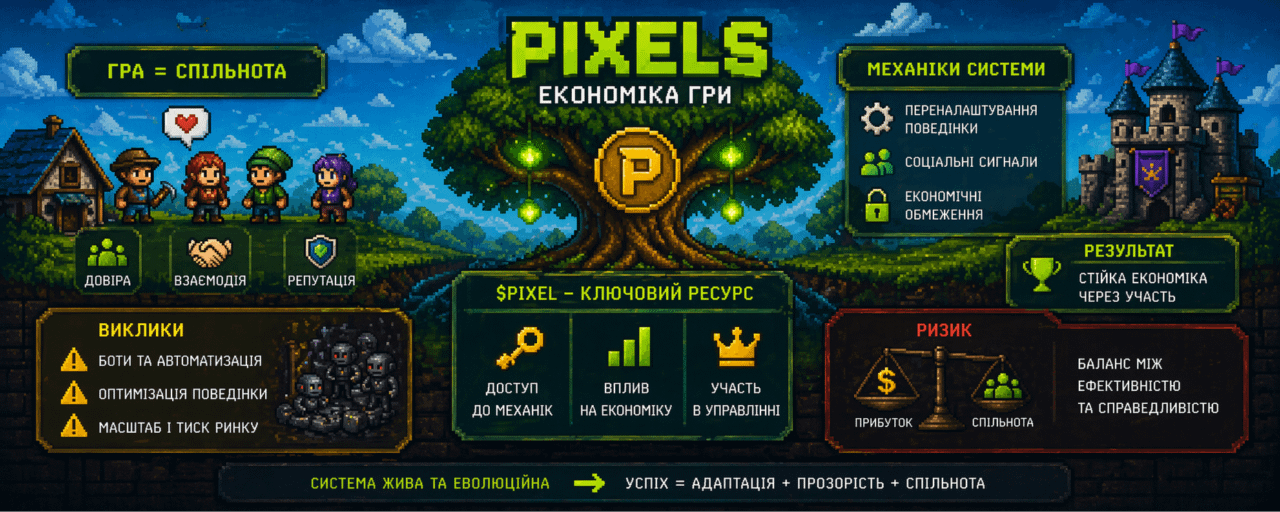
#pixel I've been in the game for a while. Enough to not buy into pure models. And enough to understand: if something looks stable, it means I haven't seen where it breaks yet. With @Pixels I have a strange feeling. I'm not interested in the game itself. It's straightforward. Even too straightforward. The cycle is clear, the mechanics are familiar, nothing fundamentally new. I'm interested in the system under the hood. On the surface - rare honesty. The bot issue isn't being swept under the rug. They're talking about it openly. This looks like a mature position. Sounds like trust. But what if it's a trap? Because in crypto, transparency isn't always honesty. Sometimes it's just another way to manage expectations. Control through openness.
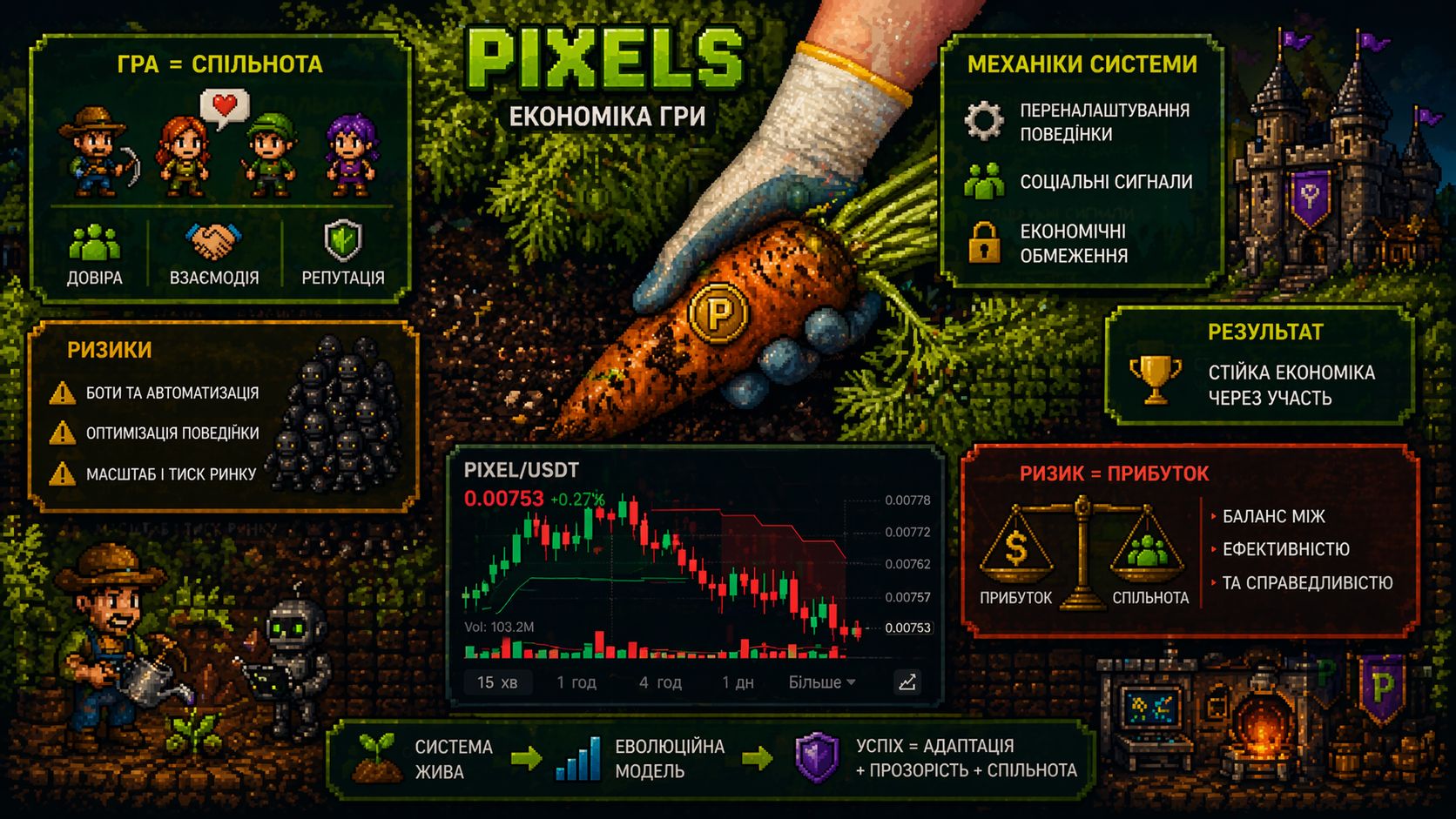
Trust here isn't built-in. It's temporary. And it depends not on words, but on how the system behaves under load. It gets even more interesting. The system doesn't prohibit behavior. It tries to recalibrate it. Not 'you can't farm,' but 'it will become less rewarding.' Not 'we're catching bots,' but 'we're making them less effective.' Sounds elegant. But I’ve seen this somewhere before. Any action that has a reward becomes an optimization task. Reputation becomes a resource. Guilds become tools. Social interaction becomes mechanics. This is no longer a game. It's an environment where behavior is counted.
And here the question isn't whether the system works. The question is how quickly it can be learned to be exploited. The economy gives more signals. Abandoning the inflationary model is a decision that looks mature. Without the endless printing of tokens. Without the illusion of infinite growth. This sounds like math. I'm looking again for where the 'dog is buried.' 😵
Because any economy that promises value through participation will sooner or later face scalability issues. And scale doesn't ask for permission. It comes with capital, automation, and cold efficiency. Where profit appears, infrastructure builds up around it. And it's not always human.
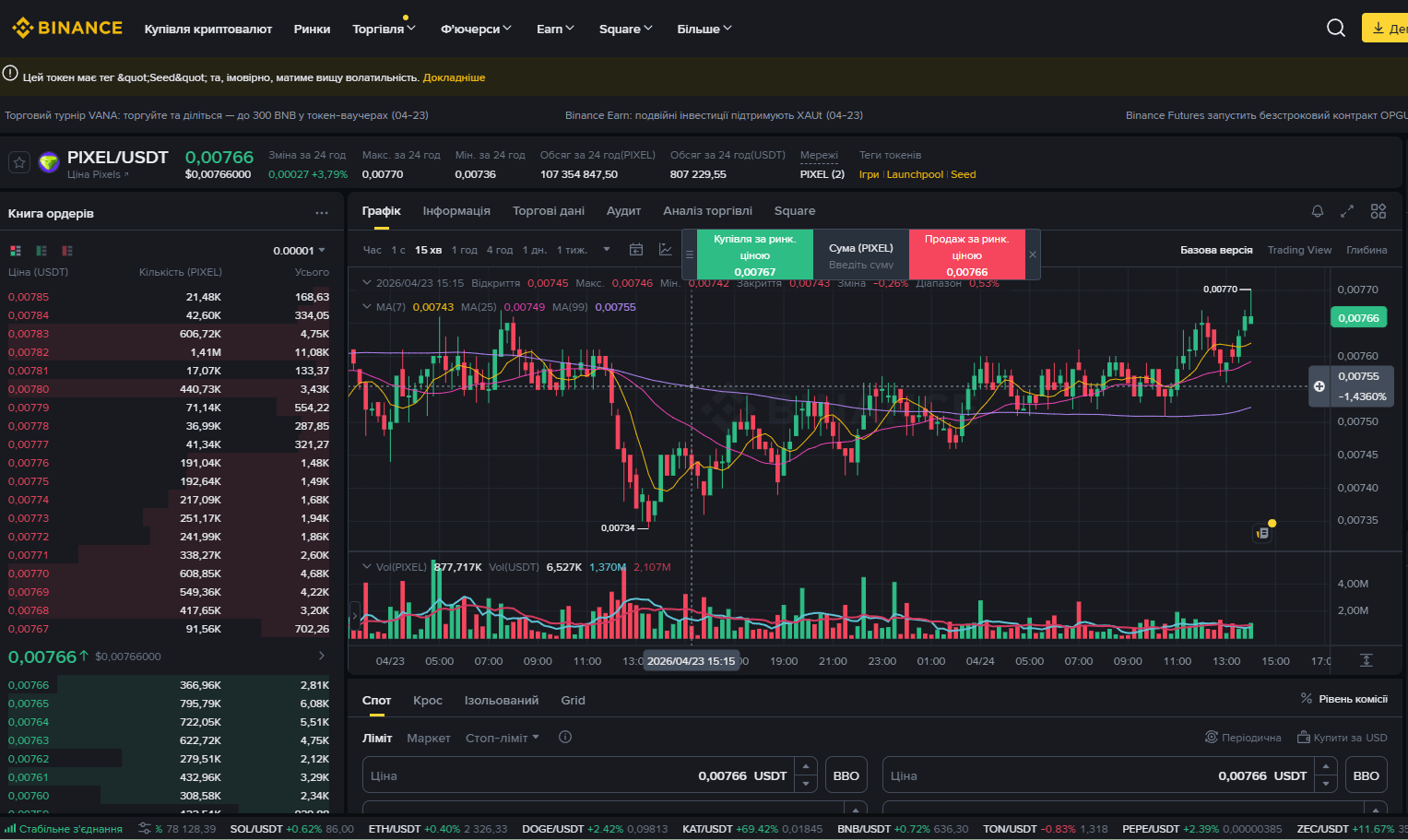
$PIXEL looks like the next step. It’s no longer just a reward. It becomes a point of access.
To mechanics.
To influence.
To the game itself.
This changes the behavior. You're no longer just playing. You're deciding how to use the resource. Sounds like evolution. I see the risk. The more functions a token has, the more strategies there are to circumvent it. Or to use it better than others. And then it stops being a tool for participation. It becomes a tool for advantage. This creates the main conflict.
The system looks like an attempt to create a living economy. One where value arises through interaction, not just speculation. But the market operates differently. It doesn't care about culture. It cares about efficiency. On a small scale, behavior still resembles a game. There's context, trust, and community. On a larger scale, everything simplifies. Trust becomes a transaction. Behavior turns into strategy. Participation becomes a revenue function. And this isn't a bug. It's the natural state of a system under pressure. I don't think there's a simple solution here.
Hybrid models sound nice:
social signals + economic constraints + technical control.
In practice, this means a constant battle with your own audience. And an ongoing rewriting of the rules. There won't be stability here. Perhaps, that is the design. I'm not skeptical of the idea. I'm skeptical of the implementation. Because there's a chasm between 'it might work' and 'it withstands scale.' And that's usually where everything breaks. So the question remains open for me. Can a system built on behavior survive when it starts being used as a market?
I don't have the answer. But if it shows up, it will be noticeable not by words, but by the system withstanding what usually destroys it.
