There was a time when @Pixels looked like just another Web3 farming game with a familiar promise play more earn more and move on That idea was simple and attractive but it also carried the same weakness that has already broken many play to earn systems too much focus on rewards and not enough control over how those rewards shape behavior
Happening now inside Pixels feels very different and far more intentional The change is not loud it is not marketed as a dramatic overhaul but if you look closely the entire structure of the game is slowly being redesigned The goal is no longer to push rewards into the system as fast as possible The goal is to build an economy that can actually hold its shape over time
At the center of this shift is a deeper understanding of player behavior In early phases most players approached Pixels with a clear mindset maximize output minimize time extract value This created a loop where the system was constantly under pressure Every action led toward the same endpoint which was earning and selling and nothing inside the design was strong enough to slow that cycle down
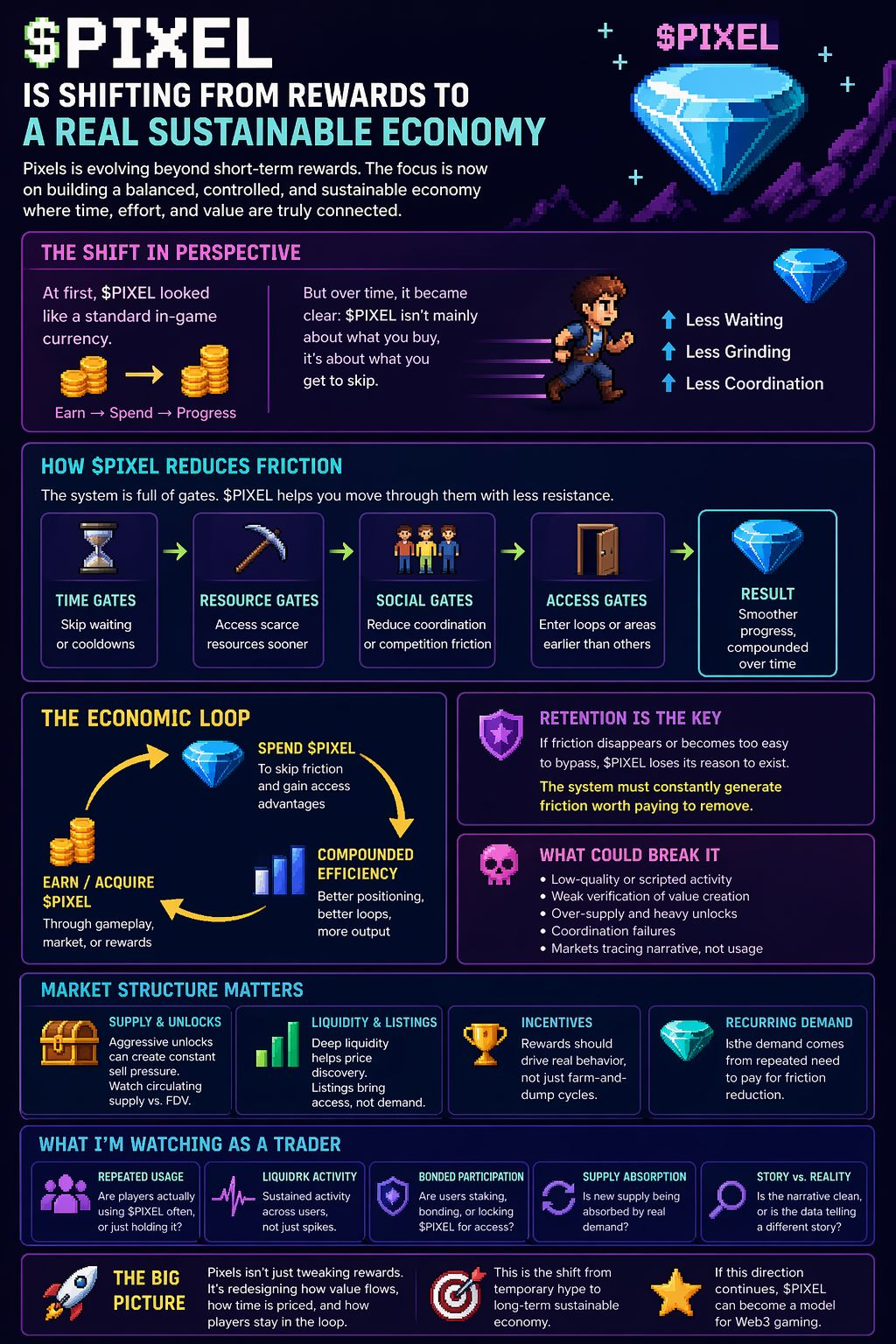
Now that pattern is being challenged Instead of removing rewards Pixels is changing how and when they appear The system is introducing friction but not in a way that feels purely restrictive This friction is carefully placed at moments where players naturally make decisions Energy limits waiting periods and progression gates are no longer just barriers they are turning into points of choice
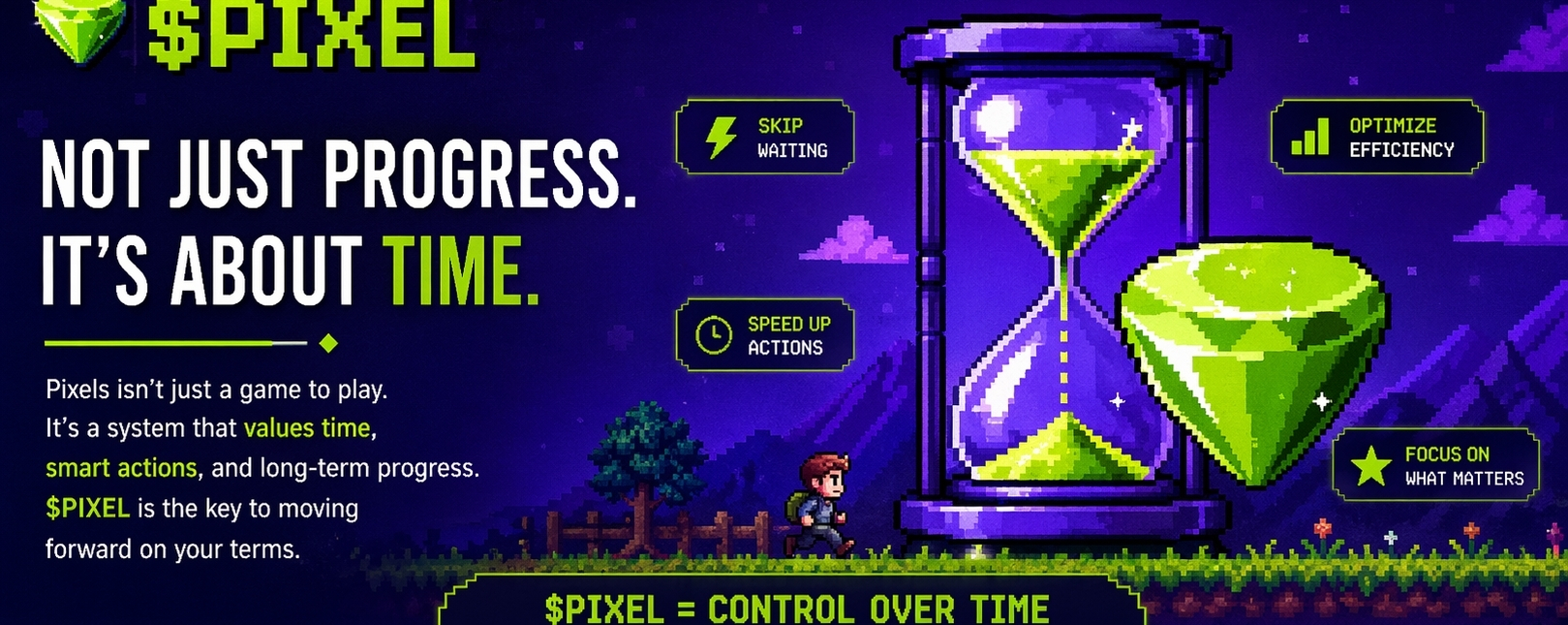
This is where $PIXEL as a token starts to evolve Its role is no longer limited to being something you earn and trade It begins to sit directly inside these decision points When a player chooses to speed things up the token captures that choice When a player decides to stay consistent and move at a natural pace the system responds differently Over time this creates a balance where time itself becomes a meaningful resource
This idea may seem subtle but it changes everything It shifts the game away from a race and turns it into a system where presence and consistency matter more than speed Instead of rewarding the fastest players the system starts to favor those who understand how to move within it
Another important part of this transition is how progression is being restructured In many games progression is linear and predictable you move forward as quickly as possible and reach an endpoint In Pixels progression is becoming layered Farming exploration and creation are no longer separate activities they are interconnected pieces of a larger system
This creates a sense that every action has context You are not just repeating tasks for rewards you are participating in a loop that builds over time The more you engage the more the system reveals its structure and this naturally encourages players to stay rather than rush through
Makes this approach powerful is that it addresses one of the biggest problems in Web3 gaming sustainability A system that depends purely on constant reward output will eventually collapse under its own weight Pixels is moving away from that model by controlling how value enters and circulates within the game
Instead of flooding the economy with rewards it is creating a flow where value is distributed more carefully and tied to meaningful actions This reduces pressure on the token while also making the overall experience feel more stable
At the same time the game does not lose its casual identity On the surface #pixel still feels accessible and easy to pick up You can farm explore and create without needing to understand the deeper systems immediately But for players who stay longer the underlying structure becomes more visible and more engaging
This balance between simplicity and depth is important because it allows Pixels to attract a wide range of players while still building a system that can support long term growth
The shift we are seeing is not just about mechanics it is about philosophy Pixels is moving away from the idea that a game should constantly give and toward the idea that a game should manage how value is created and experienced
It is a slower approach and it requires patience both from the developers and the players but it is also far more sustainable If this direction continues Pixels could become one of the first examples of a Web3 game that successfully transitions from a reward driven model to a true digital economy
In the end this is what makes the current update so important It is not just another feature or adjustment it is a signal that Pixels understands the challenges of this space and is actively trying to solve them
Pixels is no longer just asking how players can earn It is asking how a system can last And that question may define the future of the entire Web3 gaming landscape.