
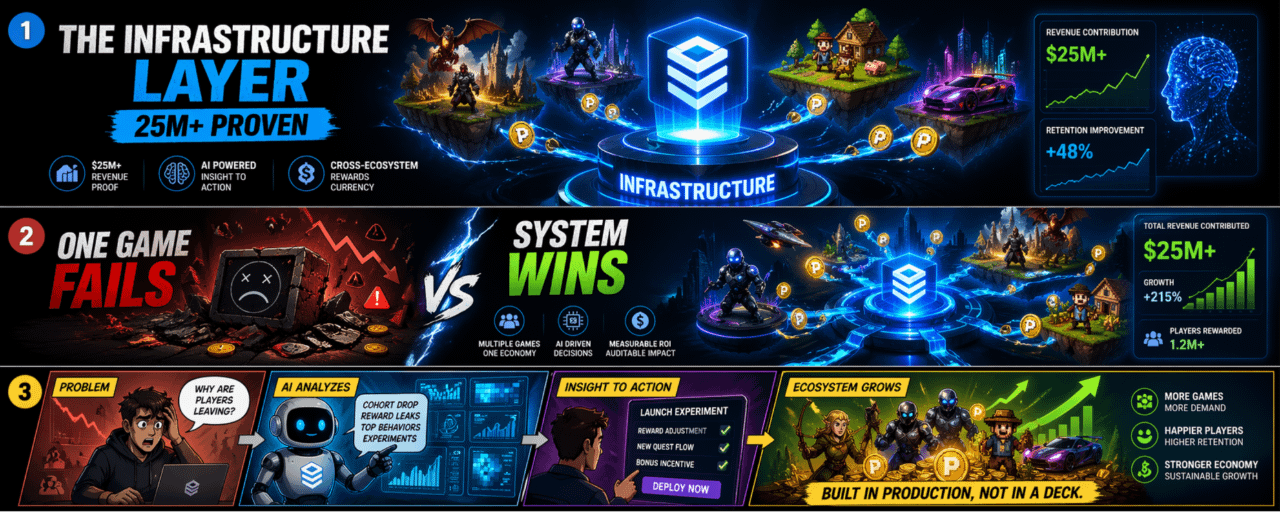
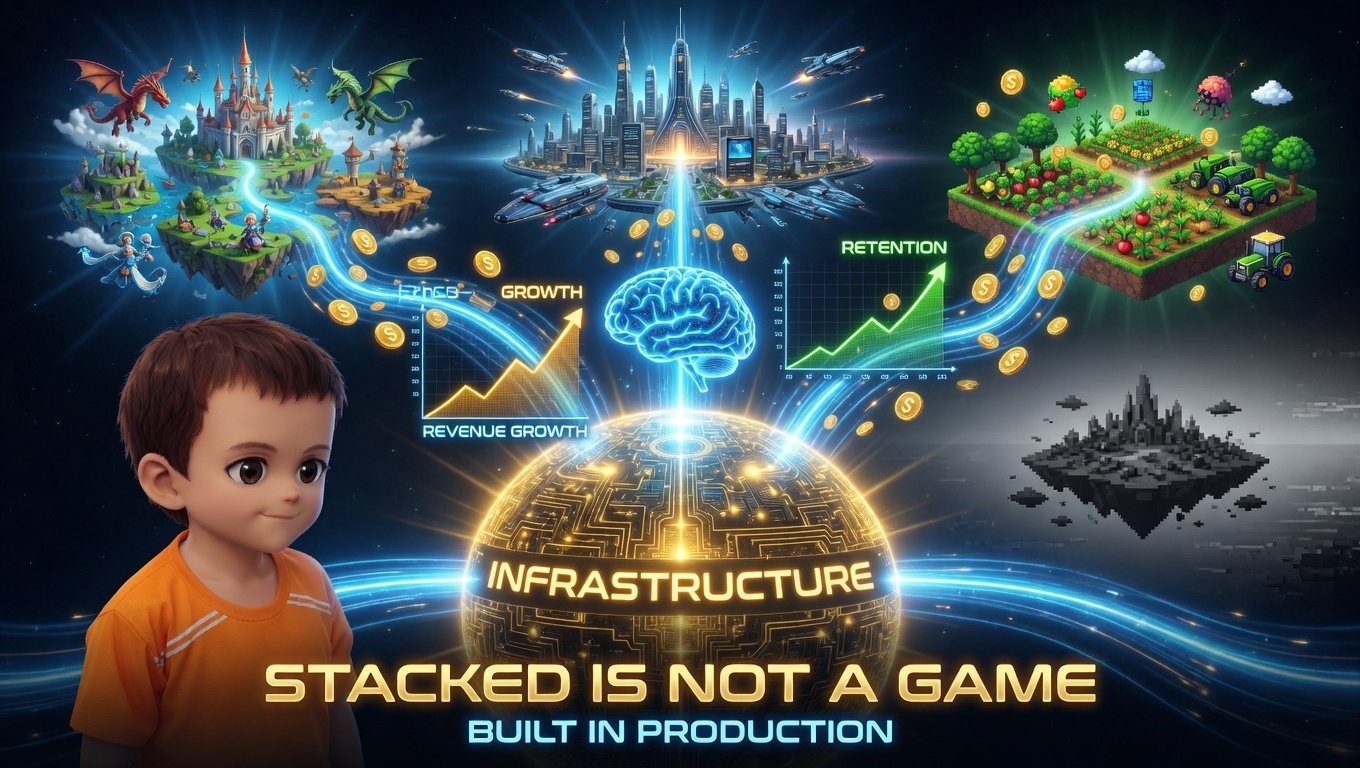
Stacked is starting to gain some attention and recognition, but for the right reasons. Rather than just hyping things up as so many others do, Stacked has become increasingly recognizable due to proof of its operation, which is quite rare in the Web3 space. In a field where everyone promises something, Stacked's approach is grounded in results that have been achieved and quantified. The systems utilizing Stacked have so far generated over 25 million dollars in revenue through the @Pixels ecosystem.
That in itself is enough to prove that the mechanics work in a viable manner and at least have the potential to scale and be used across multiple ecosystems without too much hassle. Most projects claim to develop sustainable economic models, but show nothing but concepts when put under pressure from the players using their product. Stacked has proved itself to work even within an uncontrolled environment and generates tangible results in revenue.
The other change worth mentioning is the development of the token itself. $PIXEL will stop being constrained by the game loop within each game. It is developing into a cross-ecosystem reward currency. As such, the structure of its demand will undergo major changes. PIXEL will have the chance to become a demand generator on multiple platforms.
It is relevant because it influences the flow of value. One single game token is rather vulnerable. In case of a slowdown in its gameplay, the whole system will feel it straight away. Cross-ecosystem tokens are far more flexible. The flow could move from one game to another without compromising the aggregate demand for them.
The inclusion of the AI layer becomes even more exciting from this point of view. This feature does not imply simply building a dashboard for analytics and reporting. Instead, it becomes a functional layer that allows developers to receive information about what is going on within the internal economies of their ecosystems. They can ask why a certain cohort is disappearing from their game, what reward mechanics need to be reworked to increase efficiency, or which loops do not keep gamers engaged anymore.
What is particularly useful about it is the speed with which all this happens. Traditional game economy monitoring requires several steps: data collection, analysis, interpreting results, and implementing changes into gameplay. It might take weeks to implement the necessary changes. By that time, the initial problem could have changed already.
The Stacked system compresses that entire process. Insight and execution operate in the same context. A game can recognize a problem with retention and experiment with a reward change or a mechanic adjustment almost immediately. That cuts down on friction in the decision-making process and accelerates the experimentation rate. In a competitive landscape, the ability to iterate more quickly can make the difference between success and failure.
A final interesting perspective on the topic revolves around ad budget redirection. Gaming companies spend millions of dollars each year on user acquisition. The vast majority of that money goes into marketing channels with little transparency regarding effectiveness in the long run. With Stacked, that equation changes. Rather than investing heavily in user acquisition from outside sources, money could be spent internally through reward payments.
That forms a quantifiable feedback loop. Rather than buying eyeballs or clicks, game companies pay for engagement. Gamers receive rewards for engaging in the platform, and performance metrics can track the effects. That transforms user acquisition into a more investment-like strategy rather than a cost.
For fund managers and investors, the proposition is appealing due to its clarity. Marketing budgets are notoriously tough to quantify and measure when it comes to ROI. When reward payments, engagement, and revenue generation are directly tied together, that creates a clear metric of efficiency.
The role that Stacked plays as infrastructure versus a solo game reinforces its longer-term value. Many companies in the space have their fortunes rise or fall depending on the success of a particular game. There are only two outcomes: either it succeeds and the company experiences meteoric growth, or it fails, and the company rapidly collapses.
Infrastructure has a completely different dynamic. By operating at the infrastructure level, Stacked will be distributing risk by working with multiple studios. Success becomes dependent on implementation rather than the success of the individual game. Every integration adds more data, more usage, and more feedback to the network. A compounding advantage emerges from there.
Another unique feature of infrastructure is how it scales. There’s no guarantee that a game will become an instant smash hit. However, improving the performance of many games becomes a much more stable approach. The value created through infrastructure scales along with the network.
Perhaps one of the best stories about Stacked is that the entire project has been built “in production” as opposed to “theorized”. While the industry has seen many companies with excellent marketing materials that lack true proof of concept, building an infrastructure service within a live system has a unique advantage.
The process described above creates an entirely new level of maturity that is hard to attain through independent developmental endeavors. Such projects become significantly more reliable, scalable, flexible, and adaptive to actual consumer behavior. They generate trust as well, which is essential for any successful project. The ability to showcase genuine results rather than projections impacts the way stakeholders perceive the potential of a specific product.
All those components form a solid basis for a compelling thesis. In other words, Stacked is not striving to achieve dominance on the market by introducing a groundbreaking game title. Instead, it focuses on developing a robust infrastructure capable of creating self-sustaining ecosystems, enhancing the performance of games, and making them more responsive to players' actions.
The unique blend of demonstrated revenue impact, continuously expanding scope of token utility, integration of AI-driven decision-making capabilities, and infrastructure-related activities creates a completely new type of opportunity. The shift in narrative, moving away from pure speculations and toward the actual design and implementation of innovative solutions, makes all the difference here.
The fact that attention in the sphere of Web3 gaming tends to be attracted by hype cycles creates additional value for this particular initiative.