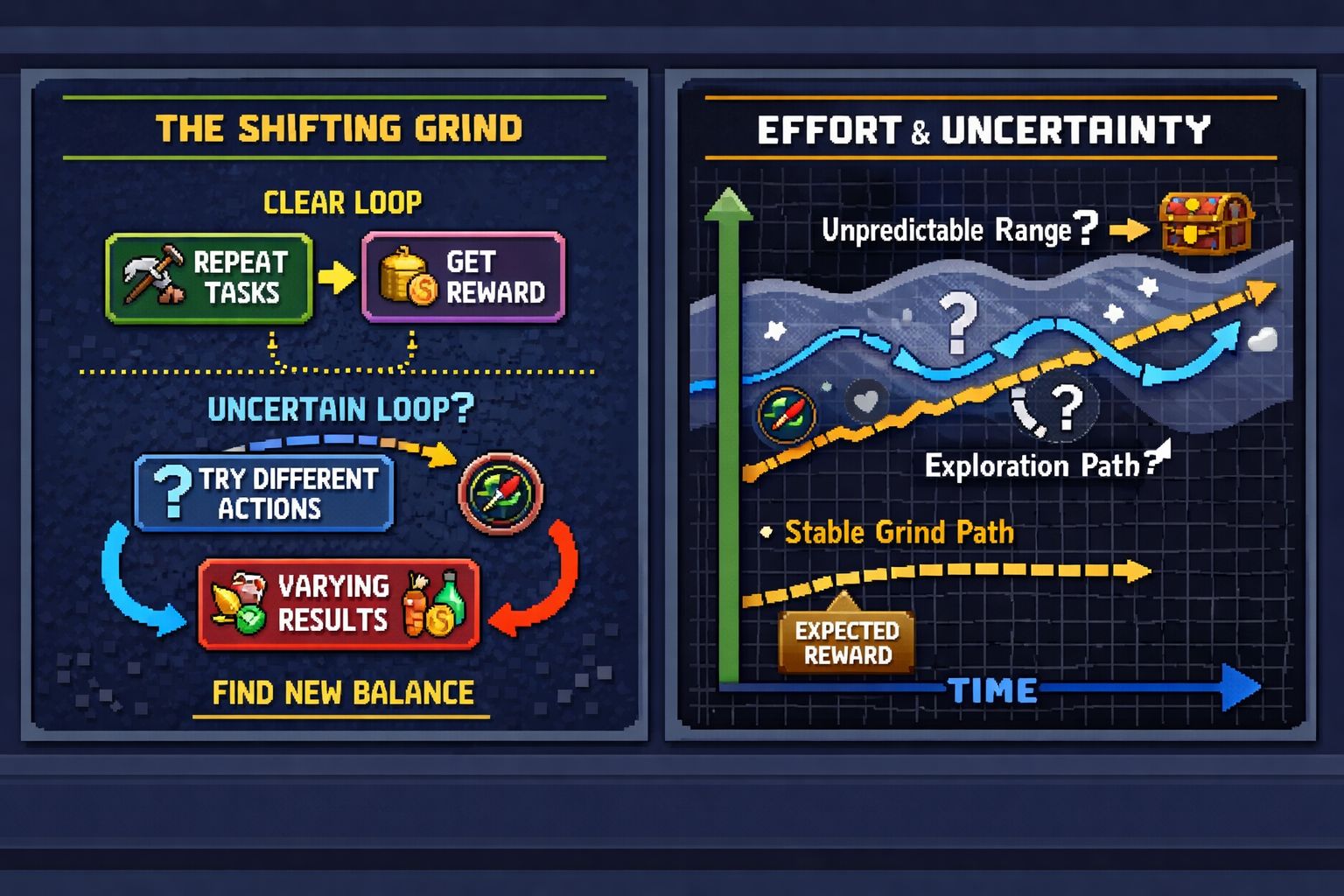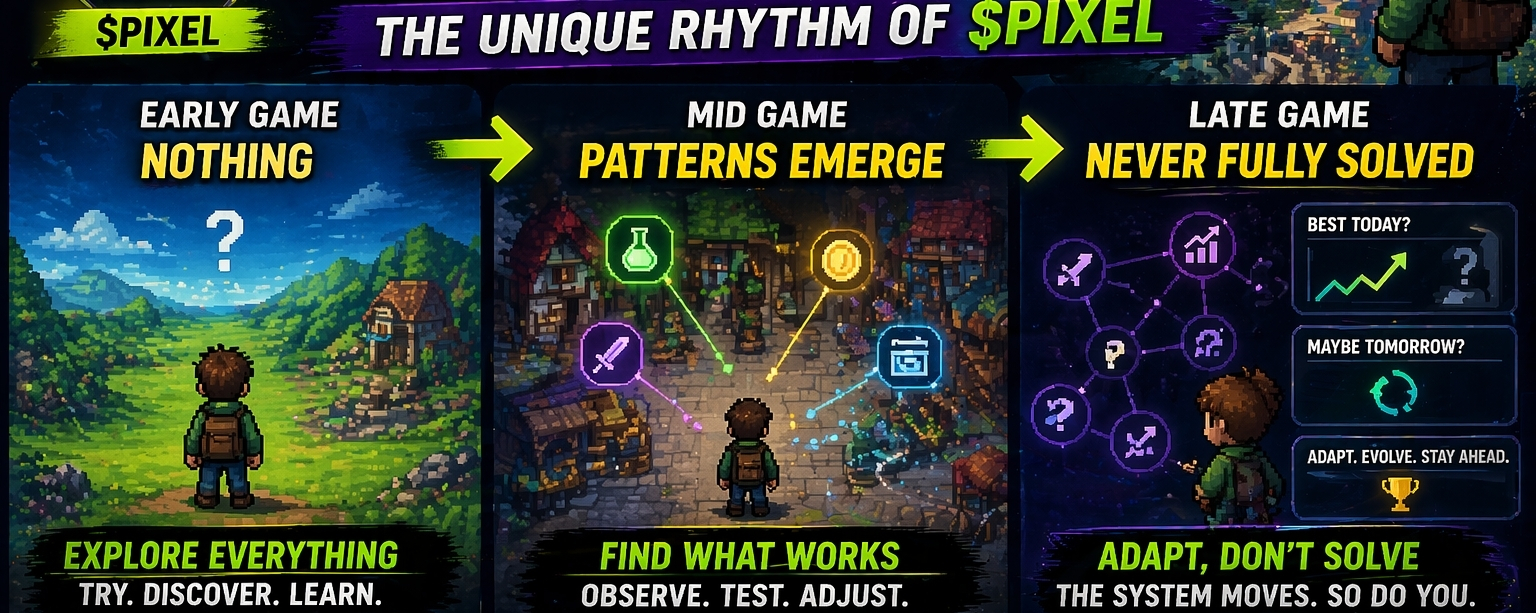


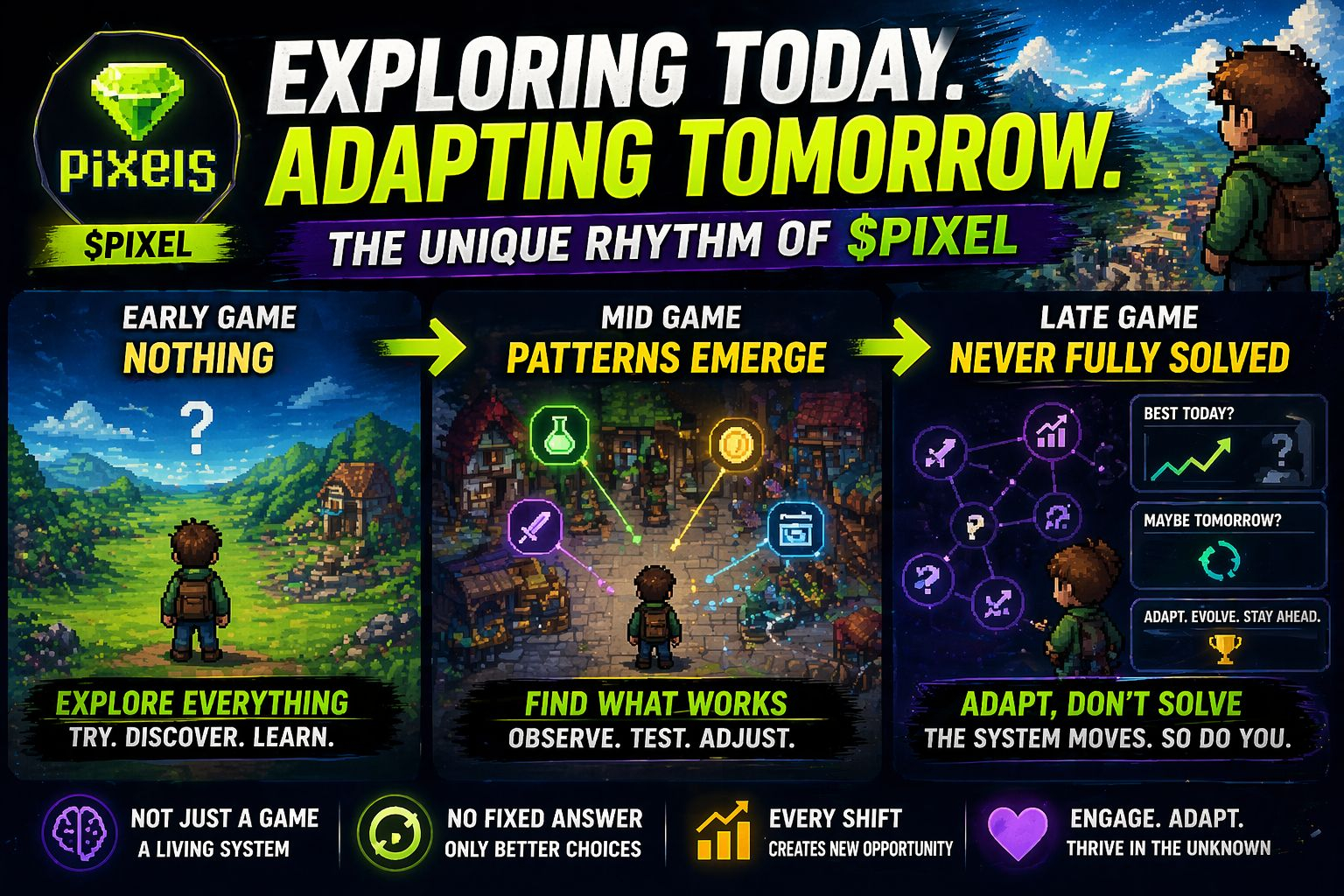
I was thinking about how players move through systems like $PIXEL over time as it's Nothing at the start, when everything feels open, but a bit later when patterns begin to settle.
In most games, that shift is easy to spot. You explore first, try different things, figure out what works… and then you lock in. One loop becomes clearly better than the rest, and everything slowly narrows around it.
Pixels doesn’t completely avoid that But it doesn’t feel like it settles as cleanly either
Because the transition from exploration to optimization feels less defined. You still experiment early on, still move through different activities without much structure. But when it comes time to “figure things out,” the system doesn’t fully reveal a single dominant path.
At least not in a stable way.
Instead, what works seems to shift slightly over time. Not dramatically, just enough that optimization never feels fully complete. You can lean toward certain behaviors, but there’s always a sense that the system is still adjusting around you.
I see that keeps you in a kind of in-between state
Not purely exploring, but not fully optimizing either.
I’m not sure if that’s intentional or just how things evolve when the system itself is adaptive. But it creates a different rhythm compared to what we usually see.
Because in a typical setup, once optimization takes over, exploration fades out. There’s no reason to try new things when the best path is already clear. Everything becomes about efficiency.
Here, that clarity never fully locks in & without that final step, exploration doesn’t disappear completely. It just becomes more subtle. Smaller adjustments, minor shifts in behavior, constant checking to see if something else might work slightly better.
That changes how players engage over time.
You’re not chasing a fixed answer. You’re moving alongside something that’s still forming. And that makes the system feel less solved, even after you’ve spent a lot of time in it.
But it also introduces a trade-off $PIXEL
Because without a clear endpoint for optimization, some players might feel like they’re never fully “getting it.” There’s always a layer that remains slightly out of reach, slightly unclear.
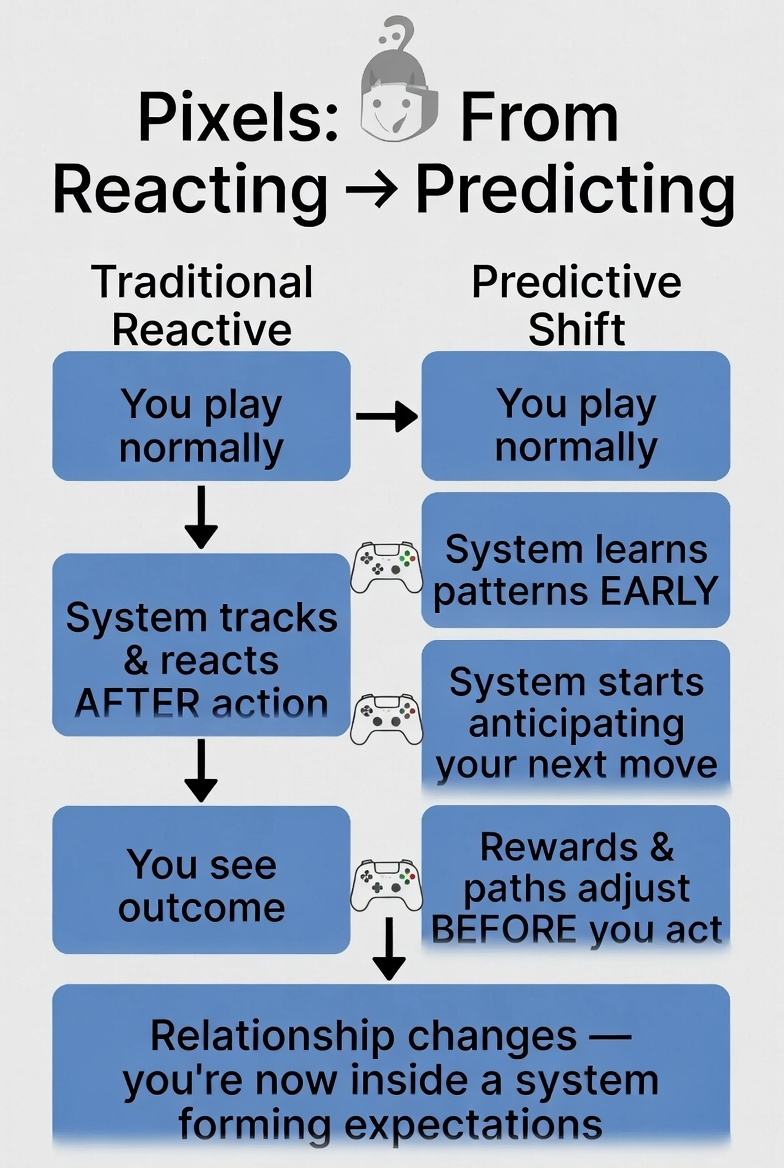
And that can either keep people engaged or slowly wear them down.
Pixels seems to be balancing right on that edge
Not giving enough structure to fully optimize, but not removing structure entirely either. Just enough movement to keep things from locking into a single path.
I’m not sure if that holds as the system scales
But for now, it creates an experience that feels less like solving a game & more like adapting to one & that’s a subtle difference, but it changes how everything unfolds over time.