
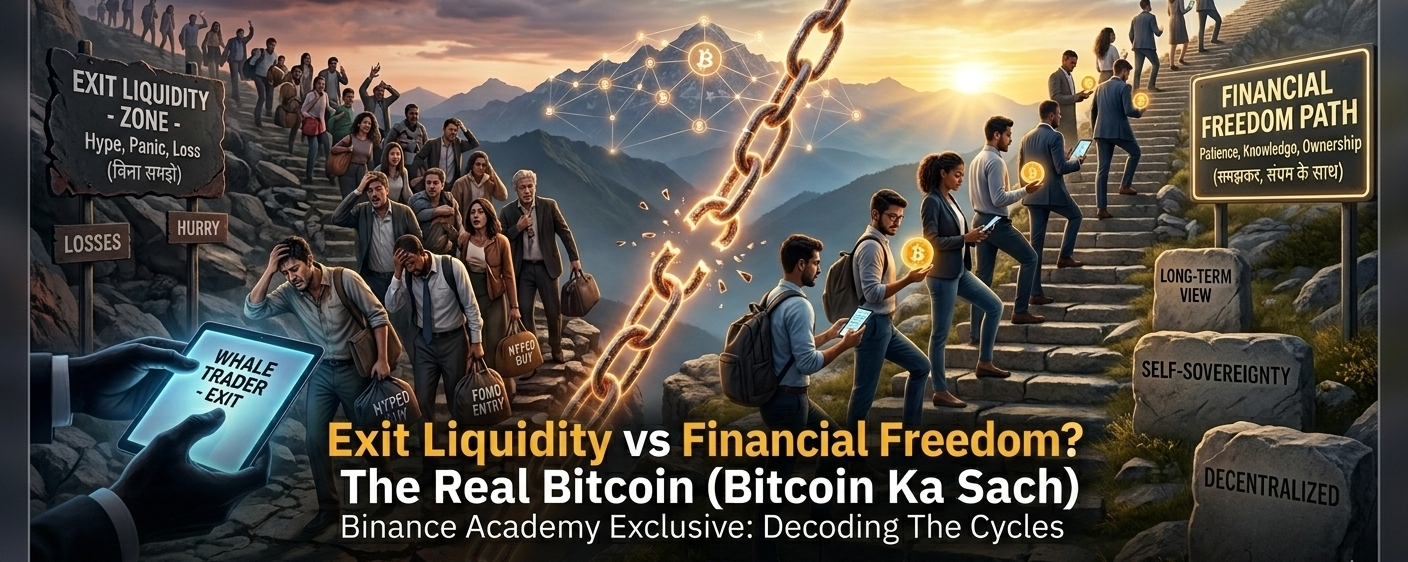
The first time I heard about $BTC , honestly, I didn't get it much. I just heard that 'people are making money.' And, as often happens, curiosity kicked in before logic.
I invested a little. The price went up. It felt great. Then I told more people. They bought in too. At that time, everything seemed simple—like this system was made for those who got in early to win.
Then one day the market tanked.
It dropped so fast that the profit felt 'real', but it turned out to be just numbers. For the first time, a strange thought crossed my mind—did I become part of someone else's exit?
That's where my thinking changed.
Over time, I've realized that Bitcoin is not just an asset. It's an idea. A system where there's no central control. No bank, no authority deciding what happens to your money. This concept is powerful—especially for those where financial systems are weak or restricted.
But the ground reality isn't that clean.
Not everyone comes to the market for 'freedom.' Many enter just because they've seen someone else making profits. And when the reason for entry isn't clear, the exit isn't planned either.
I've seen cycles repeat. Every time the same pattern—people enter when confidence is at its peak. When everyone is saying, 'it's definitely going higher now.' And then those same people panic and sell when the market has already dipped.
The idea of 'financial freedom' gets a bit blurry.
The truth is that Bitcoin can be both—freedom and an exit liquidity game. The difference lies not in the system, but in the approach.
If you jump in without understanding, just chasing hype, the chances are high that you become liquidity for someone else. Because the market runs on emotions—fear and greed lead people to make wrong decisions.
But if you take a moment to pause... to understand what Bitcoin's purpose is, how its design works, and what your own goal is—then the picture changes.
Personally, the most interesting thing is that Bitcoin forces you to think long-term. It's not a 'get rich quick' scheme, even if people treat it that way. It tests your patience. It tests your discipline.
And honestly, not everyone passes that test.
One more thing that shouldn't be ignored—the market isn't equal. There are big holders with enough capital to influence short-term moves. Retail investors often react before they understand those moves.
So does this mean Bitcoin is flawed?
Not necessarily.
This only means that the system isn't perfect; people are imperfect.
Today, when I look at Bitcoin, it doesn't just seem like a price chart to me. It feels like a mirror—reflecting how people behave with money. Who has patience, who panics, who invests with understanding, and who just follows the crowd.
In the end, Bitcoin can give you freedom—but only if you use it responsibly. Otherwise, it just becomes another cycle where some win and some learn.
And maybe that's the truth.
Now you tell me—what was your reason for getting into Bitcoin... and is that reason still the same today?