


 Most people talk about inflation in gaming tokens like it’s a sudden collapse event. I’ve usually seen the opposite. Systems rarely break overnight. What happens first is slower and more dangerous: rewards lose meaning, attention fades, and players stop caring long before charts fully reflect it. That’s why I’ve been watching $PIXEL differently lately. I don’t think the more interesting story is raw emissions anymore. I think it’s how the Pixels economy appears to be shifting where value gets captured inside the loop. Recent chapter updates look less like simple content releases and more like economic redesigns that may matter far more over time than most people realize.
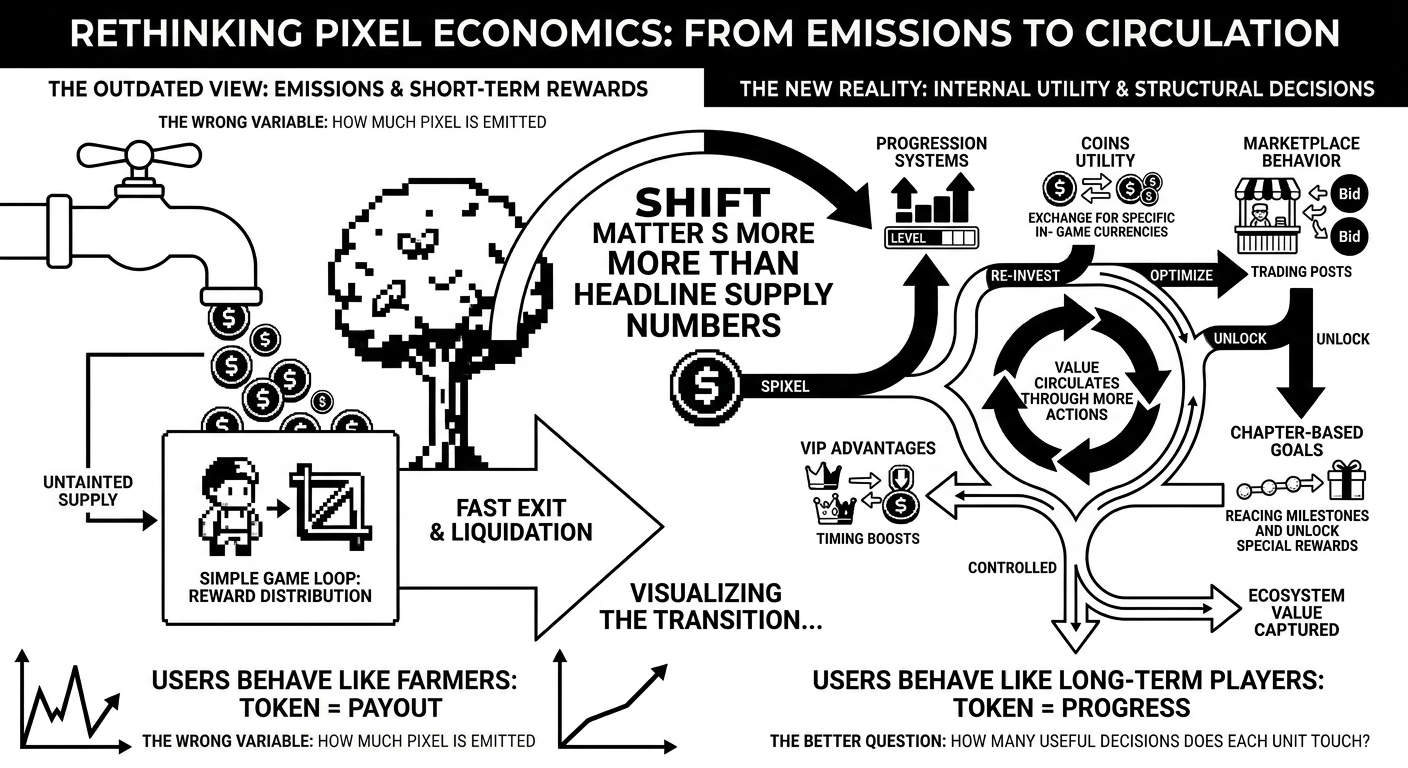
What stands out to me is the growing emphasis on structured utility instead of passive distribution. In many weak GameFi models, rewards enter circulation quickly and leave just as fast because there are limited reasons to use them inside the system. That creates temporary activity but fragile retention. @Pixels seems to be leaning in another direction. Progression systems, Coins utility, marketplace behavior, VIP advantages, and chapter-based goals all create more decision points where players may choose to spend, optimize, or reinvest rather than simply extract. That changes psychology. When tokens only represent payout, users often behave like farmers. When tokens unlock progress, timing advantages, or deeper participation, users start behaving more like long-term players. I’ve seen enough game economies to know that shift can matter more than headline supply numbers.
The market still tends to price #pixel through an older lens: emissions, unlocks, and short-term reward pressure. Those factors matter, but they don’t tell the whole story if internal utility keeps strengthening. The better question is whether each unit of value circulates through more actions before leaving the ecosystem. If the answer keeps improving, then the token becomes less dependent on constant new rewards and more connected to repeat in-game demand. That’s usually where stronger systems separate from weaker ones. I’m not saying success is guaranteed execution always matters but I do think many observers are measuring the wrong variable. This isn’t about how much $PIXEL gets emitted. It’s about how many useful decisions each unit touches before it exits the loop.