
The idea of reward apps is not new. For years, platforms have tried to attract users by offering incentives — points, tokens, cashbacks, or digital items — in exchange for engagement. On paper, it sounds like a perfect system. Users get rewarded for their time, and platforms get growth, retention, and activity. But in reality, most reward apps fail. Not slowly, not quietly — but almost predictably.
Despite millions of downloads and initial hype, these platforms often end up with the same problems: low-quality users, bot exploitation, unsustainable reward models, and eventually, user drop-off. This raises an important question: if the concept is so appealing, why does execution almost always break down?
This is where Stacked by Pixels enters the conversation. Instead of reinventing rewards completely, it attempts to fix the broken parts of the system. But to understand whether it can succeed, we first need to understand why most reward apps fail in the first place.
1. The Bot Problem: Fake Users Destroy Real Value
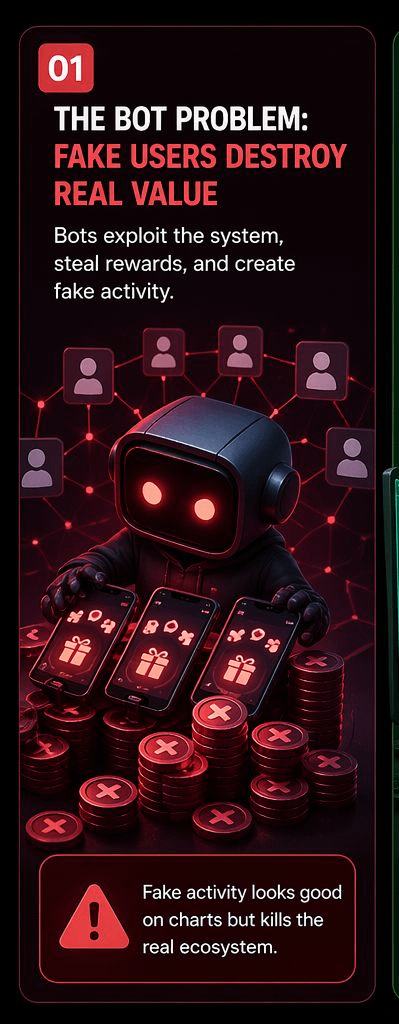
One of the biggest issues in reward-based systems is bots. The moment a platform starts offering incentives, it attracts not just genuine users but also people trying to exploit the system. These users create multiple accounts, automate tasks, and drain rewards without contributing real value.
This creates a dangerous imbalance. On the surface, the platform looks successful — user numbers grow, activity increases, and metrics look strong. But underneath, most of that activity is fake. Real users start noticing this over time. They see others earning rewards faster without effort, and trust begins to break.
Eventually, the system collapses under its own weight. Either the rewards become too diluted, or the platform tightens restrictions so much that even real users lose interest.
Stacked by Pixels attempts to solve this by focusing on behavioral patterns rather than simple actions. Instead of rewarding users just for completing tasks, it looks at how they interact within the system. This creates a higher barrier for bots, as automated behavior is easier to detect than genuine engagement.
However, this is easier said than done. Bot developers constantly evolve, and any system designed to detect them becomes a target. The real challenge is not just blocking bots initially but adapting continuously.
2. Farming Culture: When Rewards Kill the Experience
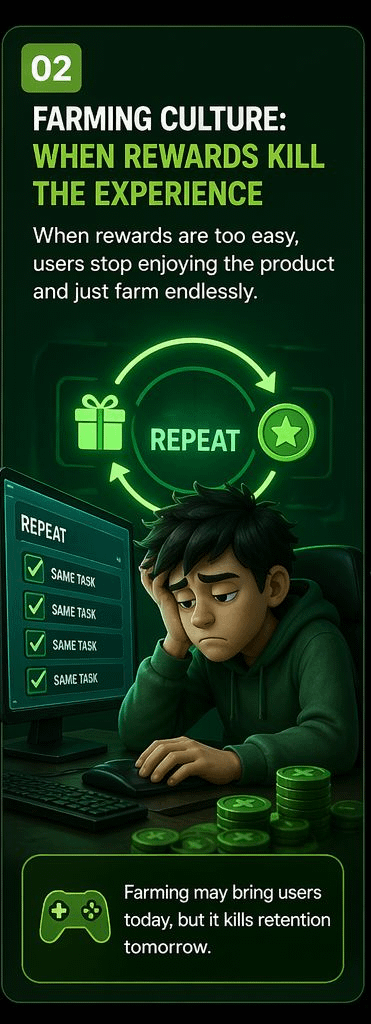
Another major reason reward apps fail is the culture they create. When rewards are too easy to earn, users stop caring about the actual product. They are not there to enjoy the experience — they are there to maximize rewards.
This leads to what is commonly known as farming. Users optimize every action, skip meaningful engagement, and focus only on what gives them the highest return. Over time, this destroys the platform’s core purpose.
For example, in gaming environments, players might ignore gameplay mechanics and instead repeat the simplest actions that yield rewards. This not only reduces enjoyment but also creates a monotonous and artificial ecosystem.
Stacked tries to address this by aligning rewards with meaningful actions. Instead of rewarding quantity, it focuses on quality. Players who engage deeply with the game — completing objectives, exploring features, and participating naturally — are more likely to benefit.
This approach has potential, but it requires precise balance. If rewards are too strict, users feel discouraged. If they are too loose, farming returns. Finding the middle ground is one of the hardest problems in reward design.
3. Unsustainable Economics: When Rewards Become a Liability
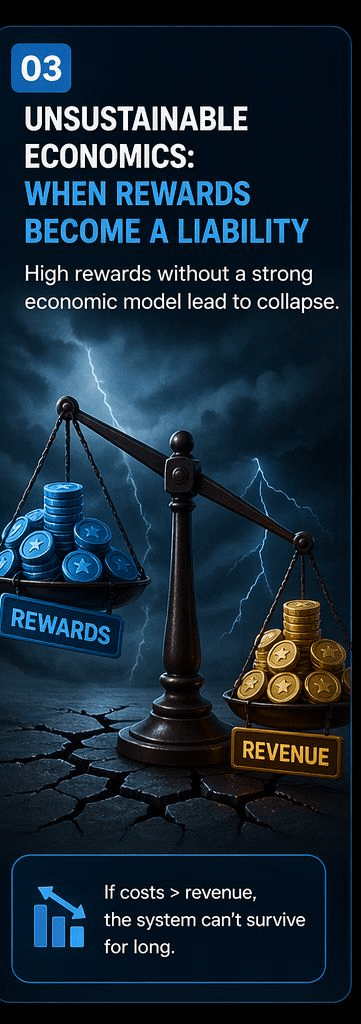
Most reward apps fail because their economic model is not sustainable. In the early stages, platforms offer generous rewards to attract users. This creates rapid growth and excitement. But over time, the cost of maintaining these rewards becomes too high.
Without a strong revenue model, the platform starts reducing rewards, adding restrictions, or introducing paywalls. This creates frustration among users, especially those who joined early expecting consistent benefits.
Eventually, users leave, and the platform loses momentum.
Stacked approaches this problem differently by integrating rewards into the broader ecosystem rather than treating them as separate incentives. The idea is to create a system where rewards are not just expenses but part of a value loop.
For example, if rewards encourage behaviors that increase retention or spending, they can indirectly support the platform’s sustainability. This shifts the perspective from “giving away value” to “circulating value.”
However, this model depends heavily on execution. If the loop is not strong enough, the system can still collapse under pressure.
4. Lack of Personalization: One System Doesn’t Fit All
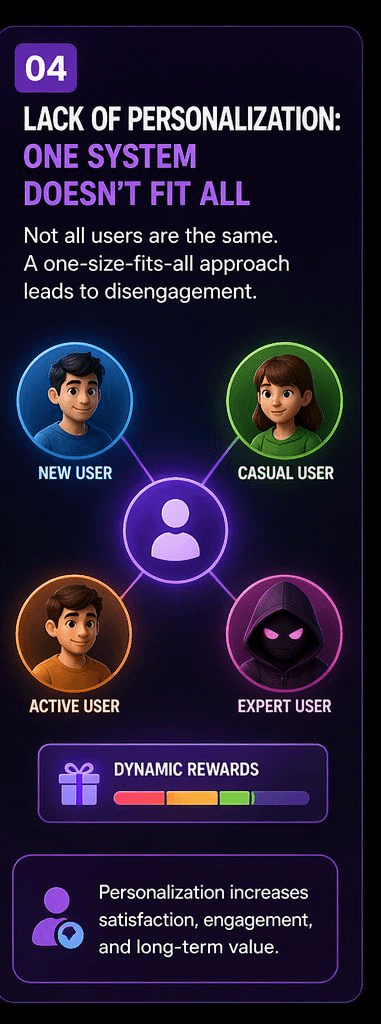
Most reward apps use a one-size-fits-all approach. Every user gets similar tasks, similar rewards, and similar experiences. But users are not the same. Some are highly active, some are casual, and some are purely exploratory.
When a system fails to adapt to different user types, it creates inefficiencies. Active users may feel under-rewarded, while casual users may feel overwhelmed. This imbalance leads to reduced engagement over time.
Stacked introduces the idea of dynamic rewards — adjusting incentives based on user behavior. This means the system can potentially offer different experiences to different users, increasing overall satisfaction.
For example, a new user might receive simple tasks to get started, while an experienced user might be challenged with more complex objectives. This creates a more personalized journey.
The challenge here lies in data accuracy and system intelligence. Personalization requires deep understanding of user behavior, and any miscalculation can lead to frustration instead of engagement.
Conclusion: A Better Idea — But Still a Test
Stacked by Pixels is not just another reward app. It is an attempt to fix a system that has repeatedly failed. By addressing bots, farming, economic sustainability, and personalization, it targets the core issues that have held back similar platforms.
But having the right ideas is not enough. Execution is everything.
The history of reward systems shows a clear pattern: strong starts, rapid growth, and eventual decline. Breaking this pattern requires more than innovation — it requires consistency, adaptability, and a deep understanding of user behavior.
Right now, Stacked sits at an interesting point. It has identified the problems correctly and proposed solutions that make sense. But until these solutions are tested at scale, nothing is guaranteed.
If it succeeds, it could redefine how rewards work in digital ecosystems, especially in gaming and Web3. If it fails, it will join a long list of projects that had the right vision but couldn’t deliver.
For now, the only logical approach is to watch closely, analyze critically, and stay realistic. Because in the world of reward apps, promises are easy — but sustainable success is rare.
