

I’ll be honest, I wasn’t actively looking for a farming game when I stumbled into Pixels. Lately, I’ve been more focused on liquidity flows, watching where attention rotates next, trying to read the mood of the market rather than chase it. But something about the way Pixels kept popping up in conversations felt different. Not loud. Not forced. Just… persistent. And in crypto, that kind of quiet repetition usually means something is actually working.
From what I’m seeing right now, the market is in one of those in-between phases. Not quite euphoric, not completely risk-off either. People are still here, still curious, but far more selective than before. The days of blind speculation are fading, at least for now. What’s replacing it is something slower, more deliberate. People want reasons to stay, not just reasons to ape in.
That’s where Pixels caught my attention.
At first glance, it looks almost too simple. A browser-based game, pixel art, farming mechanics, light exploration. It doesn’t scream cutting-edge Web3. It doesn’t try to overwhelm you with technical complexity. And maybe that’s exactly the point. I didn’t expect this, but the simplicity is doing a lot of heavy lifting here.
Because if I step back for a second, one of the biggest problems Web3 gaming has been struggling with isn’t graphics or even gameplay. It’s retention. We’ve seen countless games launch with strong hype cycles, token incentives, flashy trailers… and then slowly fade as users realize there’s no real reason to stay once the rewards dry up.
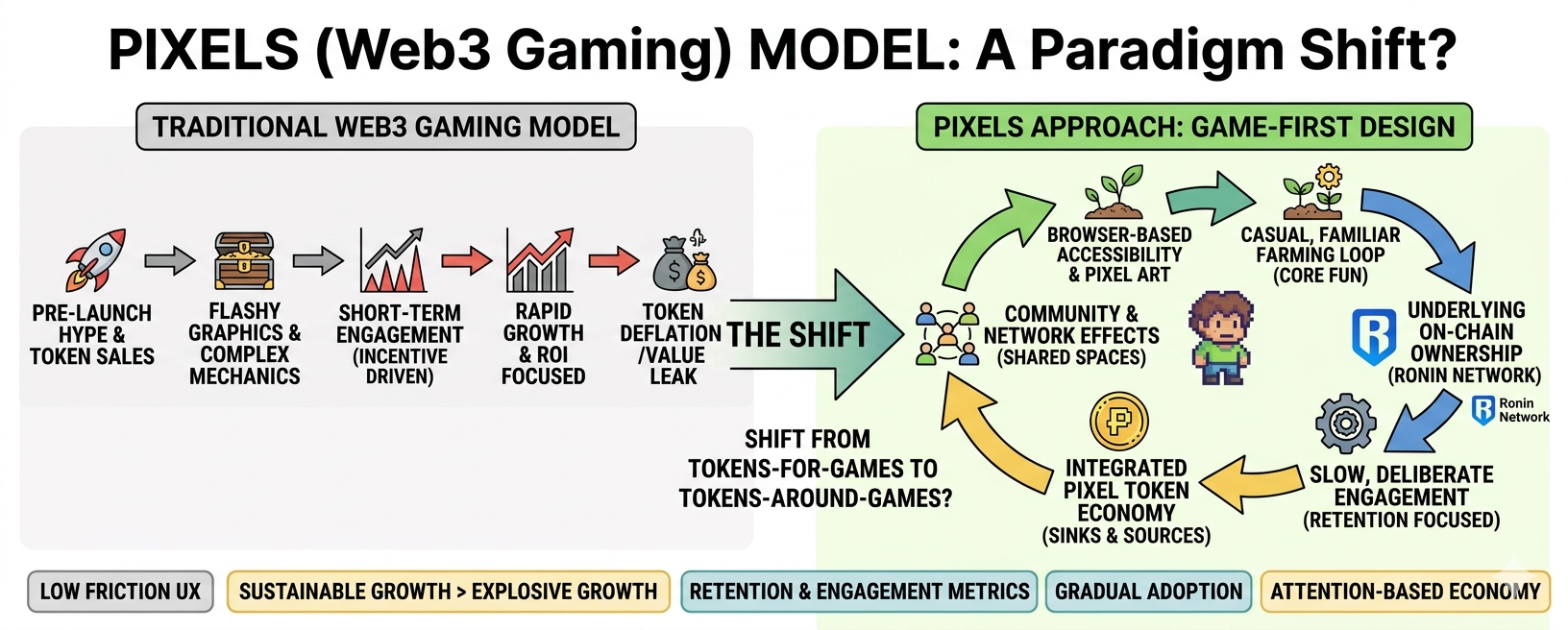
Pixels seems to be approaching this from a different angle. Instead of building a game around tokens, it feels like they’re building a game first, then layering the economy on top of it. That might sound obvious, but in crypto, it really isn’t.
The way it works is surprisingly intuitive. You jump into this open world where you can farm, gather resources, craft items, and interact with other players. There’s a loop here that feels familiar, almost like those casual games people play without thinking too much. But underneath that simplicity, there’s an on-chain layer that tracks ownership, progression, and assets.
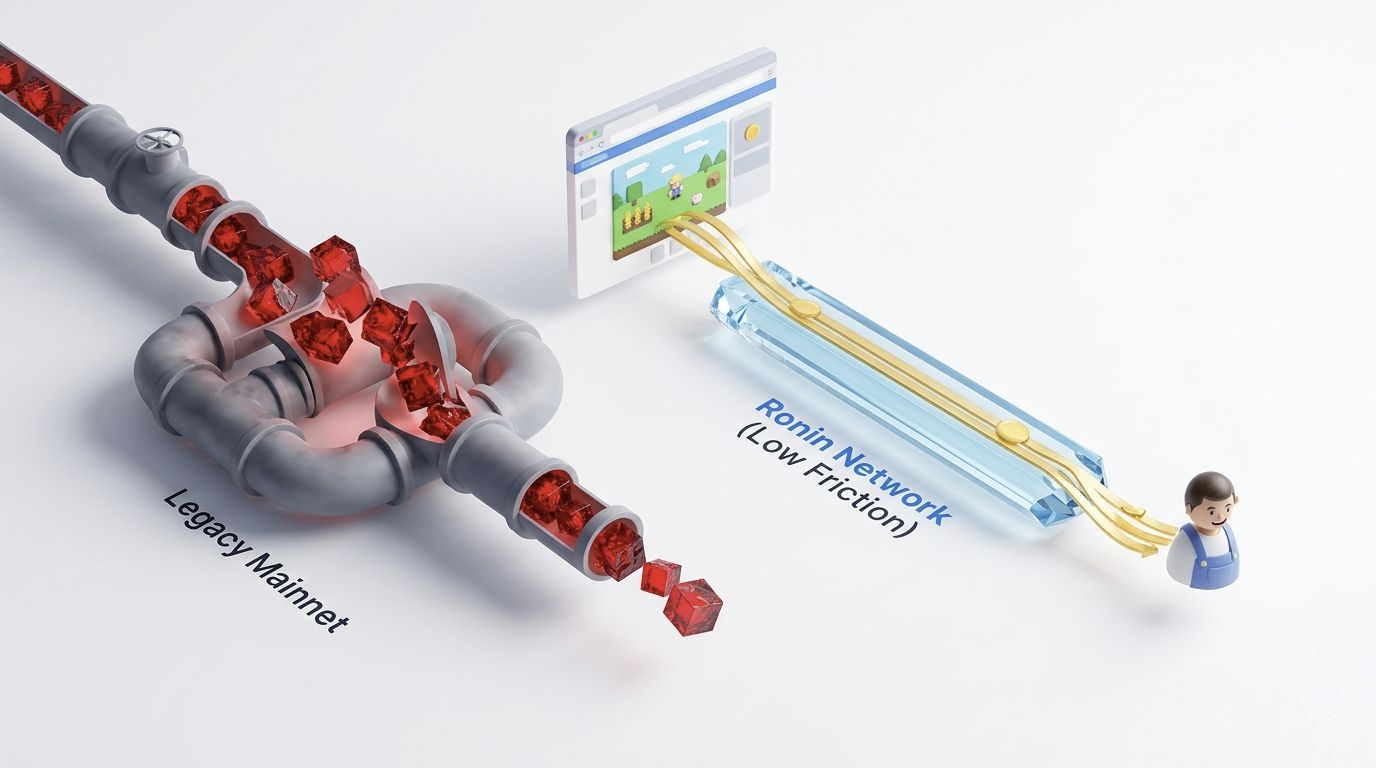
What I find interesting is how the Ronin Network plays into this. Ronin already proved itself through Axie Infinity, but Pixels feels like a second attempt at getting things right. Lower friction, better user experience, and a more grounded economy. Transactions are cheap and fast, which matters more than people think. If every action in a game feels like a financial decision, it stops being fun.
And fun is a weirdly underrated metric in crypto.
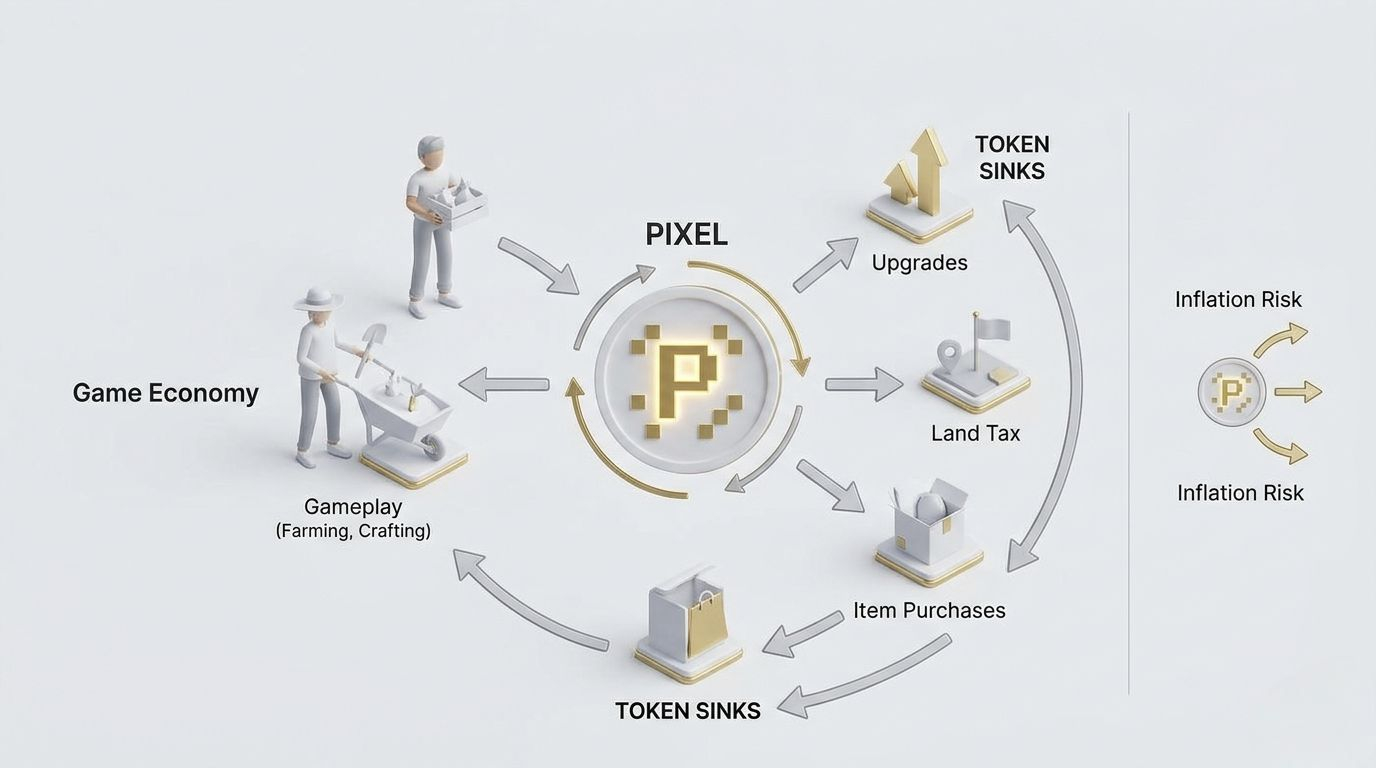
The PIXEL token is where things start to get more nuanced. It’s not just a reward token floating around without purpose. It ties into gameplay in a way that feels more integrated than what we’ve seen in earlier Web3 games. You earn it through in-game activity, but you also spend it within the ecosystem, whether it’s for upgrades, items, or progression.
That circular flow matters. I’ve noticed that projects tend to fall apart when tokens only move in one direction, usually outwards. That’s when inflation kicks in, and suddenly the whole system starts leaking value. Pixels is clearly trying to avoid that by creating sinks for the token, not just sources.
Still, I’m not convinced the balance is perfect yet. These systems rarely are in the early stages. There’s always a risk that rewards outpace demand, especially if user growth spikes too quickly. And in crypto, rapid growth can sometimes be more dangerous than slow growth because it exposes weaknesses faster.
But here’s where it gets interesting. The traction isn’t just theoretical. From what I’ve observed, Pixels has been pulling in real users, not just speculative farmers jumping from one game to another. There’s actual engagement. People are spending time in the game, not just extracting value from it.
That’s a subtle but important shift.
I think part of it comes down to accessibility. You don’t need a high-end setup. You don’t need deep crypto knowledge. You can just… play. And that lowers the barrier significantly. It reminds me a bit of how Web2 games scale, where the focus is on bringing people in first, then monetizing later.
Compared to something like Axie in its peak days, Pixels feels less financialized. There’s less pressure to optimize every move for profit. That changes the psychology of the player. Instead of constantly thinking about ROI, you’re more likely to engage with the game itself.
But of course, the comparison with Axie is unavoidable. Same network, similar audience, overlapping narratives. The difference, at least from my perspective, is that Pixels feels more sustainable in design, even if it’s less explosive in growth. And honestly, that might be a better trade-off in the current market.
What stands out to me is how they’re leaning into community dynamics. Land ownership, social interactions, shared spaces. These aren’t just add-ons, they’re core to the experience. And if they get this part right, it could create a kind of network effect that’s hard to replicate.
Still, I can’t ignore the risks.
Token unlocks are always something I keep an eye on. If supply hits the market too aggressively, it can put pressure on price and sentiment. And in a game where incentives matter, that can quickly ripple through the entire ecosystem. Then there’s execution risk. Building a game is hard. Maintaining it is even harder. Keeping players engaged over months, not just weeks, is where most projects struggle.
Regulation is another layer, especially as Web3 gaming starts to blur the lines between entertainment and financial activity. It’s not an immediate threat, but it’s something that could shape how these ecosystems evolve over time.
And then there’s competition. Web3 gaming isn’t crowded in the traditional sense, but it’s noisy. New projects launch constantly, each trying to capture attention with a slightly different angle. Pixels has momentum right now, but sustaining that momentum is a different challenge altogether.
One thing I didn’t expect to notice, but keeps coming back to me, is how Pixels almost feels like a test case for a quieter version of crypto adoption. Not driven by hype cycles or massive token rallies, but by gradual user engagement. It’s not trying to prove that blockchain gaming can make you rich. It’s trying to prove that it can keep you interested.
That’s a very different goal.
And maybe that’s where the real value is. If a project can hold attention without constantly relying on financial incentives, it’s already ahead of most of the space. Because attention is the hardest thing to earn and the easiest thing to lose.
I keep thinking about where this fits in the broader cycle. If we do move into a stronger bull phase, projects like Pixels could benefit from renewed interest. But at the same time, they might also face pressure to scale faster than they’re ready for. That tension between growth and stability is something every successful project has to navigate.
Right now, Pixels feels like it’s in that early but promising stage. Not fully proven, but clearly doing something right. It’s not trying to reinvent everything. It’s just taking familiar ideas and executing them in a way that feels more aligned with how people actually behave.
And maybe that’s the part that stuck with me the most.
Because for all the innovation in crypto, we sometimes forget that user behavior doesn’t change overnight. People still want simple experiences, clear incentives, and a reason to come back tomorrow. Pixels seems to understand that.
I’m still watching closely. Not rushing to conclusions, not treating it as the next big thing, but definitely paying attention. Because if this model works, even partially, it could quietly reshape how we think about Web3 gaming.

And the question I keep coming back to is this… are we finally seeing the shift from games built for tokens to tokens built around games, or is this just another cycle where things look sustainable until they aren’t?
