

Sitting at a roadside stall in Bangkok eating mango sticky rice, I opened the latest white paper from Pixels. The heat here feels a lot like the frenzy back when Axie skyrocketed, but the document in my hands is as cold as ice. It no longer talks about 'metaverse dreams' or paints a picture of 'playing games to buy villas'. Instead, it’s all about: how I’m going to calculate the accounts, how I’m going to catch you bloodsuckers, how I'm going to turn this game into a ruthless machine focused on acquisition efficiency.
This is actually quite interesting. After all these years of Web3 chain games, finally, an 'honest player' has emerged. It no longer pretends to engage in complex macroeconomic models but directly tears away that layer of warmth, telling everyone: Dude, this is just an on-chain ad mediation alliance dressed in game clothing.
This sense of disillusionment is actually a sign of progress in the industry.
Think back a few years; why did everyone get into chain games? Very few were for those pixel squares or rudimentary battles. Everyone was coming to 'farm gold'. Back then, project teams were happy to play along, issuing tokens as if they were free, as long as there were new investors coming in to take the bait, this Ponzi scheme could keep dancing. But when the tide went out, all that was left were the gold-farming studios without pants and the bewildered retail investors. Pixels’ brilliance lies in its insight into this and its decision to reverse the operation.
What it’s playing now is called RORS, which is the gold-farming ROI.
This term sounds pretty high-end, but if I break it down, it’s just like the casino boss starting to check the surveillance. Before, you could come in and play freely, with the boss tossing coins to treat you. Now, the boss is standing at the door with a calculator, watching you: How much have you deposited in the game today? How many resources have you consumed? If you're just here to leech, sorry, the rewards I give you will definitely be lower than what you put in. If you’re willing to spend real cash, then I might give you a little kickback.
This is what they call the 'North Star Metric'. When a project starts mentioning 'token return rates', it has already transformed from a game factory into an internet acquisition platform.
Pixels’ current logic is very straightforward and effective. It no longer seeks that false, all-robot DAU (daily active users). What it wants are 'high-quality users', meaning those who can bring positive cash flow to the ecosystem. To achieve this goal, it created something called vPIXEL, which I call 'joy beans that can only be spent in the game'.
This joy bean has a spirit of its own. You earned gold and want to cash out? Sure, pay a hefty 'toll', which is that so-called Farmer Fee. If you don’t want to pay the fee, then convert your cash into joy beans, continue spending in the game, or stake it back. It’s like winning chips in a casino; if you want to exchange them for cash to take home, a big chunk will get taken away; but if you want to exchange them for hotel vouchers or meal coupons, the boss will applaud and even give you more.
The design intent of this mechanism is extremely obvious: it’s pulling the plug on those purely looking to farm rewards. It doesn’t welcome those who just want to cash out; it welcomes those willing to stay and cycle within this small closed loop.
So where do those staked coins go? That’s where Pixels is most ambitious. It treats every game that joins its ecosystem as a 'validator'.

In traditional blockchain, validators run nodes to maintain network security. But in Pixels’ eyes, the game itself is the node. When players stake tokens to a game, they’re essentially voting in favor of that game. The more tokens staked, the higher the 'acquisition quota' that game can obtain.
This is not decentralization; this is clearly an extremely efficient ad bidding system.
In the past, game developers had to spend money on Facebook or TikTok to acquire users. Now, as long as you can attract players to stake tokens with you, you can get free traffic support from Pixels’ treasury. This is like a godsend for small game studios. But for Pixels, it feels more like collecting player ROI data.
It’s using this method to filter which games can get players to spend money and which players are most willing to spend in the game.
This is what they call 'precision rewards based on user behavior'. It uses that massive Events API data in the background to record every move you make like a voyeur. When you log in, how many times you click the mouse, how many emojis you send to friends; these behaviors will ultimately be calculated into a score. Higher scores mean more rewards; low-scoring leechers can only get a few crumbs.
This logic, if you’ve worked in a big internet company, will feel incredibly familiar. Isn’t this just the data attribution and acquisition strategies of AppsFlyer or Applovin? It’s just that Pixels has moved all of this on-chain and wrapped it with token incentives.
But what do you call this? It’s honesty that makes you shiver.
In those Web3 projects that are all about 'empowerment', 'vision', and 'redefining production relations', Pixels’ attitude of 'I just want to calculate the accounts' has a certain cold charm. It acknowledges the essence of chain games at this stage: they don’t exist for fun; they exist for efficiency.
It wants to make tokens no longer just a chip that gets hammered down but a type of 'productive material' that circulates within the ecosystem.
But this raises a very real question: if a game becomes this calculated, can it still be fun?
Or to look at it another way: do players really care about whether it’s fun or not?
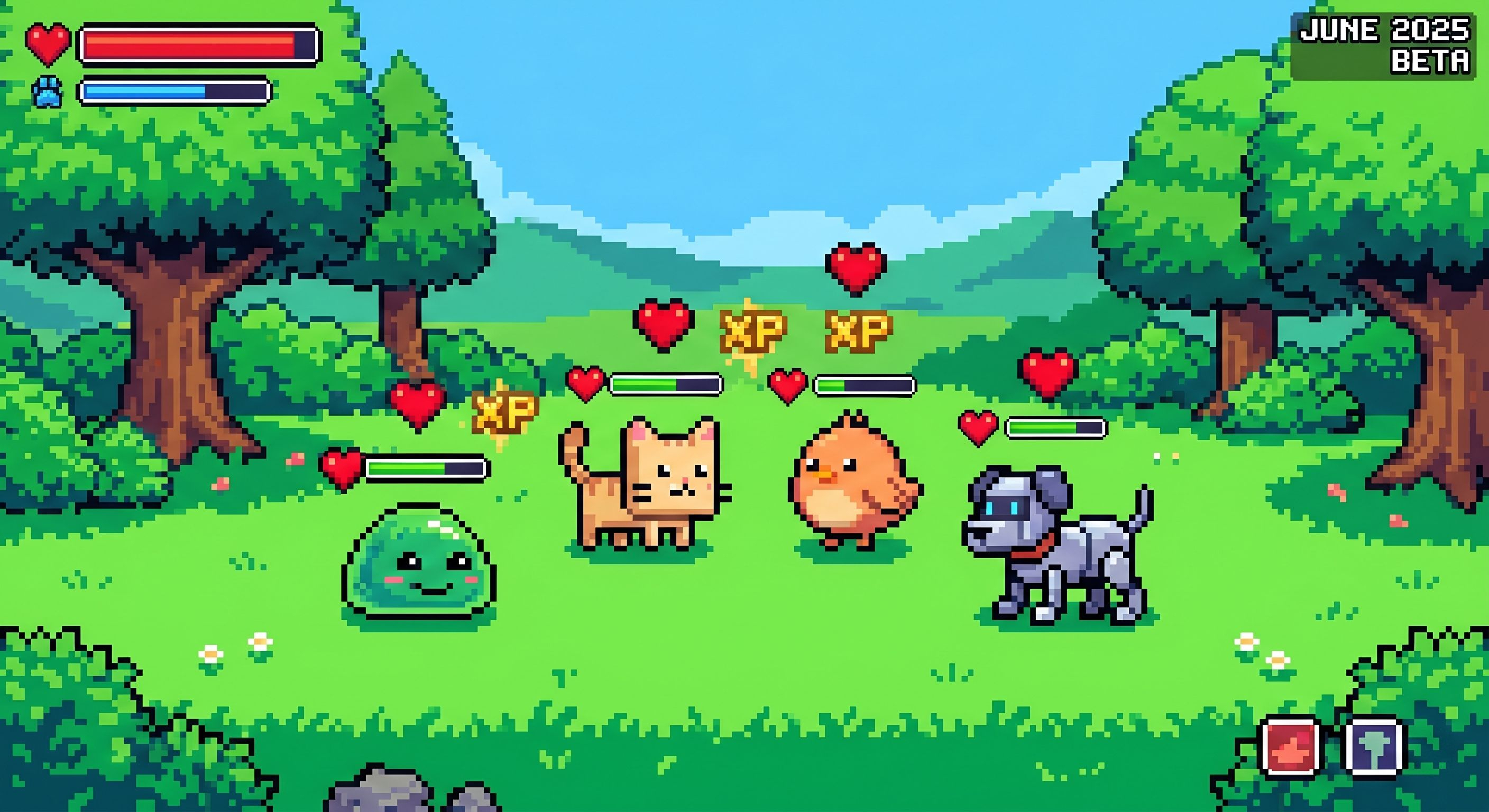
When you stay in this circle for long, you’ll find that most people shouting 'GameFi must be fun' are actually masking their anxiety about making money. Pixels straightforwardly quantifies this anxiety. It tells you that here, all the joy is clearly priced, and all the rewards are based on the data you contribute.
It is turning every player into a cell in its KPI report.
This transformation is quite brutal. It marks the complete end of the 'wild west era' of chain games. The illusion that you could generate huge profits with a simple click is being replaced by this tightly knit acquisition logic. Future chain games may no longer be a ladder to financial freedom, but more like a part-time job that requires careful calculation of 'work-to-ROI'.
Pixels’ current gameplay is essentially betting on one thing. It bets that even if everyone knows they're being calculated, as long as they can figure out that the RORS is greater than 1 formula, and as long as this system can keep running, there will always be a steady stream of new participants.
Because it has created a closed loop. A cold cycle made up of data, tokens, acquisition, and consumption.
Can this cycle last? No one knows. After all, in the Web3 world, human nature is always more complex than code. When you try to counteract human greed with the dullest Web2 business logic, you might also lose the initial vitality that brought people in out of madness.
Lastly, let me share a heartfelt insider thought.
I’ve seen too many tales of grand buildings, lavish feasts, and collapse. Pixels’ white paper feels more like a survivor’s retrospective journal. It teaches everyone how to build a long-lasting, albeit slightly boring, cash-out threshold on this ruin.
It can no longer return to the golden age of FOMO across the net; it is becoming an extremely precise, on-chain abacus.
In this world full of gold-farming vampires, the project team has finally learned to stop listening to stories and just look at the reports. It’s pretty dull, but in this industry, projects that can calculate their accounts clearly often last longer than those that sound good. Just remember, when you next open that pixelated screen, don’t treat it like a refuge.
Beneath that lovely pixel shell, countless algorithms are watching your wallet, calculating your residual value as a 'data tag'. That’s the cold, hard truth of Web3 games.