
Project feels like a small step back from the noise, or maybe just a pause in it. Pixels (PIXEL) sits there on the , not trying too hard to explain itself beyond the basics—farming, exploring, creating, interacting. It sounds simple, almost too simple for a space that usually overexplains everything. But that simplicity is probably the first thing that makes you look twice, not because it’s impressive, but because it’s rare.
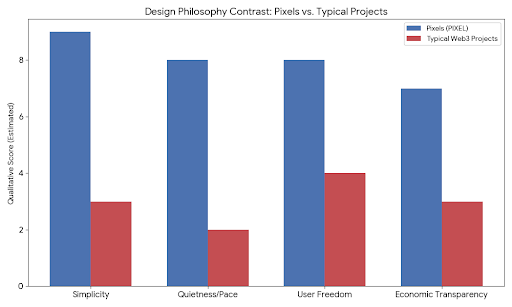
After spending time around these kinds of projects, you start to notice a pattern. Most of them don’t actually want to be slow, even when they claim they do. They build in urgency almost by instinct, like they’re afraid people will leave the moment things get quiet. Pixels leans toward quiet instead, or at least it tries to. And that choice feels less like confidence and more like a reaction to everything else happening around it.
Because the truth is, people are tired of being rushed inside systems that pretend to be games. You log in, you do your tasks, you check your progress, and somewhere along the way it starts to feel less like play and more like upkeep. Pixels seems to come from that exact frustration. It doesn’t try to overwhelm you with complexity. It just gives you a space, a few tools, and lets repetition do the rest.
But repetition is a fragile thing. It can either become comfort or it can become emptiness, depending on what sits underneath it. Farming a plot, walking through the same paths, slowly building something over time—these are not exciting actions on their own. They only start to matter when the world around them feels stable enough to hold meaning. That’s where most projects struggle. Not in creating mechanics, but in creating a place where those mechanics don’t feel temporary.
There’s always this quiet tension in the background. On one side, you have the idea of a living world, something that grows slowly and remembers what people do inside it. On the other side, you have systems that want to measure everything, assign value to it, and keep it moving. Pixels sits right between those two forces, and you can feel it if you pay attention long enough.
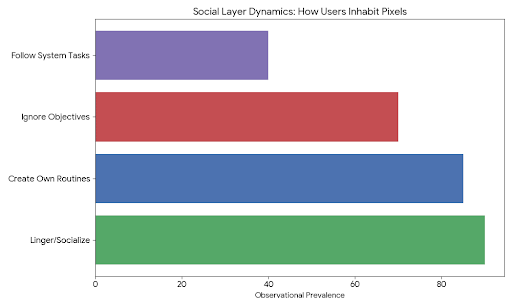
The social layer is where it becomes more obvious. People don’t interact the way designers expect them to. They linger, they ignore objectives, they create their own routines that don’t always align with the system. A good world allows that. A controlled system resists it. Watching how Pixels handles that difference is more interesting than anything written in its description.
Then there’s the economy, quietly shaping behavior whether anyone wants to admit it or not. The moment something has value, even a small one, the atmosphere changes. Actions become decisions. Time becomes something you start calculating instead of just spending. Even in a calm environment, that shift is hard to avoid. It doesn’t break the experience immediately, but it changes its tone in subtle ways.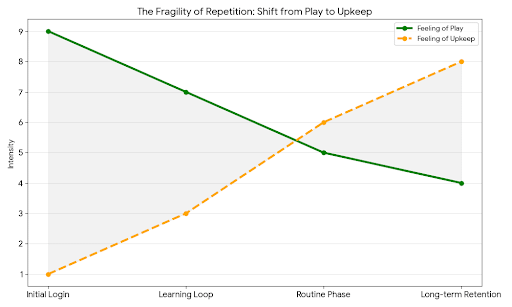
What keeps Pixels from fading into the background is not that it solves these problems. It’s that it doesn’t completely hide them either. It feels like a project that comes from observing what hasn’t worked, even if it hasn’t fully figured out what will. There’s something honest in that, even if it’s not reassuring.
You start to notice the smaller details over time. How long people stay when there’s nothing urgent pulling them forward. Whether coming back feels natural or forced. Whether the world feels slightly different each time or exactly the same. These are quiet signals, but they matter more than any feature list.
And eventually, like everything else in this space, it reaches a point where attention fades a little. That’s when the real version of the project shows up. Not the one described at the beginning, but the one shaped by the people still there, repeating the same small actions day after day. That’s the part you can’t design directly. You can only make space for it and hope it doesn’t collapse under the weight of its own systems.
Pixels feels like it’s trying to make that space, even if it’s not entirely sure how stable it is yet. It’s not loud enough to dominate the conversation, and maybe that’s why it stays in it. Not as a solution, but as something worth watching a little longer than usual.