
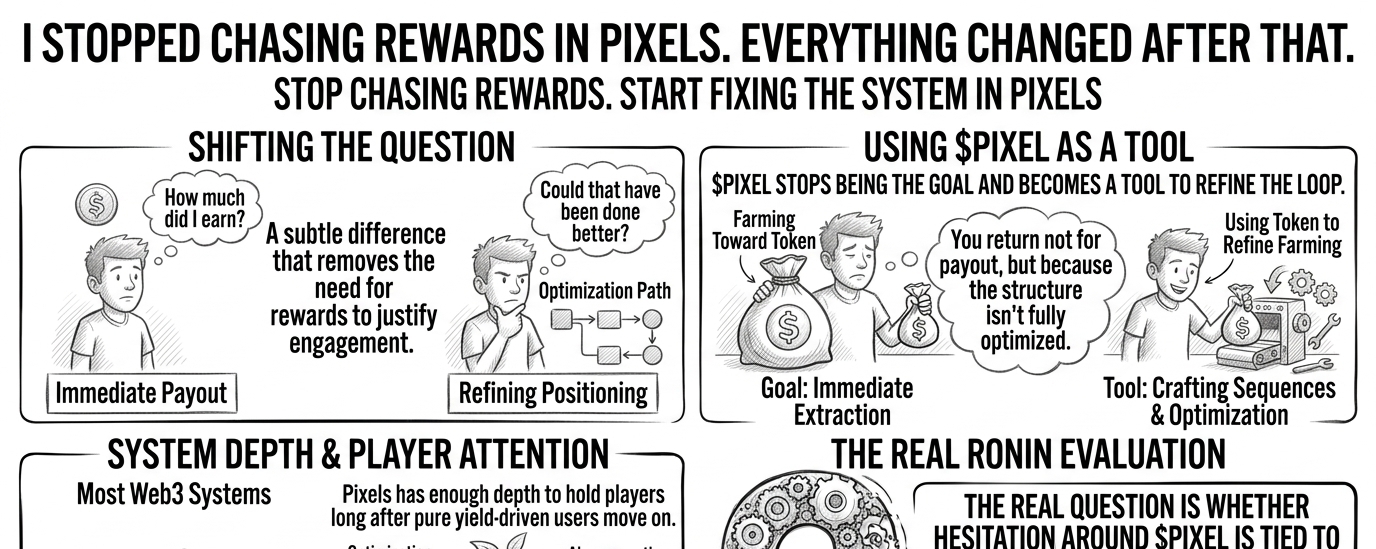
I Stopped Chasing Rewards in Pixels. Everything Changed After That.
I stopped chasing rewards in Pixels. and that’s when the game actually started working.
Stop Chasing Rewards. Start Fixing the System in Pixels
There was a specific session where the way I approached Pixels changed.
before that, the process was routine. log in, identify what pays best, adjust toward it, extract value, leave. it worked. it was efficient. and after a while, it started to feel empty.
then something shifted.
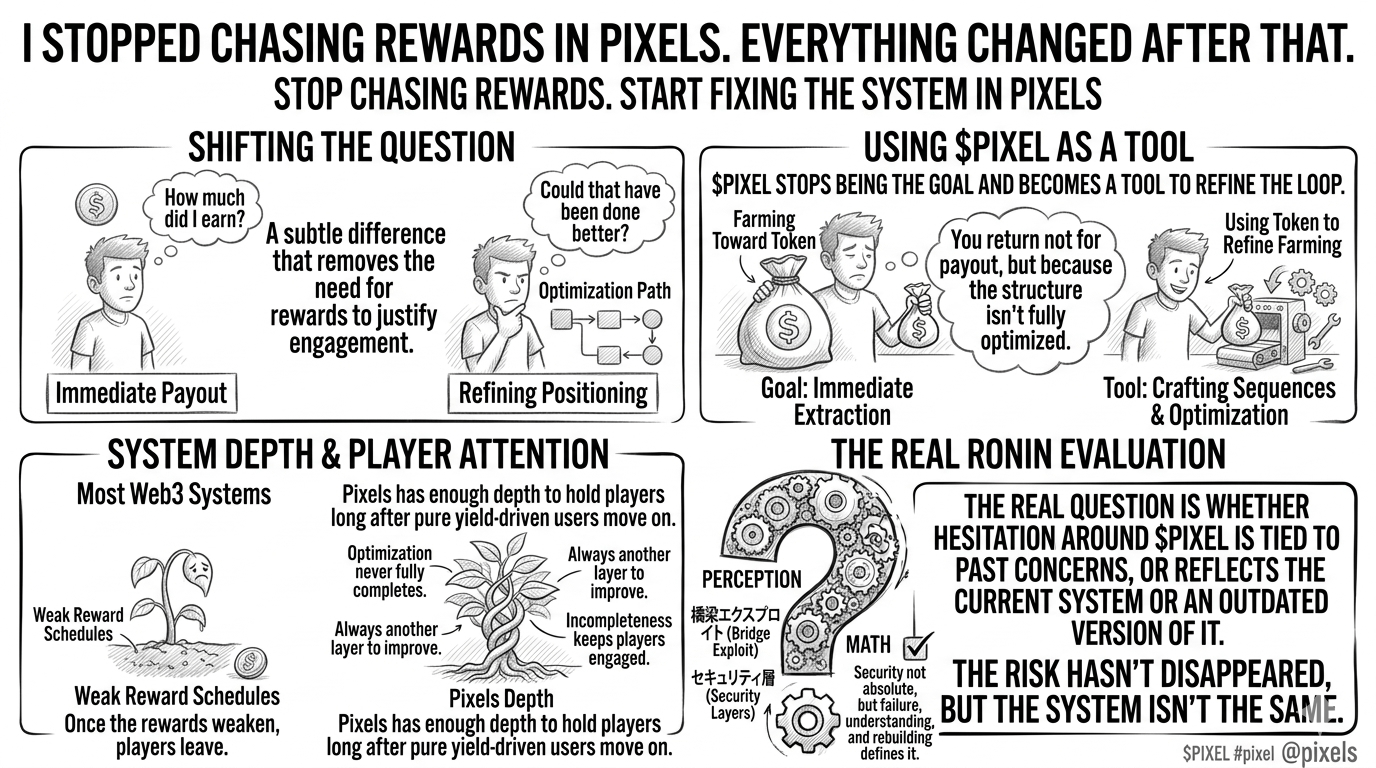
instead of optimizing for immediate returns, I started adjusting for positioning. changing how premium actions were used. rethinking resource timing. planning crafting sequences not for today’s payout, but for what they enabled next.
at some point, the question changed.
it stopped being “how much did I earn.”
it became “could that have been done better.”
that difference is subtle, but it changes everything.
because it removes the need for rewards to justify engagement. you return not for payout, but because something isn’t fully optimized yet. there’s always a better route, a cleaner sequence, a more efficient structure that hasn’t been reached.
that tension creates its own pull.
this is what happens when the system works. stops being the goal and becomes a tool. you’re no longer farming toward the token. you’re using it to refine how you farm.
most web3 systems don’t reach this point. they rely on reward schedules to maintain attention. once the rewards weaken, players leave because there was nothing deeper holding them.
Pixels operates differently.
the loop has enough depth that optimization never fully completes. there’s always another layer to improve. and that incompleteness keeps players engaged long after pure yield-driven users move on.
now, about Ronin.
this part matters more than people admit.
there was a major security incident. ignoring that history doesn’t make sense. the bridge exploit was significant and affected real users.
but what matters more is what followed.
the response wasn’t superficial. validator structure was expanded. additional security layers were implemented. the bridge architecture was rebuilt. these weren’t quiet fixes. they were structural changes visible on-chain.
security in crypto is never absolute. no system is permanently safe.
but there’s a difference between systems that fail and ignore it, and systems that fail, understand the weakness, and rebuild around it.
Ronin now falls into the second category.
for Pixels, this matters because the dependency is direct. the game runs on that infrastructure. if hesitation around is tied to past concerns, the real question is whether that hesitation reflects the current system or an outdated version of it.
the risk hasn’t disappeared.
but the system isn’t the same either.
and that difference is where the real evaluation should happen.
#MarketRebound #StrategyBTCPurchase #WhatNextForUSIranConflict #KelpDAOExploitFreeze $SIREN