
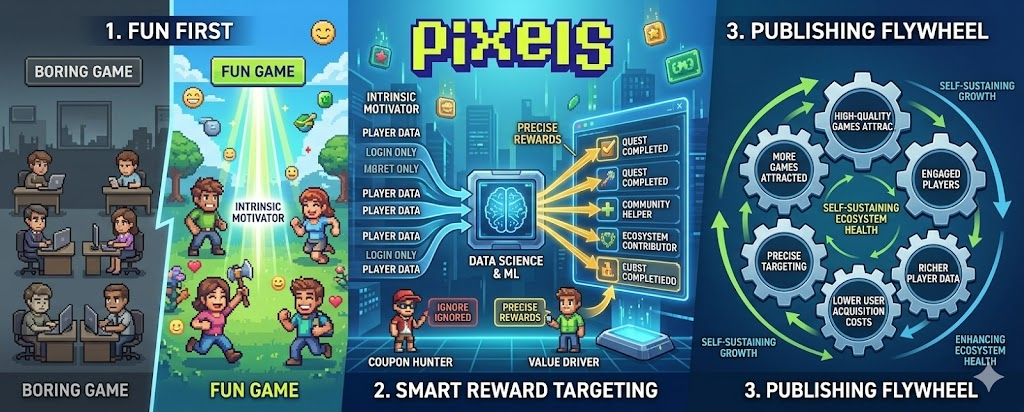
Before we get into the economics, it helps to understand the structure @Pixels says it's built around. Their whitepaper describes three "interconnected pillars" and the first one is deceptively simple:
Fun First sounds obvious, but it's actually a deliberate design constraint. The whitepaper states directly: "No matter how you plan to grow and monetize there needs to be an intrinsic motivator that drives users to use the platform. For games, it's quite obvious games need to be fun."
Think of a juice bar that promises free smoothies if you come in every day. People will show up but only if the smoothies taste good in the first place. If the product is bad, no incentive structure saves it. Pixels is trying to build the good smoothie first, then layer rewards on top.
Smart Reward Targeting is where it gets more technical. Instead of giving everyone equal token rewards just for logging in, Pixels uses data science and machine learning to identify which player actions actually drive long-term value and rewards those specifically.
This is the difference between a loyalty program that gives points for every purchase versus one that gives bonus points only when you refer a friend, write a review, or buy something you've never bought before. One creates spending habits. The other just creates coupon hunters.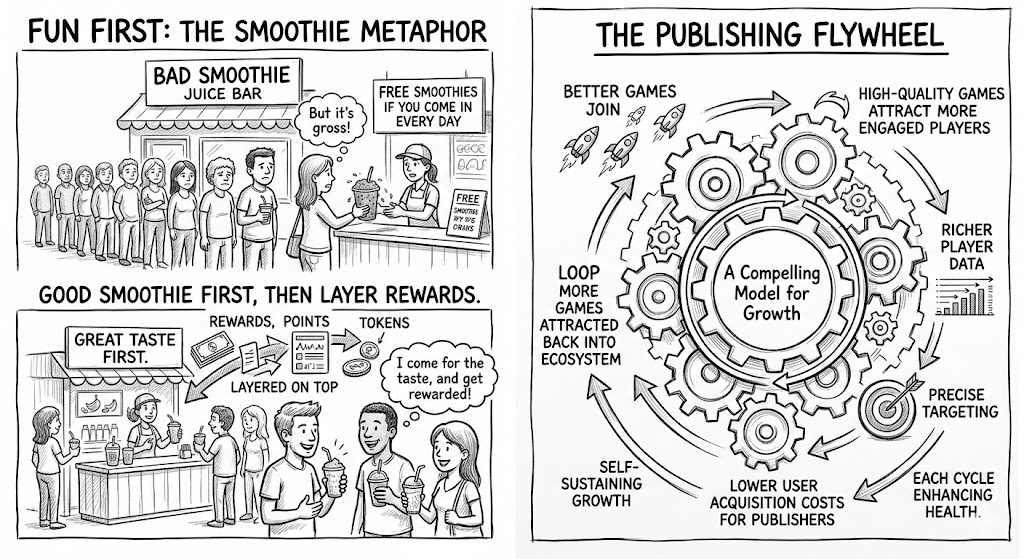
The Publishing Flywheel is the growth engine that ties it all together. Here's how it's supposed to work:
Better games join High-quality games attract more engaged players.
Richer player data : more players = more behavioral insights.
Precise targeting lower user acquisition costs for publishers.
Loop more games attracted back into ecosystem.
The whitepaper describes this as "self-sustaining growth, with each cycle enhancing the ecosystem's overall health." If it works as described, it's a compelling model similar to how app stores or ad networks grow: more publishers bring more users, which makes the platform more valuable to more publishers.