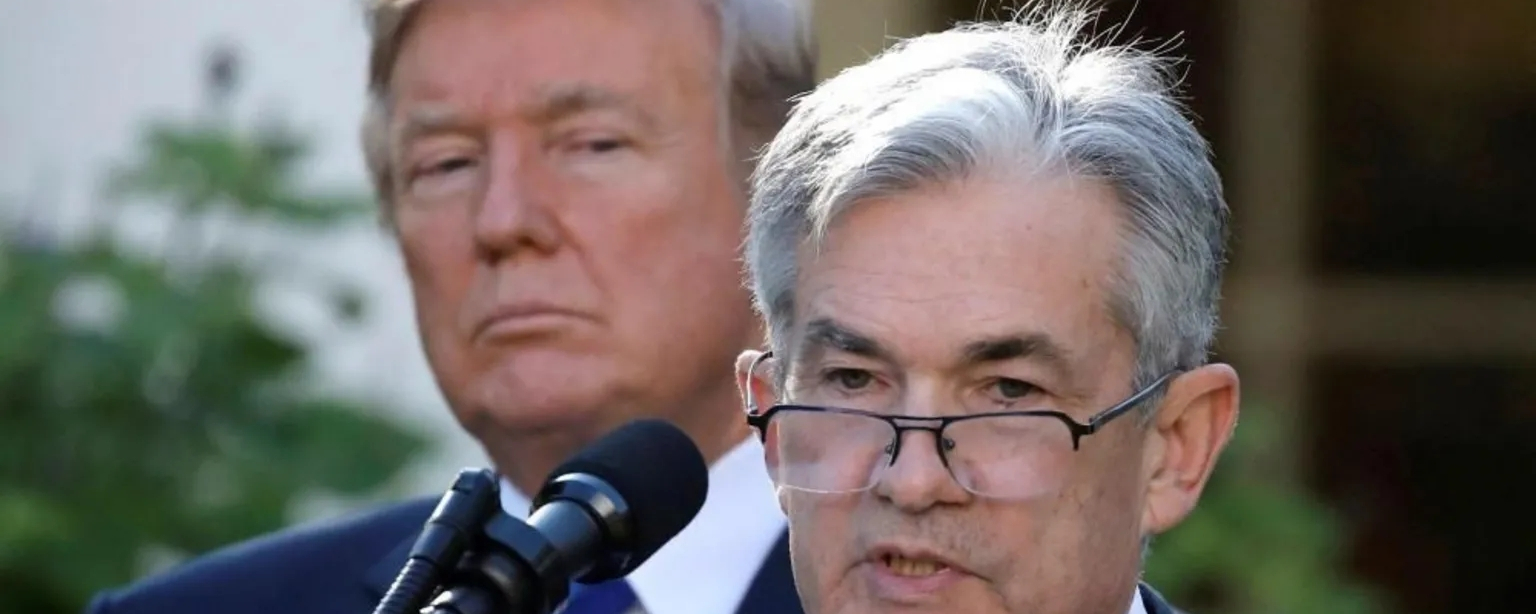
The U.S. Department of Justice has dropped the investigation against Federal Reserve Chair Jerome Powell.
The U.S. Department of Justice is closing its investigation into Federal Reserve Chair Jerome Powell over allegations of exceeding the budget on construction.
U.S. Attorney Jeanine Pirro stated that an internal investigation will be conducted under the supervision of the central bank's Inspector General instead.
President Donald Trump stated that the cost of renovating the Federal Reserve building was too high, part of a long-standing conflict with Powell.
Powell's term is nearing its end, and the U.S. Senate is considering Kevin Warsh's nomination, put forward by Trump, to replace him. Key Republican Tom Tillis is withholding support for Warsh, unless the Trump administration halts the investigation into Powell.
"American taxpayers deserve answers regarding the Federal Reserve's inept financial management, and the more influential powers of the Inspector General's Office will allow it to best address this issue," stated White House Press Secretary Kush Desai in his statement.
"The White House remains confident that the Senate will quickly confirm Kevin Warsh as the chair of the Federal Reserve, which will finally restore confidence and competency in the Fed's decision-making processes."
In her message on X, Pirro stated she would not "hesitate to resume a criminal investigation if circumstances require it."
The Federal Reserve declined to comment.
The Inspector General's office stated that they are "actively working to complete the review and look forward to presenting the results to the public and Congress after its completion," declining to comment on timelines.
After returning to power last year, Trump urged the Federal Reserve to cut interest rates and then began suggesting Powell's dismissal—a move some believe could be illegal.
Amid months of attacks, he called Powell a "dummy" and stated he was "doing a bad job," after his repeated calls for rate cuts were ignored.
Last summer, Trump criticized the skyrocketing costs of the renovation, claiming it would cost $3.1 billion (£2.3 billion), significantly above the Fed's projected $2.5 billion. The Fed stated that the renovation would reduce its expenses over time.
In January, Powell took the highly unusual step of releasing a video stating that the Justice Department had served the Federal Reserve with subpoenas and threatened criminal charges for his testimony to the Senate Committee regarding the Federal Reserve's building renovations.
Calling the investigation "unprecedented," Powell stated that he believes it was initiated due to Trump's dissatisfaction with the Fed's refusal to lower interest rates, despite repeated public pressure from the president. Trump stated he knows "nothing" about this investigation.
This was the first time Powell publicly and firmly opposed the U.S. president, warning that the independence of the U.S. central bank is at risk.
"It’s about whether the Federal Reserve can continue to set interest rates based on actual data and economic conditions, or whether monetary policy will be dictated by political pressure or intimidation," Powell said.
Lowering interest rates makes borrowing cheaper, while raising rates curbs consumer activity, aiding price stabilization.
Trump, who started his professional career with loans as a developer, has long acknowledged that he prefers low-interest rate policies.
He opposed the Federal Reserve's interest rate hikes during his first term and argued that maintaining rates too high could cause unnecessary economic harm.
Why does Trump continue to attack the central bank of the U.S.
Currently, the buildings of the Federal Reserve are being renovated: the Eccles building and the building at Constitution Avenue, 1951. "The renovation and modernization" will be the first work done since their construction in the 1930s and includes removing asbestos and lead contamination.
In 2017, during his first presidential term, Trump nominated Powell as chair of the Federal Reserve.
Last week, Trump threatened to fire Powell if he doesn't resign at the end of his term next month.
Powell's term expires on May 15, but he plans to remain in his position until the Senate confirms his successor, Warsh.