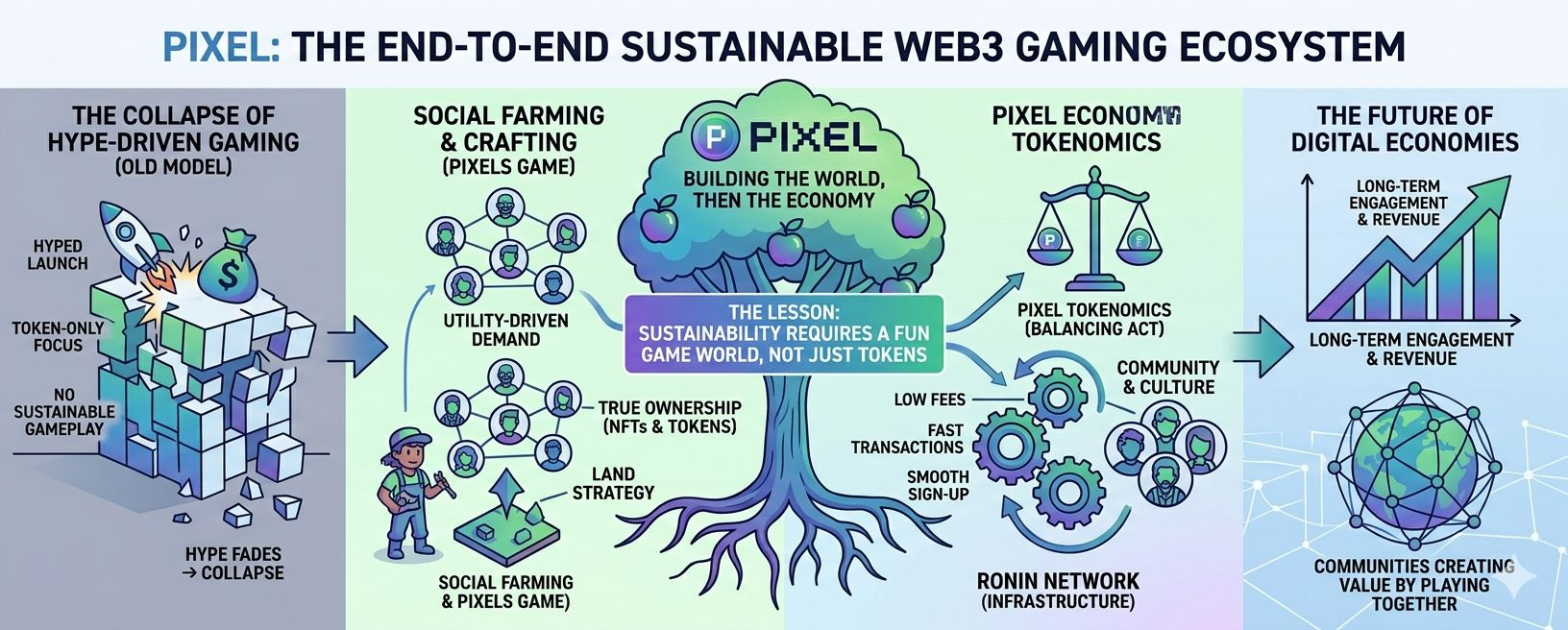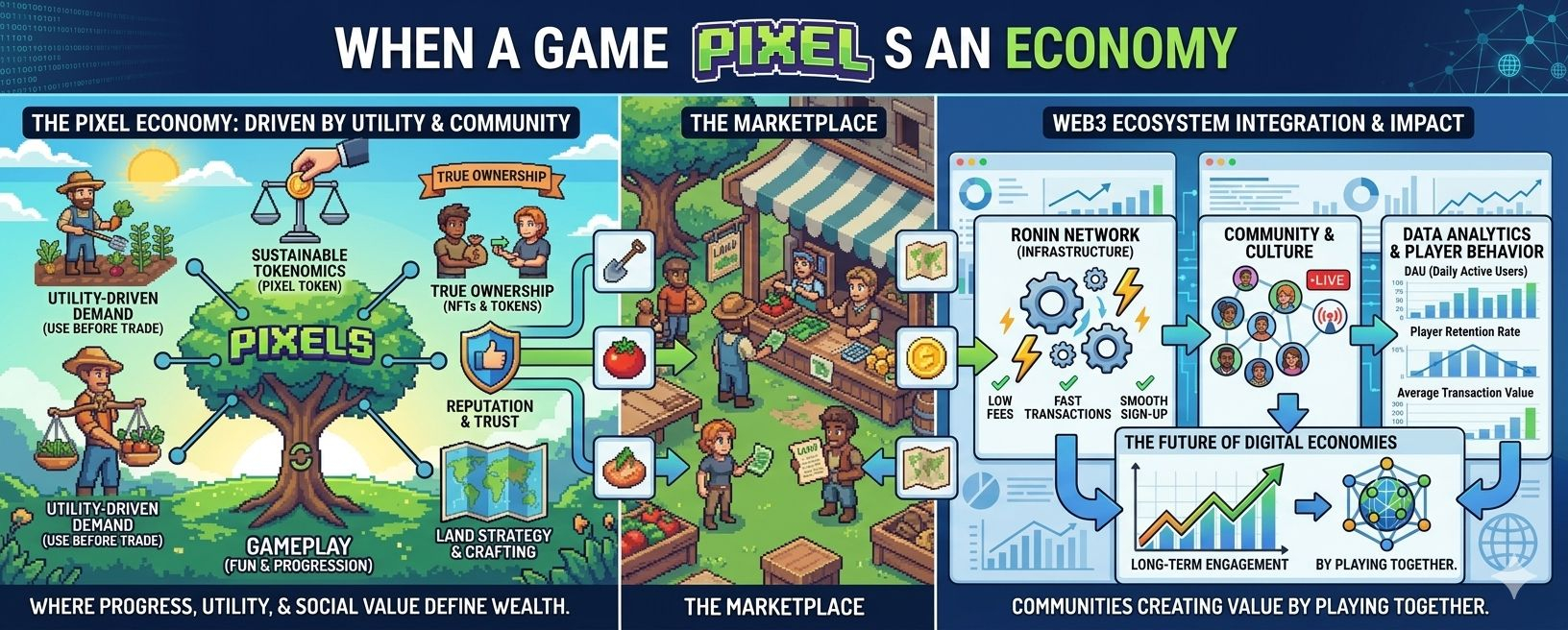
For a time Web3 gaming promised a lot: players would really own the things they earned trade things freely and be part of open digital economies.. Many early blockchain games did not deliver. They did not make fun games. Instead they focused on people buying and selling tokens, simple gameplay and hype that did not last. They made places to buy and sell things before they made the game world. This meant they got people who just wanted to buy and sell things, not people who wanted to play. The lesson was clear: owning something is not worth much if the game is not fun.
That is why PIXEL is important. It shows a mature way of doing Web3 gaming. This way the gameplay, keeping players, community and economics that work in the term are just as important as the tokens. PIXEL is built around a game called Pixels, which's a social farming game that uses the Ronin Network. The project focuses on what games should focus on: being fun letting players progress and having meaningful interactions.
In games the value of things is locked inside systems that the game company controls. Players can spend years collecting things building characters or getting good at the games economy. They do not really own those things. They cannot take them out of the game. Use them somewhere else.
Web3 gaming tried to fix this by using wallets, NFTs and tokens. But many projects did not understand something just because something is a token does not mean it is valuable. Things are valuable when they are part of a game world that players really care about. In these worlds progress how rare something is, who you are, what people think of you and what you can do with something all matter.
If players do not care about the game or it is not fun then owning things is not worth much. This is why many blockchain games failed when the rewards stopped. They got people who just wanted rewards, not people who wanted to play with others.
PIXEL tries to do things. It starts with the game world then adds the economy.
At first Pixels looks like a farming game with blocky graphics. Players grow crops, collect resources, complete quests and explore a world.. Under the simple look there is a deeper social economy.
Who owns the land matters. What you can make matters. What people think of you matters. Working together matters. The time you spend in the game makes things that last. Players are not just doing the tasks over and over. They are part of a living world.
This design is important because it makes the game easy to start playing but still fun for people who play a lot. Players who just want to have fun can. Explore, while players who want to get really good can try to optimize things think about land strategy and trade.
PIXEL is like the money system of the game world. In any game world that works there needs to be a way to reward players for what they do control inflation pay for development and make sure the community is working together.
If used correctly the token is like a connection between players, landowners, creators and developers. This is different from tokens that're just for buying and selling. Tokens that are used in the game can create demand because players actually use them not because of hype.
The future of gaming tokens will probably be in game worlds where people use them before they trade them.. Pixel fits that idea.
The technology behind the game can. Break it. Earlier Web3 games had problems like fees, slow transactions and complicated sign-up processes. For games these problems are fatal.
The Ronin Network was made for game economies so it has lower fees, faster transactions and a smoother experience. This matters because games need a lot of actions: moving items making things buying and selling and getting rewards.
If players are always aware of the blockchain technology then the game has failed. Pixels benefits from being on a network that is made for games so the technology stays in the background.
Games are communities before they are technology. Pixels has built a community of players who share strategies stream their gameplay invite friends and talk about opportunities. This turns the game into a culture.
Culture gets better over time. It helps keep players attracts creators and gives the game world legitimacy beyond its price. In games feeling like you belong is often more important than rewards.
PIXEL matters because it came out after the hype of Web3 gaming was gone. It came out in a time when people were more skeptical and projects had to earn trust by being fun not just, by making promises.
Its importance is not that it uses blockchain technology. Many projects did that. Its importance is that it uses blockchain technology to make a game world that people actually want to spend time in.
That might be the future of digital economies. Not tokens looking for a use but communities creating value by playing together.