
In today’s fast-evolving digital world, I have come to realize that learning about Web3 ecosystems and understanding how virtual economies work is no longer optional—it’s essential. One project that truly captured my attention is Pixels. At first glance, it may look like a simple pixel-art farming and fishing game, but when I explored deeper, I understood that it represents something much bigger: a growing ecosystem where gameplay, economy, and real value are interconnected.
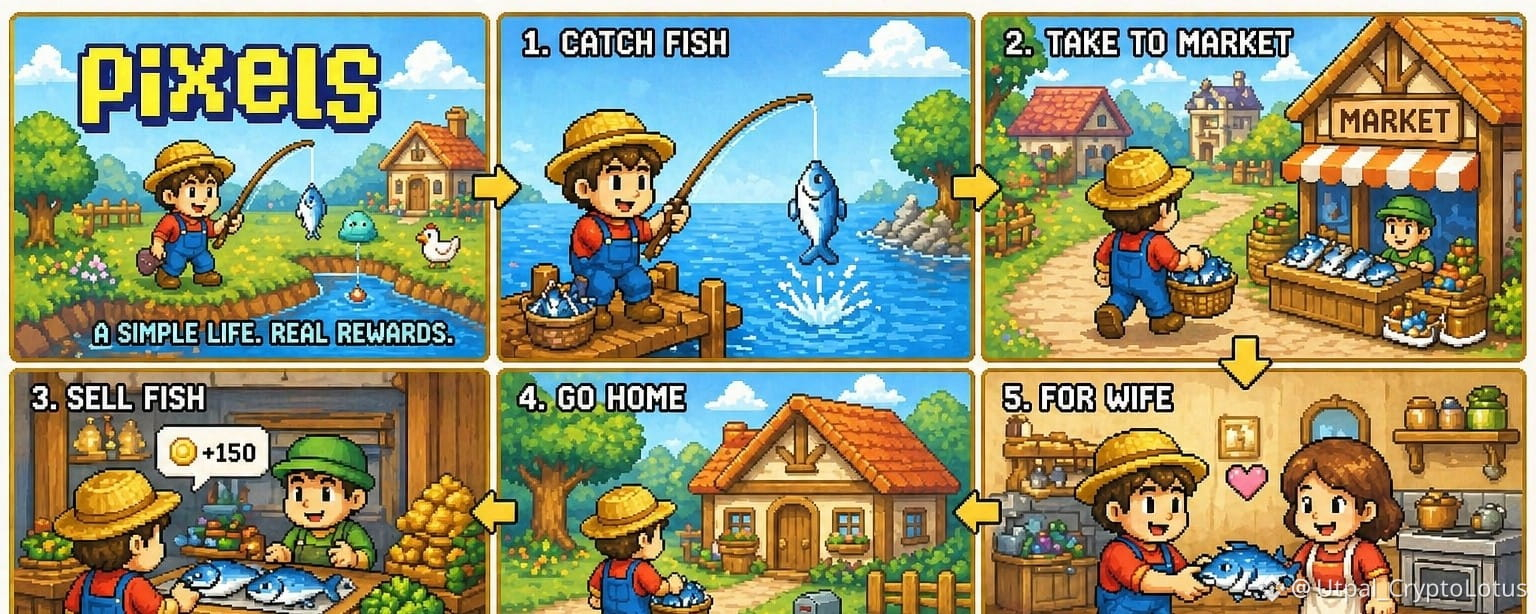
The image above perfectly reflects this idea through a simple yet meaningful storyline. It shows a cycle—catching fish, selling them in the market, returning home, and enjoying life with family. On the surface, it feels like a peaceful life simulation. But if we look closely, it actually mirrors how the Pixels ecosystem works in reality.
In Pixels, every action has value. When a player catches fish or farms resources, they are not just completing a task—they are participating in an economy. These resources can be traded, sold, or used within the game, creating a continuous loop of earning and spending. This is what makes Pixels different from traditional games. Instead of playing just for entertainment, players are contributing to a digital economy that has real potential.
The first step shown in the image—catching fish—represents resource generation. In the Pixels ecosystem, this is similar to how players gather materials, farm crops, or collect items. These activities are simple but essential, as they form the foundation of the entire economy. Without production, there is no trade.
The next step—taking fish to the market—highlights the importance of marketplaces within the ecosystem. Pixels allows players to sell their resources, interact with others, and participate in a player-driven economy. This is where Web3 truly shines. Unlike traditional games where assets are controlled by developers, here players have ownership. They can decide what to sell, when to sell, and at what price.
Selling the fish in the image symbolizes earning rewards. This is one of the most attractive aspects of Pixels. Players are not just spending time; they are potentially generating value. It creates a sense of purpose and motivation that traditional gaming often lacks. The idea that effort can translate into rewards makes the experience more engaging and meaningful.
But what I find most interesting is what comes after earning. The image shows the character returning home and sharing with family. This is a powerful message. It reminds us that the goal is not just earning—it’s about improving life. Pixels subtly teaches balance. Yes, we can earn, trade, and grow within the ecosystem, but the ultimate goal is happiness and fulfillment.
The steps showing eating together, resting, and enjoying life represent sustainability. In many fast-paced digital environments, people focus only on profit. But Pixels introduces a different perspective. It encourages a cycle: work, earn, rest, and enjoy. This makes the ecosystem feel more human and relatable.
Another important aspect of Pixels is its community. Just like the marketplace in the image, the ecosystem thrives on interaction. Players are not isolated; they are part of a larger network. They trade, collaborate, and sometimes even compete. This creates a dynamic environment where opportunities are constantly evolving.
From a broader perspective, Pixels is a great example of how Web3 gaming is shaping the future. It combines entertainment with economic opportunity. The pixel-art style may feel nostalgic, but the underlying system is modern and innovative. It shows how simple concepts can be transformed into powerful ecosystems when combined with blockchain technology.
Personally, learning about Pixels has helped me understand how digital economies function. It has also improved my ability to analyze trends and think strategically. Just like reading candlestick charts in trading, understanding game ecosystems requires observation, patience, and decision-making. Every move matters.
The message at the end of the image—“Play. Earn. Live Happy.”—perfectly summarizes the philosophy of Pixels. It’s not just a slogan; it’s a complete cycle. Play represents participation, earn represents value creation, and live happy represents the final goal.
In conclusion, Pixels is more than just a game. It is a living ecosystem where players can explore, earn, and grow. The image beautifully captures this journey in a simple and relatable way. From catching fish to living a happy life, every step reflects a deeper meaning. For me, this project is not just about gaming—it’s about understanding the future of digital interaction and economic systems.
As I continue to explore and learn, I believe projects like Pixels will play a major role in shaping how we view work, play, and value in the digital age. And this is just the beginning.#pixel @Pixels (https://www.binance.com/en/square/profile/pixels)