
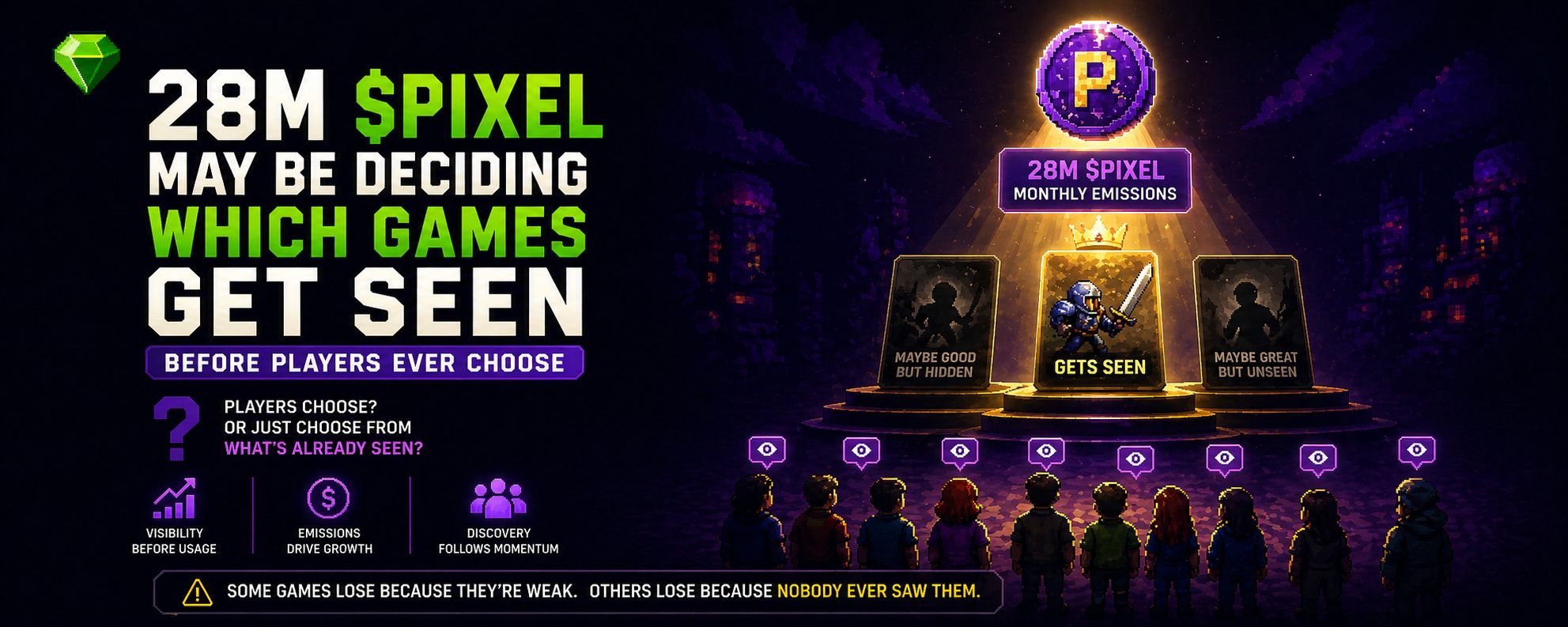
28M $PIXEL a month sounds like rewards on paper, but the deeper shift may be this: some games could gain visibility before users ever touch them.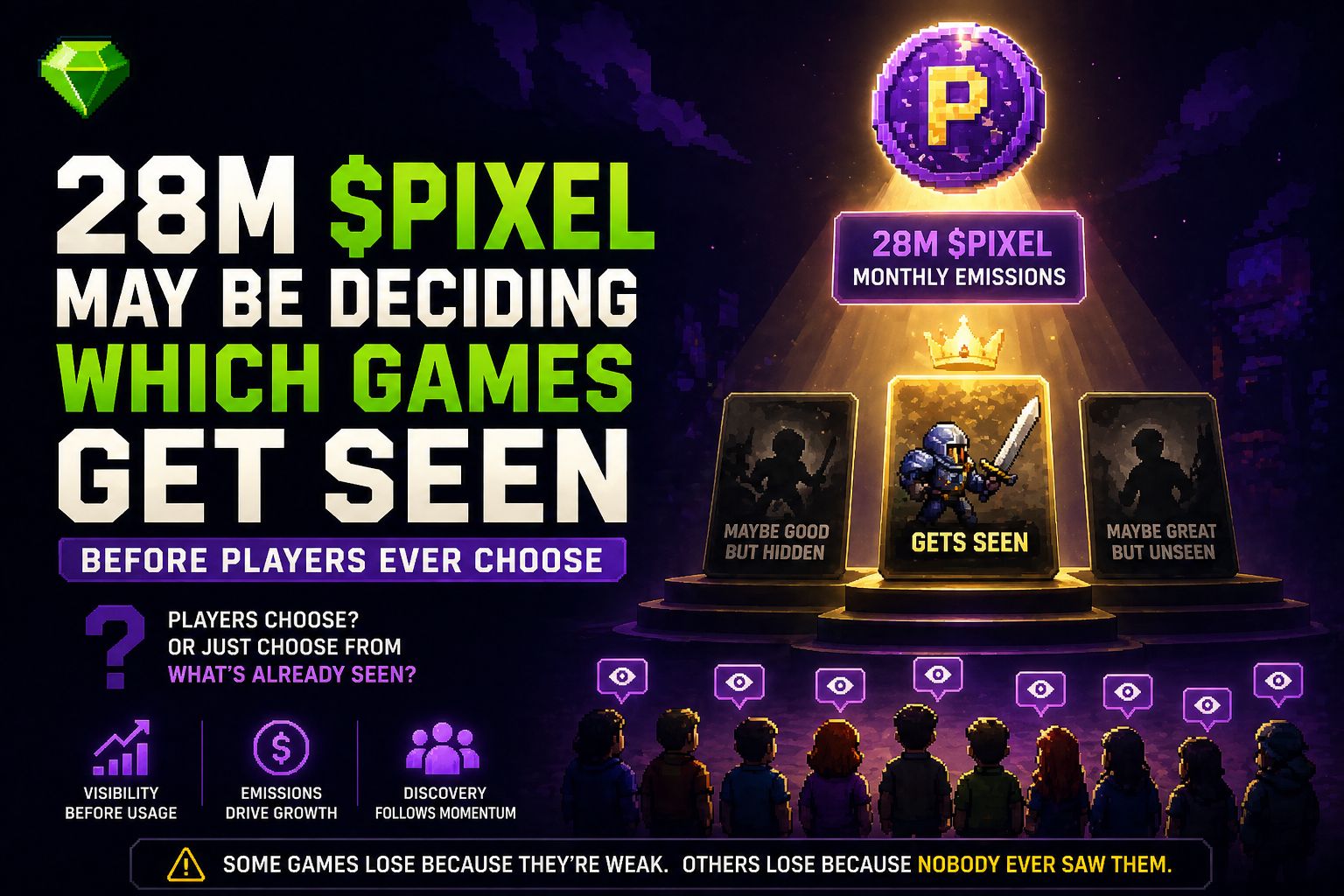
been going through the staking rollout section of the @Pixels whitepaper and the later phases look less like simple emissions, more like an attention market built into funding.
Phase 1 was fixed allocations. Core Pixels received 20M, Forgotten Runiverse received 5M, and Pixel Dungeons received 2M. simple model, selected projects got budget first.
but later phases move some of that power outward. Dynamic Pools use total staked weight, while Open Pools let games compete if they meet gates like RORS ≥1 or minimum DAU thresholds.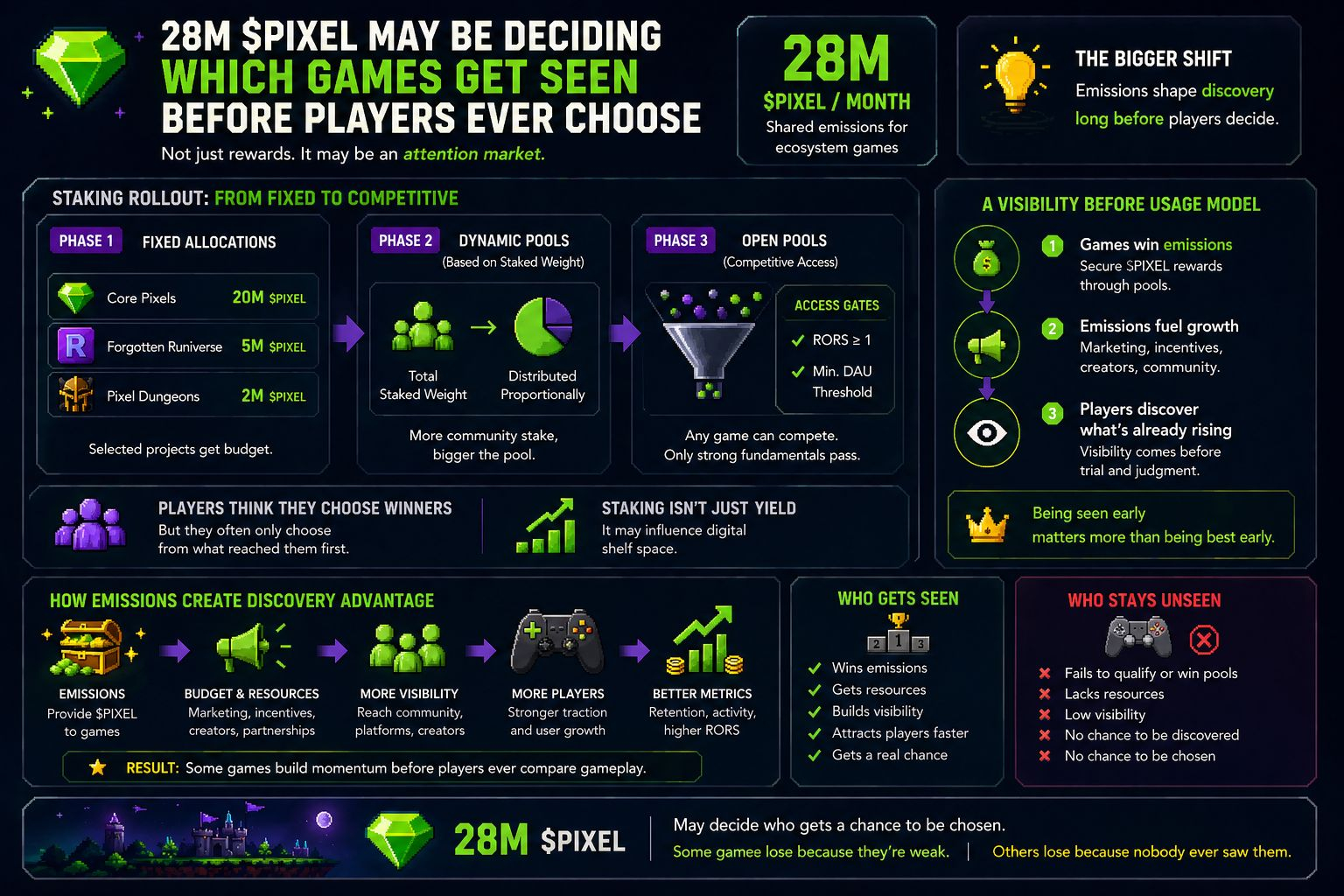
that creates what Id call a Visibility Before Usage Model.
first, games may win emissions. then emissions can fund growth. then players discover what already had momentum.
because in gaming, being seen early often matters more than being best early. that may be the bigger edge.
players usually think they choose winners, but often they only choose from what reached them first.
so if rewards increase marketing budget, community incentives, creator reach, or retention loops, emissions may shape discovery before gameplay gets judged.
that means staking is not only about yield. it may quietly influence digital shelf space.
yes, better-known names may start ahead, but smaller teams with strong communities could also break through faster than in closed publisher models.
either way, the real competition may begin before launch day. not when users compare games, but when ecosystems decide which games become visible enough to compare.
so 28M $PIXEL may not only reward projects, it may help decide who gets a chance to be chosen at all.
some games lose because they were weak, others lose because nobody ever saw them.