
I used to ignore those small “watch this to skip the wait” buttons in games. Not out of principle. It just felt like extra friction dressed up as a shortcut. But after a while, I noticed something uncomfortable. I wasn’t avoiding them because they were useless. I was avoiding them because I didn’t like how easily they worked on me. Give me a timer, then offer a way around it, and suddenly I’m making a decision that feels small but repeats more than I expect.
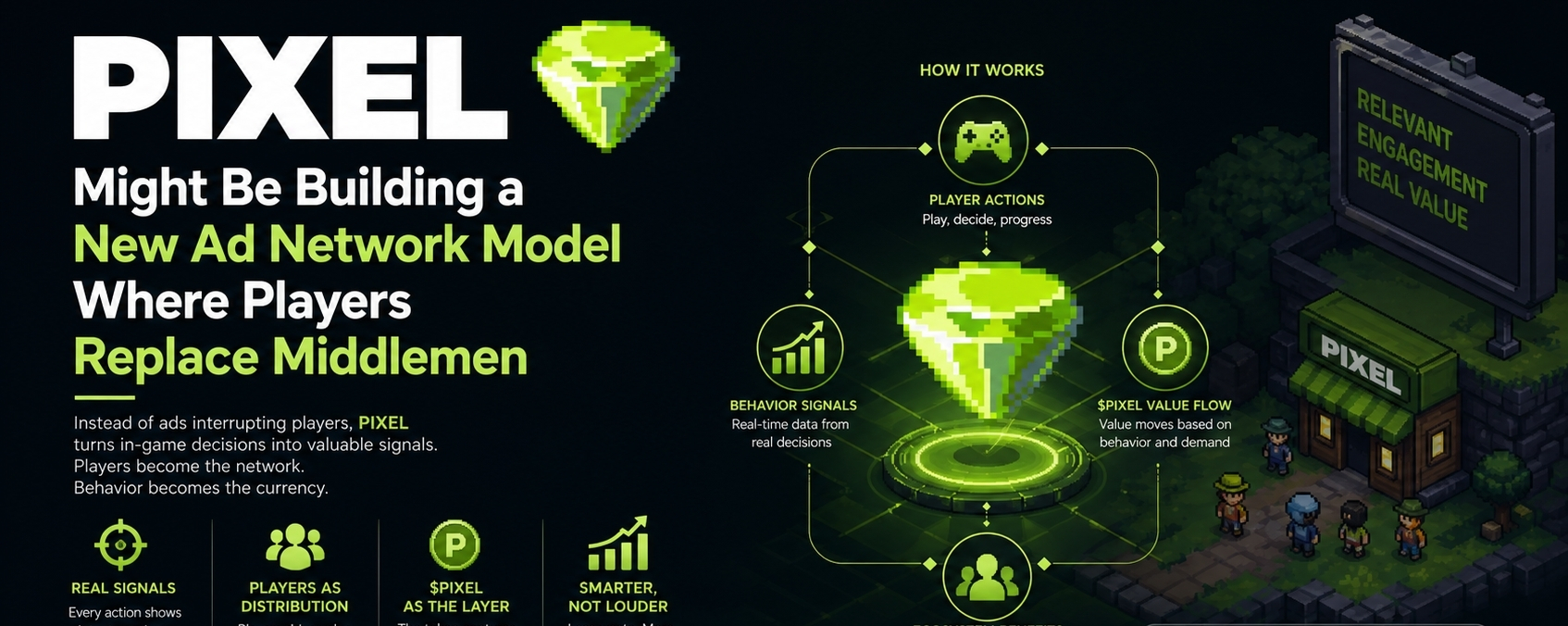
That’s been sitting in the back of my mind while looking at Pixels. At first glance, it looks like a normal play-to-earn loop with a token layered on top. Do actions, earn rewards, move forward. Nothing new. But the longer I watch how players behave inside it, the less it feels like a simple reward system. Something else is being measured quietly. Not just activity, but which actions people are willing to pay to change.
Traditional ads are noisy. You see them, you ignore them, sometimes you click by accident. There’s a whole structure behind that process. Brands pay, platforms distribute, middle layers optimize targeting. It’s messy, and a lot of money gets spent trying to guess what someone might care about. Most of the time, it misses.
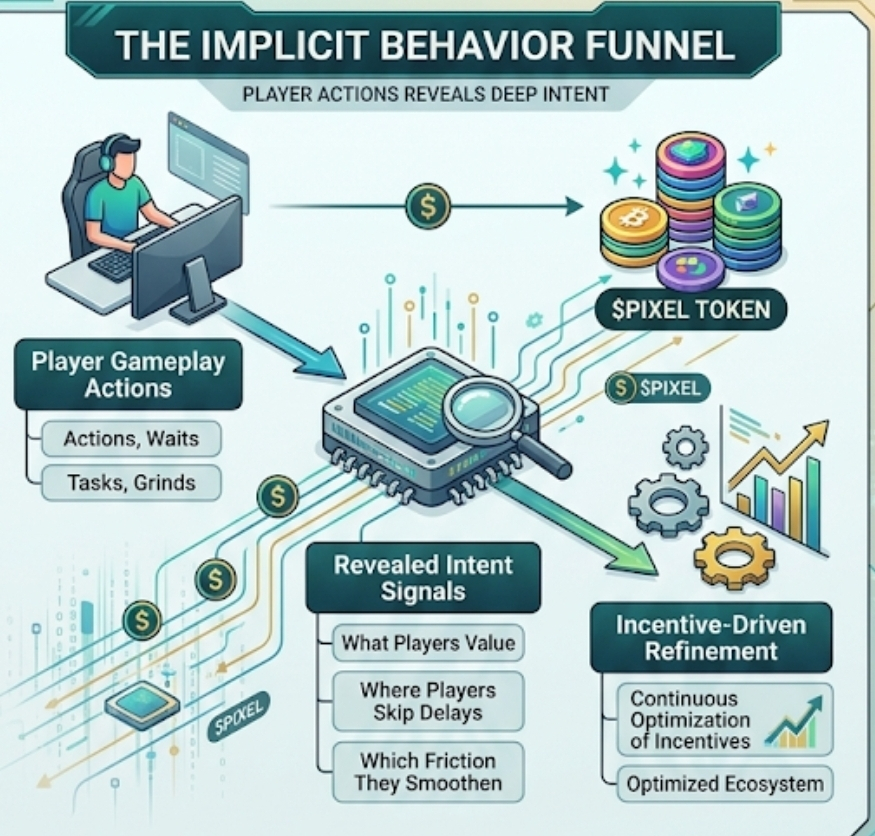
Pixels doesn’t need to guess in the same way. It already sees where players slow down, where they hesitate, where they repeat the same task again and again. That information isn’t inferred. It’s happening inside the system. And when a player uses $PIXEL to skip a delay or smooth something out, that action carries more weight than a random click ever could. It’s not curiosity. It’s a small commitment.
I think this is where the idea starts to shift. Instead of ads pushing messages toward players, the system pulls signals out of players. The behavior itself becomes the useful part. You don’t need a banner if you can see, directly, what someone values enough to spend on. It’s quieter than advertising, but probably more precise.
There’s a strange side effect here. Players start doing what middlemen used to do, without being told. In older ad systems, intermediaries existed because no one had a clear view of user intent. They stitched together data, tried to predict outcomes, sold access to attention. Here, the player’s actions already reveal that intent. No stitching needed.
But it doesn’t feel like “being part of an ad network” when you’re inside it. It feels like playing normally, making small decisions to improve your experience. That’s what makes it easy to overlook. The system doesn’t interrupt you to show something. It reshapes your path so that certain decisions become more likely than others. You follow that path because it works, not because you were told to.
I’ve seen something similar, oddly enough, on Binance Square. The way posts gain visibility there isn’t random. You start noticing patterns. Certain tones get pushed more. Certain structures seem to hold attention longer. Over time, creators adjust. Not consciously at first. Just small tweaks. Shorter sentences here, sharper hooks there. Eventually the writing starts bending toward what the system rewards. No one calls it advertising, but attention is still being guided.
Pixels might be running a comparable loop, just with gameplay instead of content. Instead of asking “what gets clicks,” it’s asking “what gets repeated.” That difference matters. Repetition is harder to fake. If someone keeps choosing the same shortcut, the system learns something stable about them. And if enough players behave in similar ways, those patterns start to look like something you can build around.
There’s a practical upside. Less waste. In theory, value flows toward actions that actually matter to users, not toward impressions that may or may not mean anything. It’s cleaner than the old model. More direct.
Still, I can’t fully shake the feeling that something gets blurred here. When behavior becomes the signal and the product at the same time, it’s harder to separate what you want from what the system has learned to encourage. You think you’re just saving time. Maybe you are. Or maybe you’re being nudged into a loop that looks efficient but mainly benefits the system’s own structure.
And if players are replacing middlemen, they’re also absorbing some of the uncertainty those middlemen used to carry. In a traditional setup, if an ad campaign fails, the loss sits with the advertiser or the network. Here, misaligned incentives might show up as wasted tokens, or habits that feel useful but don’t really go anywhere long term. It’s less visible, but probably not less real.
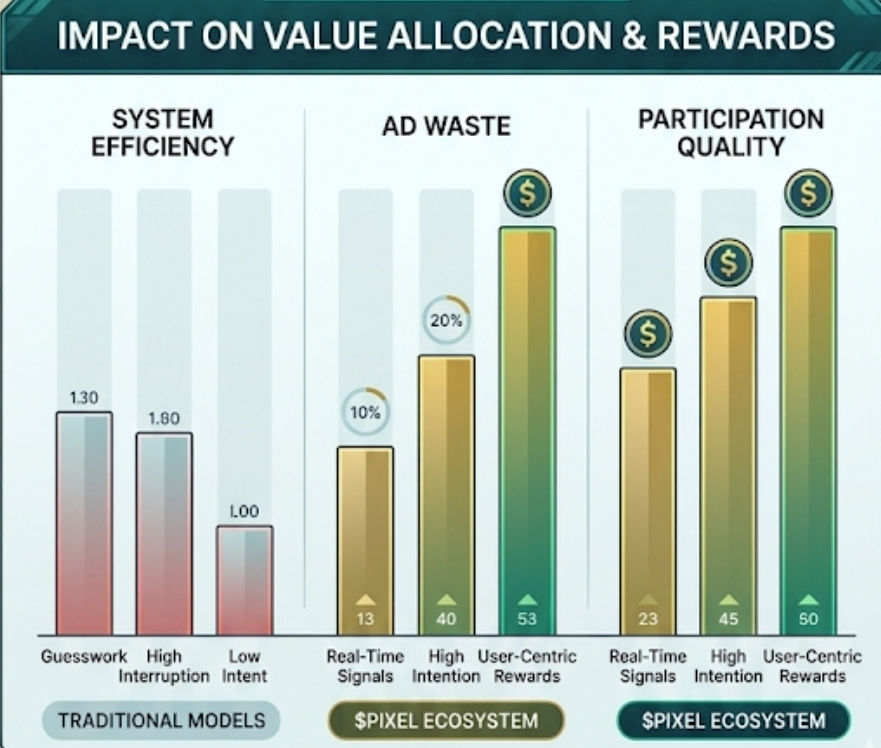
I don’t see $PIXEL as an ad network in the usual sense. There are no obvious ads, no clear buyers and sellers in that format. But the function starts to overlap. Attention is being shaped. Behavior is being measured. Value is moving based on those signals.
What I keep coming back to is how natural it feels from the inside. Nothing looks forced. You just play, adjust, repeat. And somewhere in that loop, the system learns what to prioritize next. The question is whether players are aware of how much of that loop they’re actually driving, and how much of it is quietly driving them back.