#pixel @Pixels $PIXEL I didn’t take it seriously at first.
A farming game. Pixel graphics. Social layer. I’ve seen this loop before something soft and approachable on the surface, but usually held together by incentives that don’t survive contact with reality. People show up for tokens, not tomatoes. And when that balance tips, the whole thing starts to feel hollow pretty quickly.
Pixels felt like that at a glance.
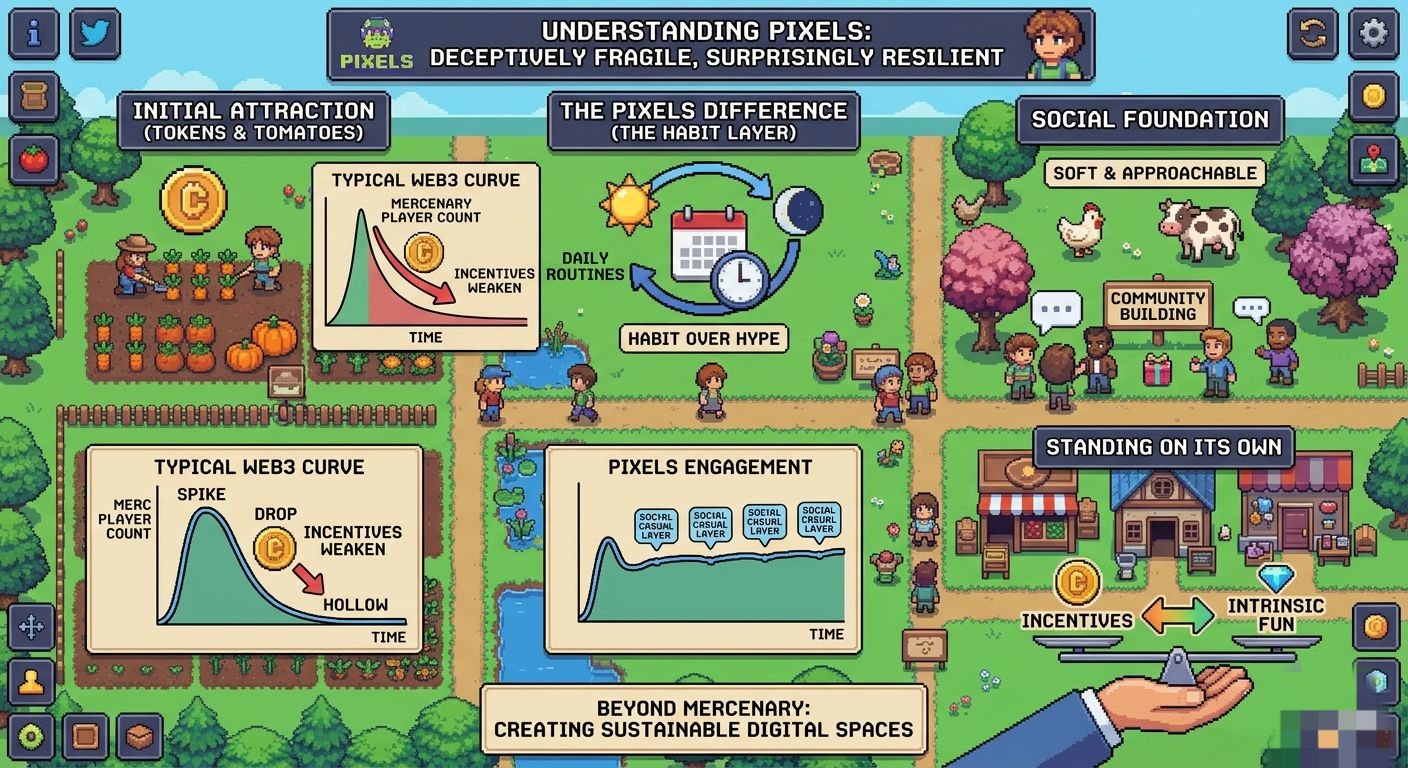
But then I kept noticing it. Not in a loud way more like it just… stayed present. People logging in daily. Small routines forming. Not the usual spike and drop pattern that most Web3 games fall into, where activity looks impressive until you zoom out and realize it’s mostly mercenary.
So I spent more time watching it.
And the thing about social casual games is they’re deceptively fragile. They rely on habits, not hype. On people wanting to come back when there’s nothing urgent pulling them in. That’s a harder problem than it looks. You can’t brute force that with rewards forever. Eventually, the system has to stand on its own or at least not collapse when incentives soften.
That’s where things start to feel uncomfortable.
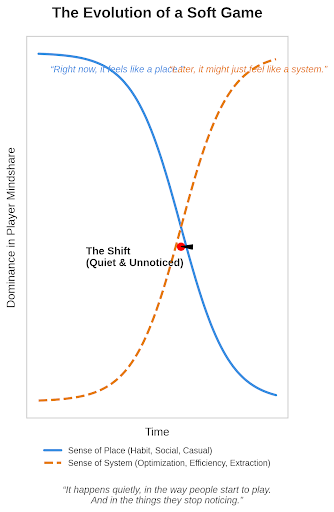
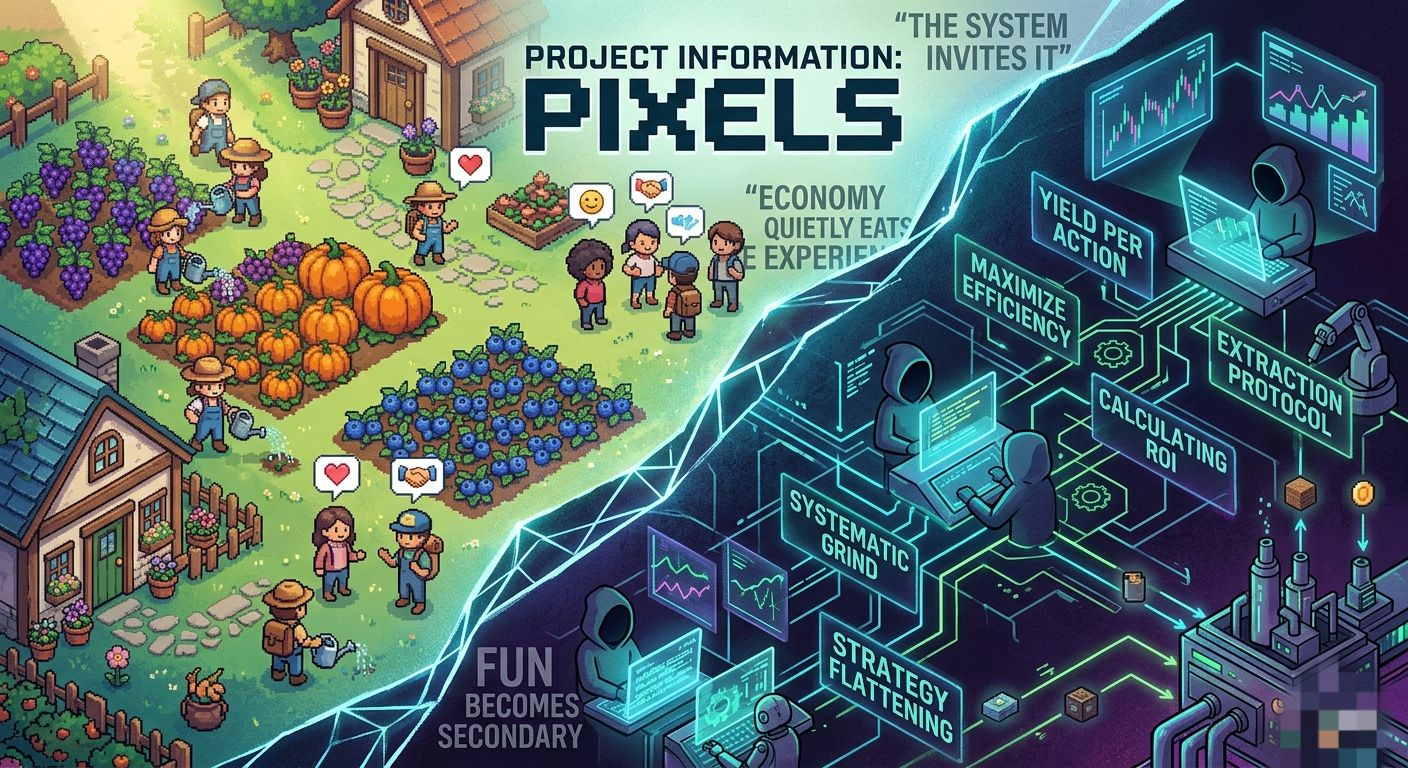
Because Web3 doesn’t really have a great track record with “casual.” Everything trends toward optimization. Efficiency. Extraction. Even the players who say they’re just there to relax eventually start calculating yield per action. It’s almost inevitable. The system invites it.
So I keep wondering: can something like Pixels resist that pull? Or is it just delaying it?
Maybe that’s too cynical. But I’ve seen too many games where the economy quietly eats the experience. Where every mechanic gets flattened into a strategy, and every strategy turns into a grind. Fun becomes secondary. Then optional. Then gone.
Pixels tries to lean into something softer farming, decorating, social interaction. Things that don’t immediately scream “profit.” And for a while, that seems to work. The world feels active. There’s a sense of presence, not just participation.
But I’m not sure how stable that is.
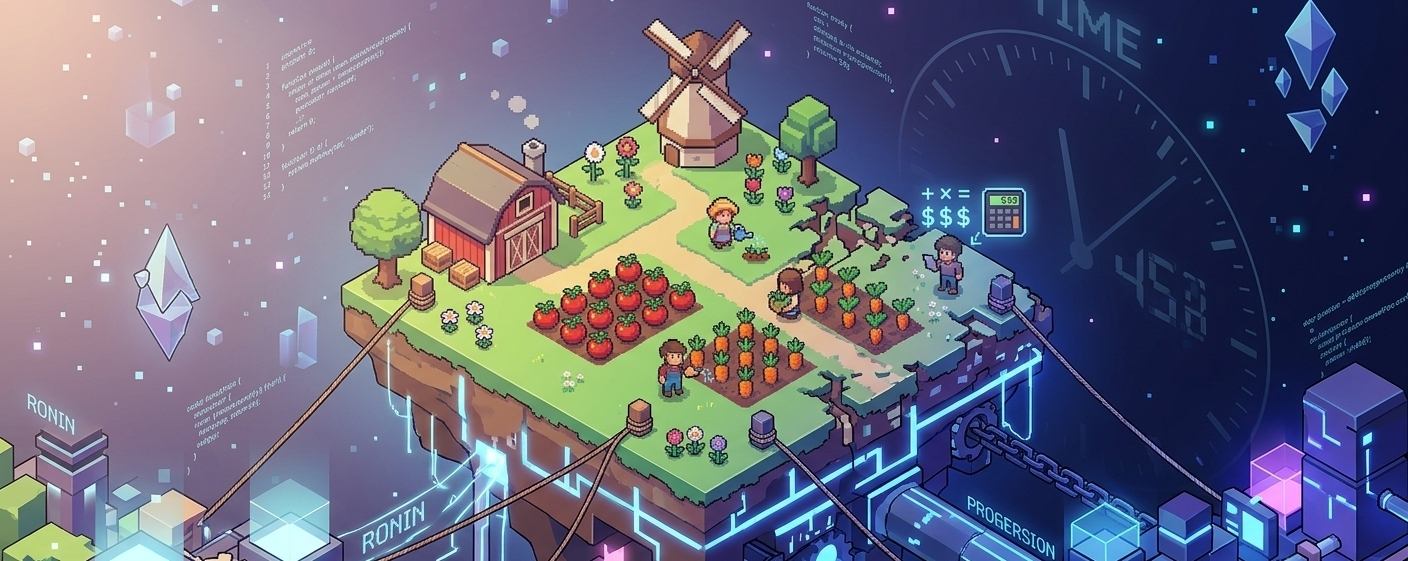
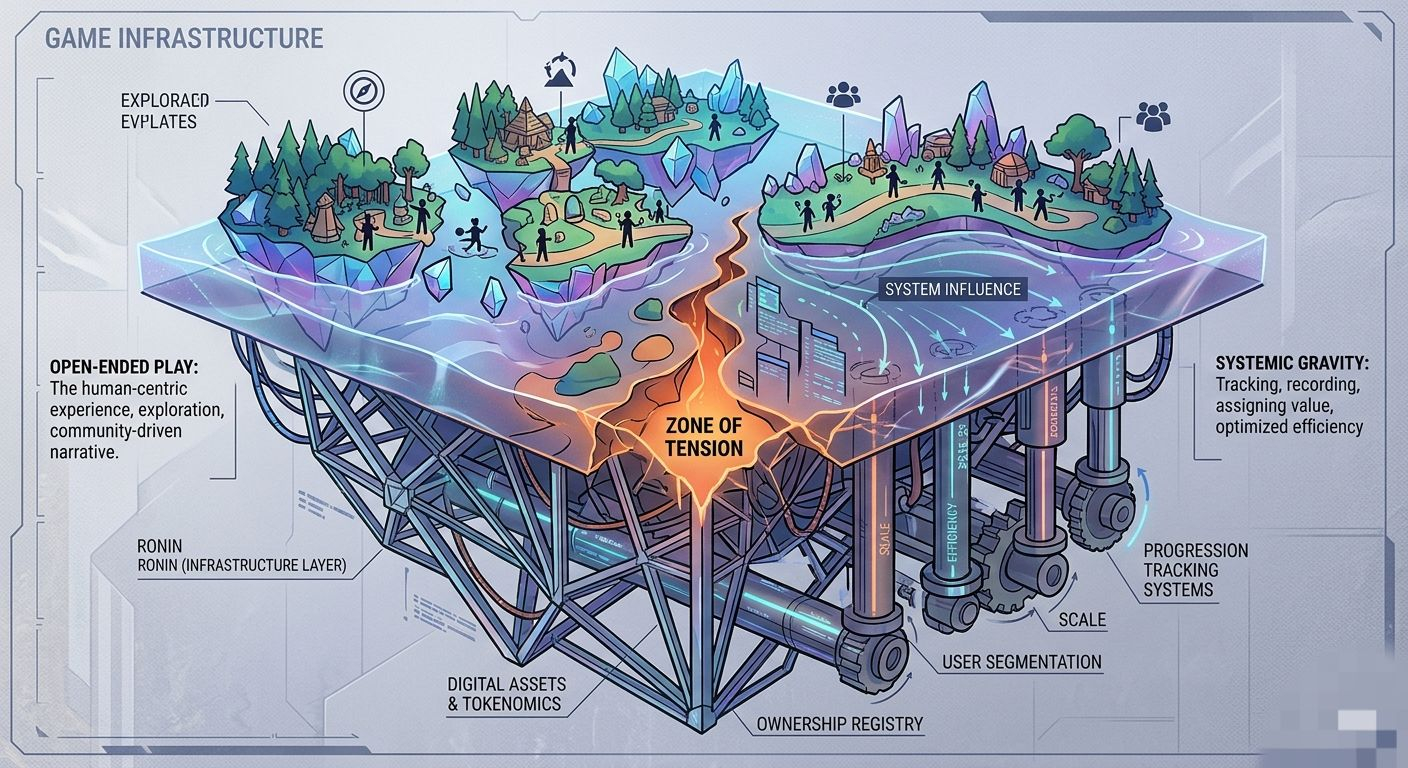
Because underneath it, there’s still infrastructure doing a lot of heavy lifting. Ronin, assets, ownership, progression systems all the parts that don’t show up in the cozy surface layer but shape behavior over time. And infrastructure has its own gravity. It pushes systems toward scale, toward efficiency, toward certain types of users.
I keep coming back to that tension.
On one side, a game that wants to feel open-l ended and human. On the other, a system that inevitably tracks, records, and assigns value. Those two things don’t always coexist peacefully. Especially not over time.
And time is the real test here.
Not launch. Not growth spikes. But what happens after months of small interactions. Do players stay because they want to, or because they’ve learned how to optimize staying? Does the world feel lived in, or just… maintained?
I don’t think Pixels has answered that yet. Maybe it’s not supposed to. Maybe it’s just sitting in that in between space where things still feel possible.
But I’ve been around long enough to know that “possible” is a temporary state.
What it turns into is something else entirely.