
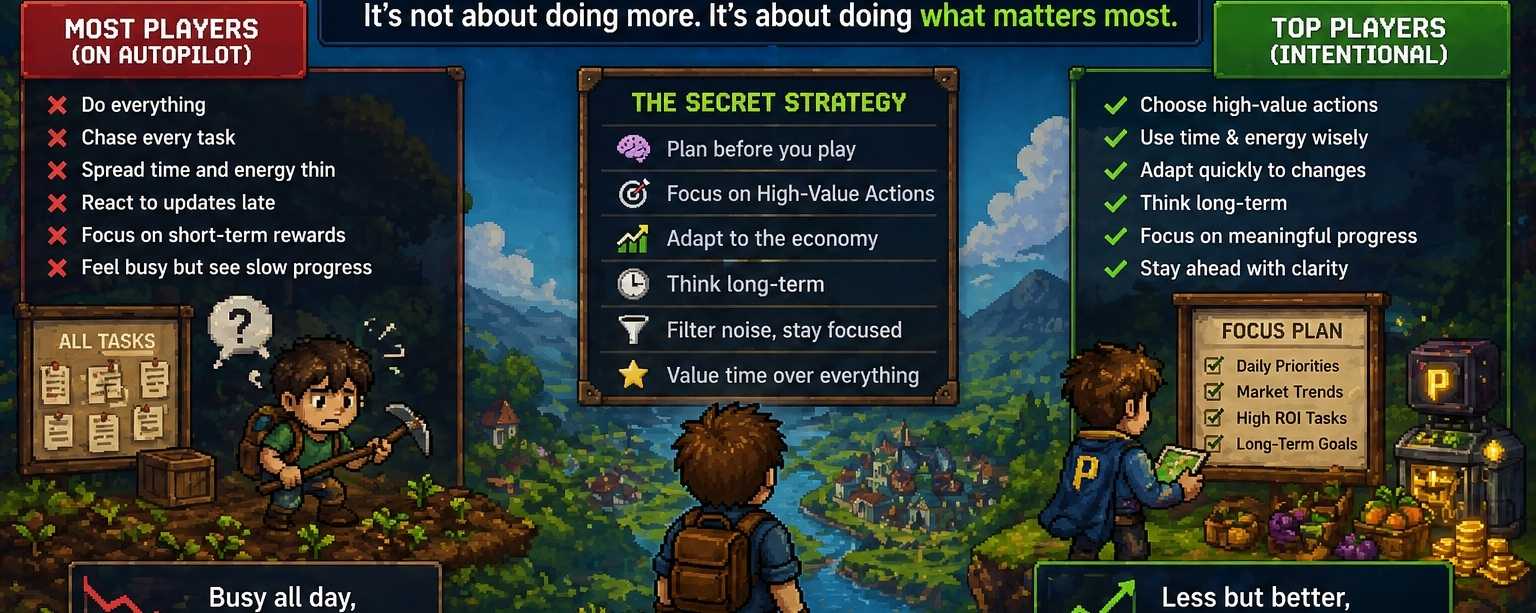

Most players approach Pixels with a simple mind set log in complete tasks gather resources and log out. From the outside it looks like steady progress. There is movement there are rewards and there is a sense of routine. However when looking closely at how the top players operate a different pattern begins to emerge. Their progress is not driven by repetition alone but by a quieter more deliberate strategy that often goes un-noticed.
Top players do not necessarily spend more time in the game. In many cases they actually spend less time performing repetitive actions. What sets them apart is how they think about the game before they even start playing. Instead of reacting to tasks as they appear they approach Pixels with a plan. This shift from reactive game play to intentional decision making is subtle but it creates a meaning-ful difference over time.
Pixels as a Web3 game built on the Ronin Network combines farming mechanics with an open economy where resources and actions have value. Because of this structure every decision carries an opportunity cost. Choosing one activity means giving up another. Average players tend to overlook this and treat all tasks as equally important. Top players on the other hand constantly evaluate which actions provide the highest return relative to time and energy.
One of the less discussed strategies involves selective participation. Rather than engaging with every feature or event experienced players often ignore low value activities entirely. This may seem counter intuitive at first. Many players believe that doing more will naturally lead to earning more. In practice however spreading attention too thin often reduces overall efficiency. By narrowing their focus, top players ensure that each action contributes meaning fully toward a larger goal.
Another important observation is how top players adapt to changes in the game’s economy. Pixels is not static. Updates balancing changes and player behavior continuously influence the value of resources and strategies. While most players take time to adjust high level players tend to observe these shifts early and reposition themselves accordingly. This ability to adapt quickly allows them to benefit from opportunities before they become widely recognized.
There is also a strong element of patience involved in their approach. Instead of chasing immediate rewards many experienced players think in longer time frames. They are willing to accept slower short term gains if it leads to stronger positioning later. This long term perspective is particularly important in a Web3 environment where assets tokens and in game items can fluctuate in value. Acting too quickly or emotionally can lead to missed opportunities or inefficient decisions.
At the same time this strategy is not without its limitations. Playing intentionally requires more mental effort. It involves analyzing patterns tracking outcomes and occasionally stepping back to reassess decisions. For some players this can reduce the casual enjoyment that Pixels is designed to offer. The game is after all meant to be social and relaxing. Turning every action into a calculated move can make the experience feel more like work than play.
An-other potential down side is that not all information is visible. Even the most thought-ful players operate with incomplete data. Market trends can change un-expectedly and strategies that worked previously may stop being effective. This un-certainty means that intentional play does not guarantee success. It simply increases the likelihood of making better decisions over time.
A unique aspect that often goes un-noticed is how top players manage their attention rather than just their resources. In an environment filled with constant updates events and social interactions it is easy to become distracted. High performing players tend to filter out noise and focus only on what aligns with their objectives. This discipline allows them to maintain consistency even when the game environment becomes more complex.
There is also an emerging pattern related to how experienced players treat time as their most valuable asset. Instead of measuring progress purely in terms of in game currency or resources they evaluate how efficiently they are using their available time. This perspective changes how decisions are made. Actions are no longer judged by how easy they are but by how much value they generate per unit of time invested.
It is worth noting that this approach does not require advanced knowledge or exclusive access. The difference lies in awareness and consistency rather than hidden mechanics. Anyone can begin to apply these ideas by simply paying closer attention to their choices and questioning whether their current routine is truly effective. The challenge is maintaining that level of awareness over time.
In the end the so called secret strategy is not a single trick or shortcut. It is a combination of small thought-ful decisions made consistently. It is the willingness to pause reflect and adjust rather than moving automatically from one task to another. While this may not sound as exciting as discovering a hidden feature or exploit it is far more sustainable.
Pixels continues to evolve and with it the gap between reactive and intentional players may become even more notice able. As more players enter the ecosystem and competition increases simply following routines may no longer be enough. Those who take the time to understand the under-lying dynamics of the game will likely find them-selves in a stronger position.
Ultimately the difference between average and top players is not just what they do but how they think about what they do. That shift in perspective although subtle is what quietly sets them apart.