
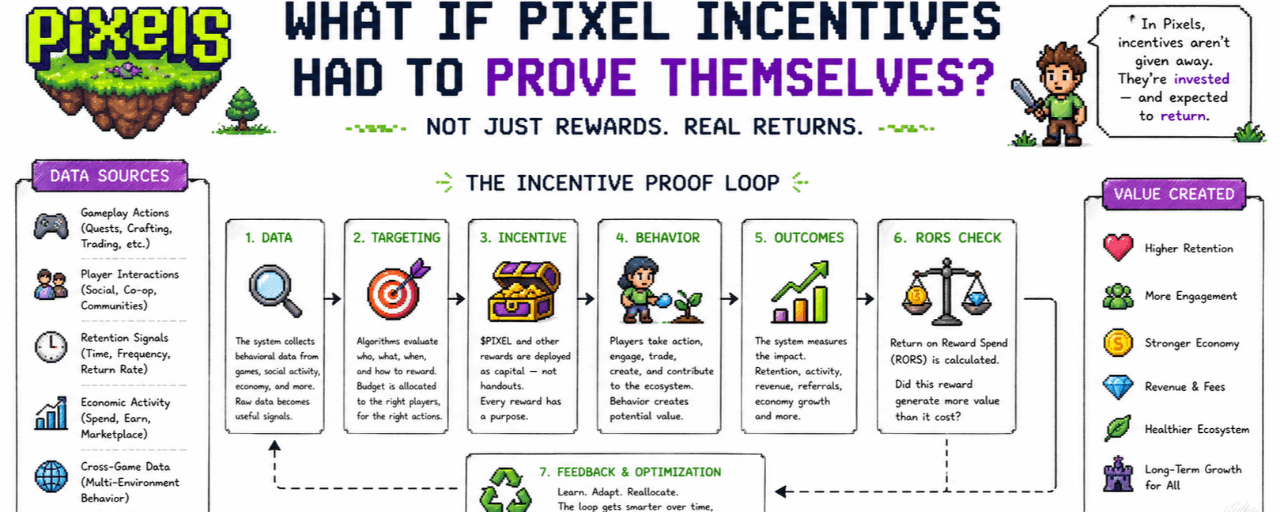

I had @Pixels running in the background again, not really focused on the game itself, just letting the loop play. At some point I caught myself asking a simple question that didn’t have an obvious answer when the system gives rewards, how does it know they actually did anything? Not just activity, but something that holds.
Most Web3 games don’t really deal with that. Rewards go out, numbers go up, and that’s treated as validation. I’ve been through enough of those cycles to stop taking it at face value. You see the same pattern repeat, short bursts of engagement, followed by quiet exits. It’s not that the systems don’t work. They just don’t check whether what they’re producing is worth sustaining.
$PIXEL feels like it’s trying to sit inside that exact gap. Not by reducing rewards, but by treating them as something closer to spend than distribution. The more I looked at it, the less it felt like a game economy and more like a system asking where capital should go. And once you see it that way, the loop changes. Rewards aren’t just outcomes, they’re inputs into behavior.
That’s where RORS becomes less of a concept and more of a constraint. Return on Reward Spend isn’t just about efficiency, it’s about justification. Every reward implicitly asks: did this create something that feeds back into the system? If not, then it wasn’t neutral, it was wasted. And that changes the tone of the entire economy. It’s no longer about how much you can emit, but how precisely you can place it.
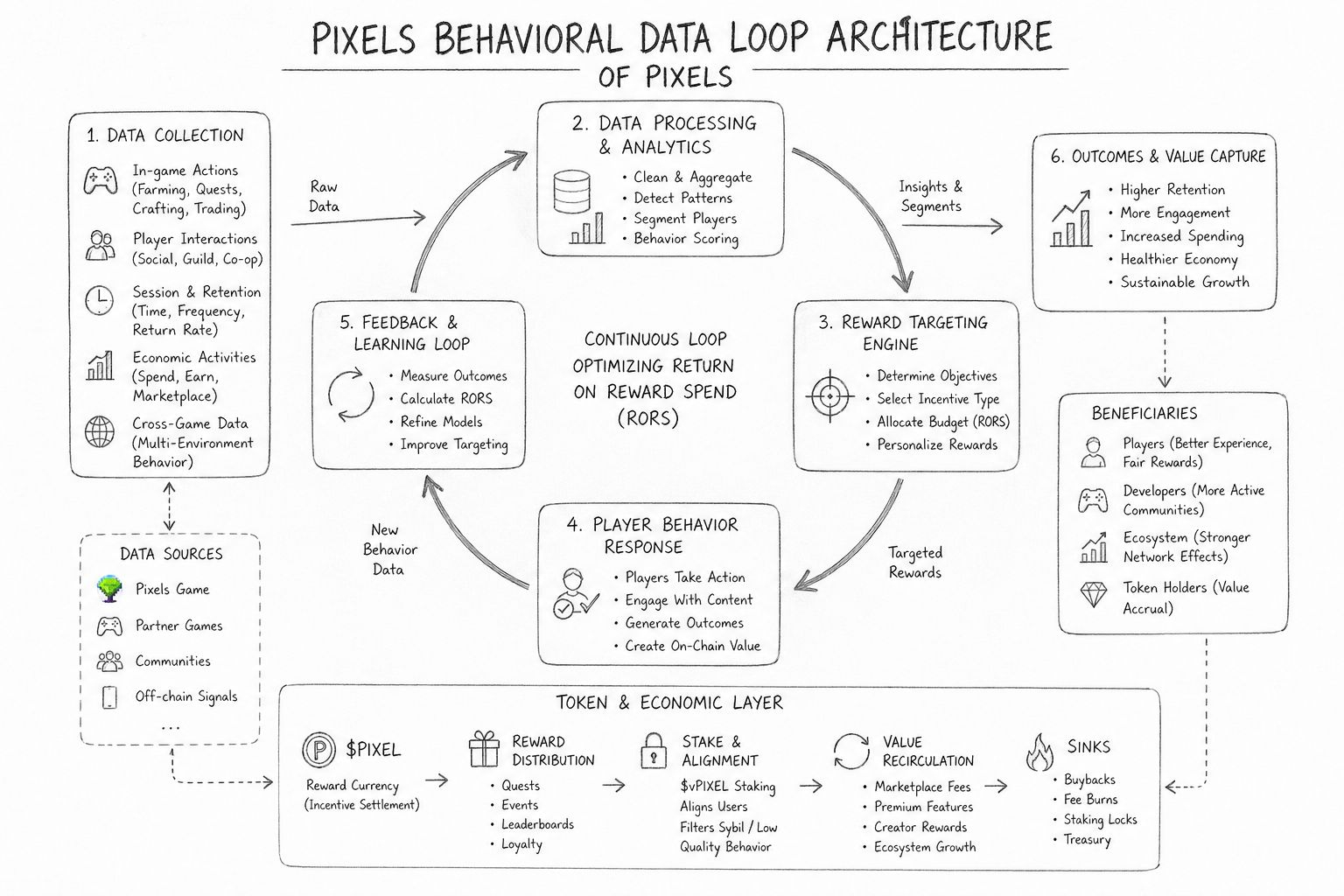
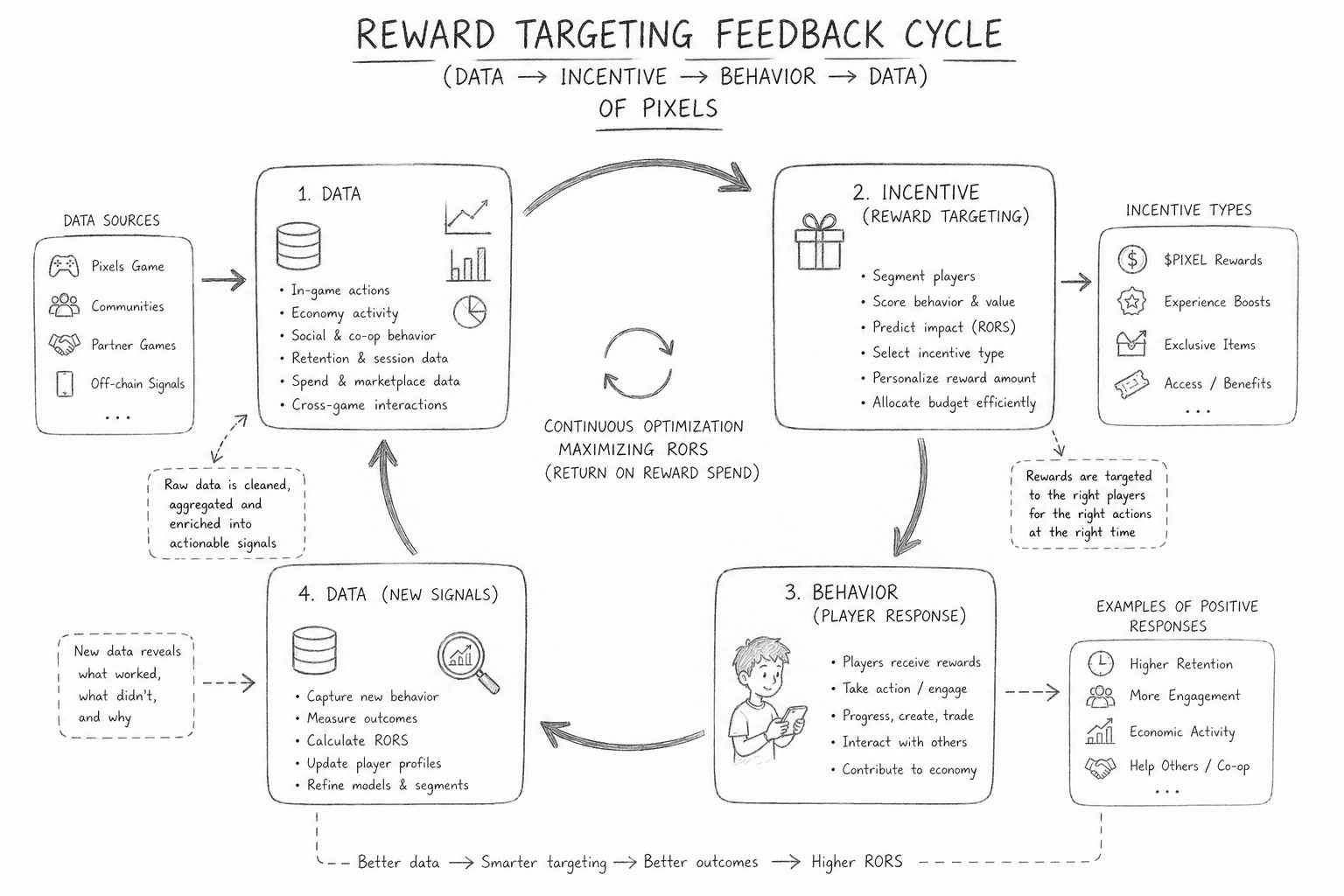
What makes it hold together is the feedback loop underneath. It’s not just rewards driving activity. It’s data shaping where rewards go, which then shapes behavior, which feeds back into better data. That loop keeps refining itself, at least in theory. And without it, this would just collapse into another version of emissions with slightly better framing.
You start noticing small things in the game that hint at this. Not everything scales cleanly with effort. Not every player progresses the same way, even with similar time spent. At first it feels uneven, but over time it feels more intentional. Like the system is quietly filtering, not punishing activity, but deciding which activity actually deserves to be reinforced.
That’s also where the token layer starts to make more sense. #pixel isn’t just circulating as a reward, it’s acting more like a settlement layer for these decisions. And when you bring staking into it, the $vPIXEL side, it starts to look less open ended. Participation isn’t just about showing up, it’s about alignment. Some users are more “in sync” with the system than others, and the flow of rewards reflects that, even if it’s not always obvious.
The $25M+ revenue figure fits into this in a different way than I first thought.
It’s not just proof of demand, it’s proof that some portion of these rewards are actually converting into retained value. That the system isn’t just emitting outward, but pulling something back in. If rewards are treated like spend, then that number suggests the spend is doing something measurable.
And when you extend that across more environments, the picture shifts again.
More games, more players, more data points feeding into the same loop. In theory, that creates a flywheel, better data leads to better reward targeting, which improves return on spend, which makes the system more attractive for others to plug into. Not just players, but developers too, treating it less like a game and more like a distribution layer they can tap into.
But that’s also where the fragility sits. Because the entire system depends on the quality of that data loop. If new environments introduce noise, low intent users, shallow engagement, the signal weakens. And once that happens, reward targeting becomes less precise. If RORS drops, the system doesn’t degrade slowly, it just starts to resemble every other emission model again.
There’s another tension underneath all of this that’s harder to ignore. The more accurately a system rewards “good” behavior, the more players start optimizing toward it. You stop acting naturally and start aligning with what the system prefers. It’s the same pattern you see in algorithm driven platforms, behavior compresses over time. The system becomes efficient, but the experience can narrow without you realizing it.
So you end up asking a slightly uncomfortable question. Are players actually playing, or are they just performing within a well designed structure? Because those aren’t the same thing. One creates attachment, the other creates short term alignment. And systems built on alignment alone don’t always survive when incentives lose their edge.
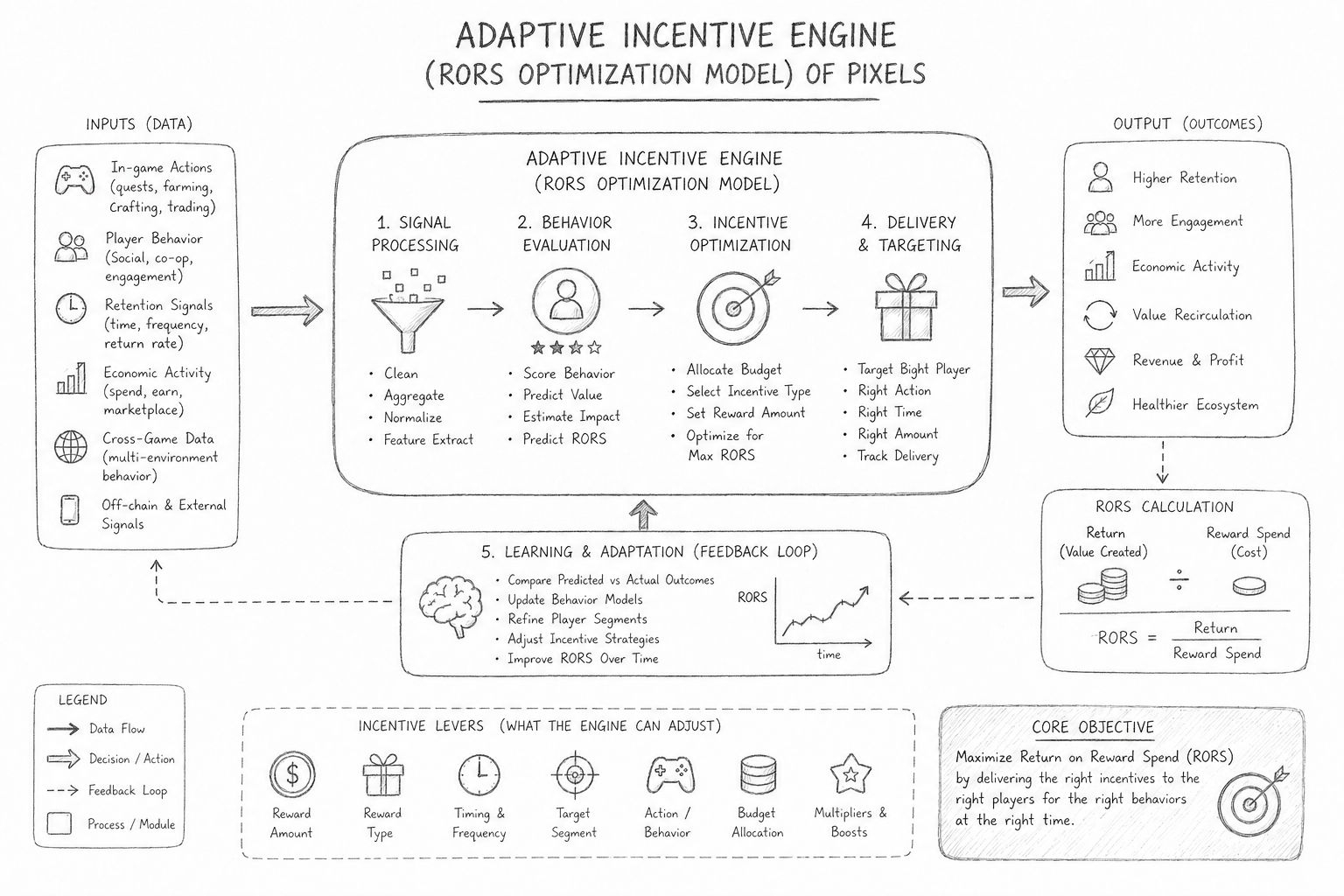
That’s why retention feels like the only real metric that matters here. Not activity, not even revenue in isolation, but whether behavior continues without needing constant adjustment. Utility only works if someone comes back tomorrow. Otherwise, even the most carefully designed reward system is just delaying when they leave.
So I don’t really look at Pixels as just a game anymore. Or even just a token. It feels more like an attempt to build an economy where rewards are treated as capital, behavior is treated as signal, and the system keeps trying to close the gap between the two. It’s not a solved problem, but it’s at least operating at the right layer.
My view is still measured. The structure makes sense. The early results suggest it’s working, at least partially. But systems like this don’t prove themselves when everything is aligned, they prove themselves when conditions shift and the loop still holds.
For now, I’m watching something simpler. Not how much activity it generates, but how much of that activity actually sticks. Because if rewards aren’t creating behavior that lasts, they’re just better designed exits.