

I never started playing with the idea that I would question how I behave inside the game. In the beginning, it was as simple as it gets. Log in, plant, harvest, repeat. A routine you move through without thinking too much about it.
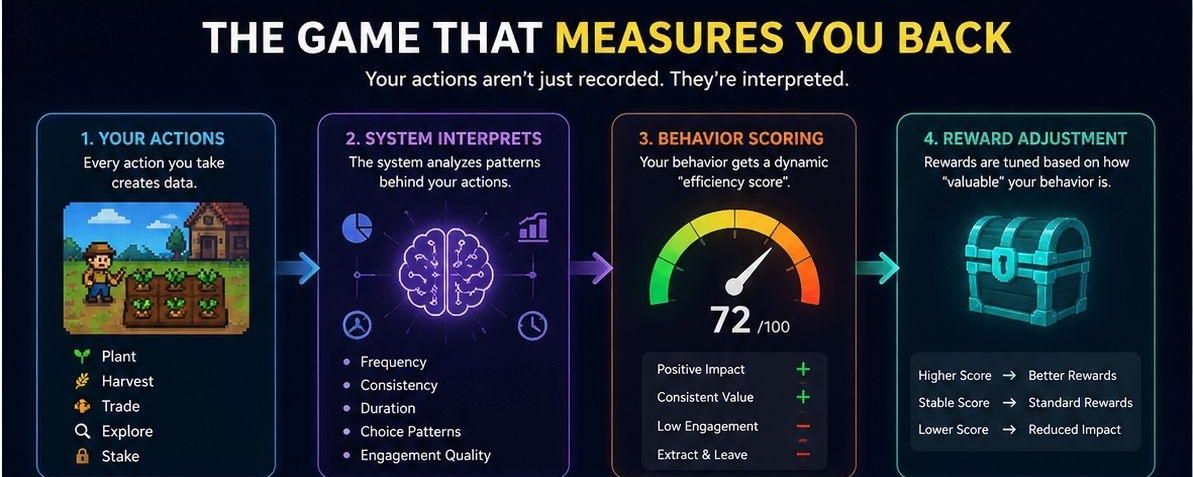
But over time, something felt slightly different. Not in a way that made me stop playing. More like a quiet shift in how the system reacted. It did not feel static anymore. It felt aware in a subtle way. Like my actions were not just being processed, but somehow weighed.
I tried doing the same things across different days, expecting the same outcomes. Sometimes it lined up. Other times it did not. But it never felt random. It felt intentional. Like something in the background was adjusting how much each action mattered.
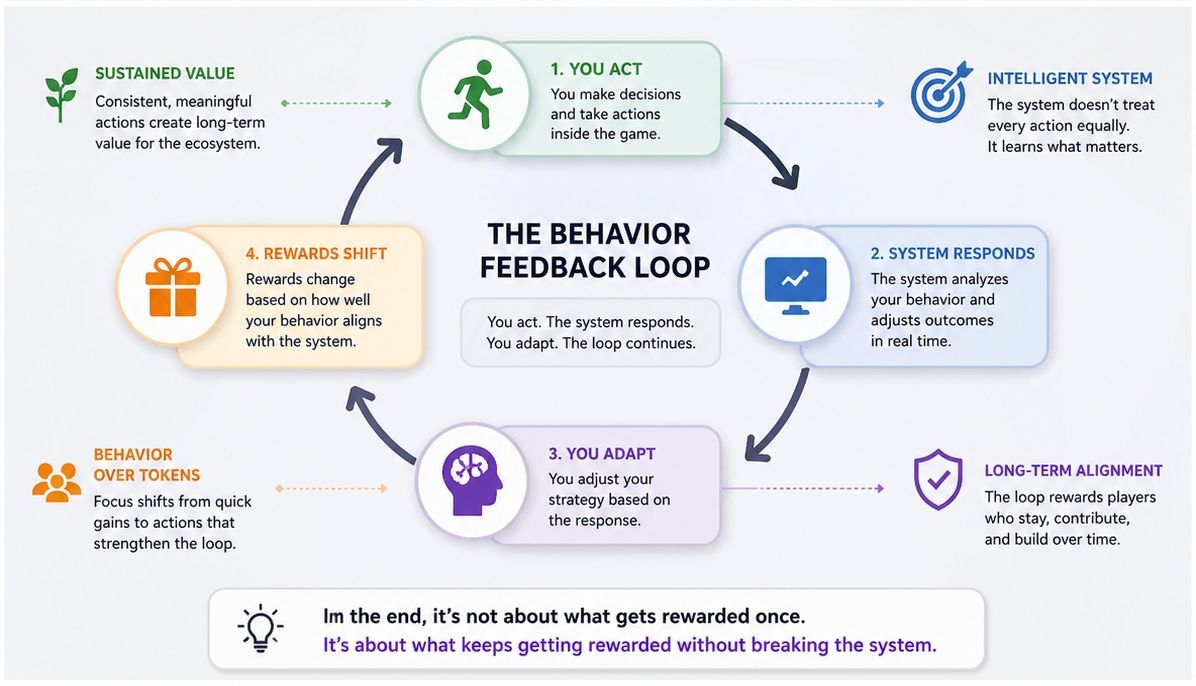
That was the point where it stopped feeling like a simple GameFi loop. It started feeling like a system that responds to behavior over time.
At first, I approached it the usual way. Optimize early, move fast, extract as much value as possible, and then slow down when it stops making sense. That pattern works in most Web3 games. But here, it does not fully play out like that.
Instead of stable returns, it feels like the system keeps tuning outcomes. Almost like it is constantly checking: is this action still worth rewarding? And based on that, things shift slightly.
That changed my perspective. It no longer felt like a direct trade of effort for reward. It felt more like the system was slowly deciding whether that trade should still exist.
That is when I started understanding reward efficiency in a different way. Not as a number or mechanic, but as a filter on behavior. Some actions naturally gained strength over time, especially the ones tied to consistency. Others did not vanish, but they lost their weight gradually.
This creates a loop that is easy to miss. You act, the system reacts, and then you adjust without even realizing why. Over time, your behavior is not fixed. It evolves with the system.
What makes it more interesting is how this connects to the PIXEL economy. On the outside, it still behaves like any other token. Price moves, sentiment shifts, nothing unusual. But inside the system, there seems to be a deeper layer trying to match rewards with real engagement.
Even staking feels different in this context. It does not feel fully passive. It feels more like a signal that you are committing to stay part of the system for longer.
And that slowly changes what value means. It becomes less about quick gains and more about how long your actions stay relevant to the system.
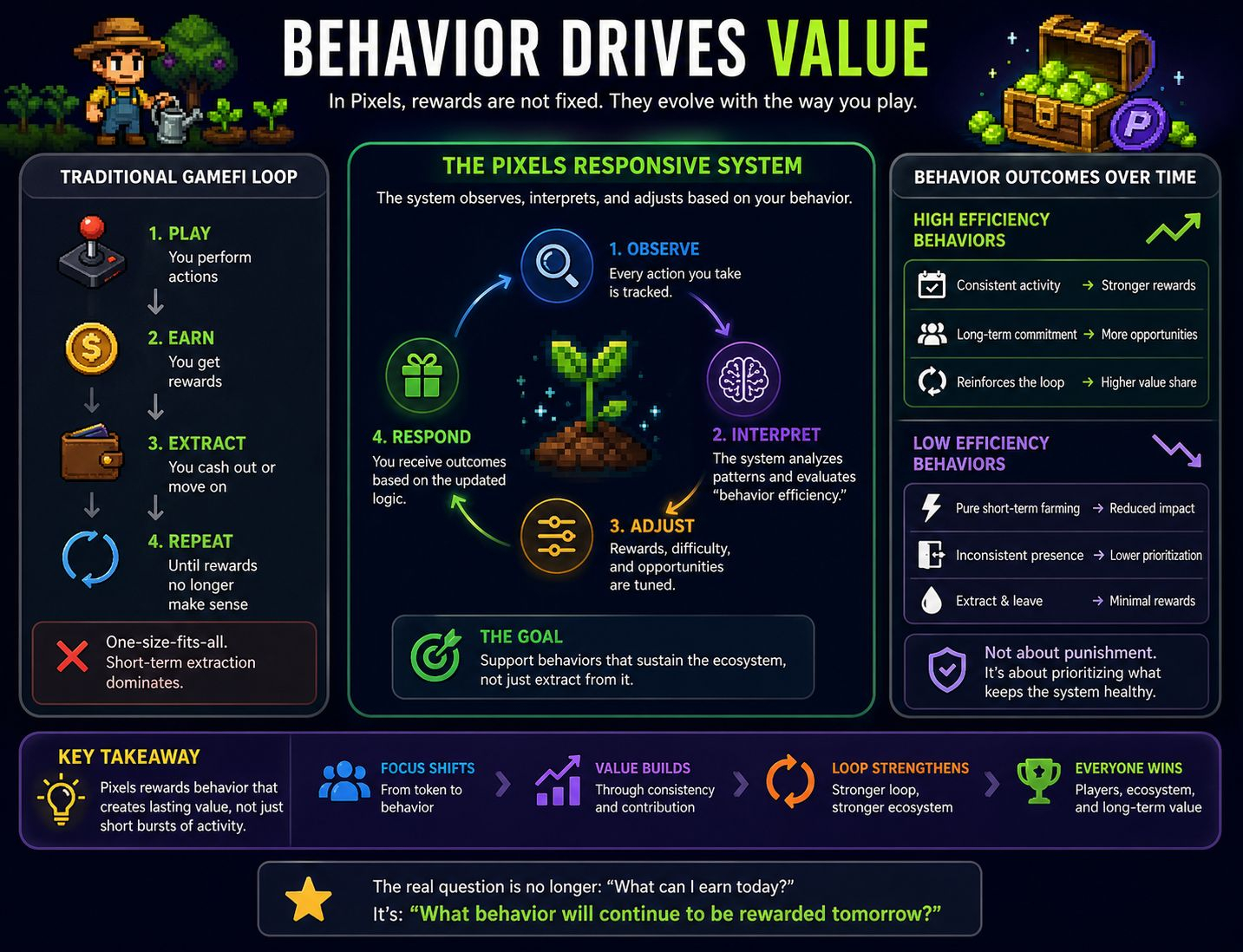
There is also a clear tradeoff. As the system becomes better at rewarding certain behaviors, it naturally starts to filter players. Some styles become stronger. Others fade into the background. It improves efficiency, but it also makes the experience less neutral.
That is where the tension sits. You still have freedom in how you play, but there is an invisible structure shaping which choices actually matter over time.
At the same time, some level of filtering feels necessary. Without it, systems like this often get drained by short-term extraction. So it makes sense that rewards slowly move toward behaviors that support long-term activity.
What stands out to me now is that the real focus is not the token itself. It is behavior. Who shows up again. Who stays consistent. Who adds to the system instead of just taking from it.
Pixels does not feel the same to me anymore. It no longer feels like just a game. It feels more like an evolving system that keeps adjusting how value flows based on what actually lasts.
I am still figuring out what that means over time. But I notice I care less about short-term spikes now, and more about patterns that continue without constant incentives.
Because in the end, it is not about what gets rewarded once.
It is about what keeps getting rewarded, again and again, without breaking everything around it.
Curious how others see this. Have you felt something similar, or does it still feel like a normal loop to you?
