
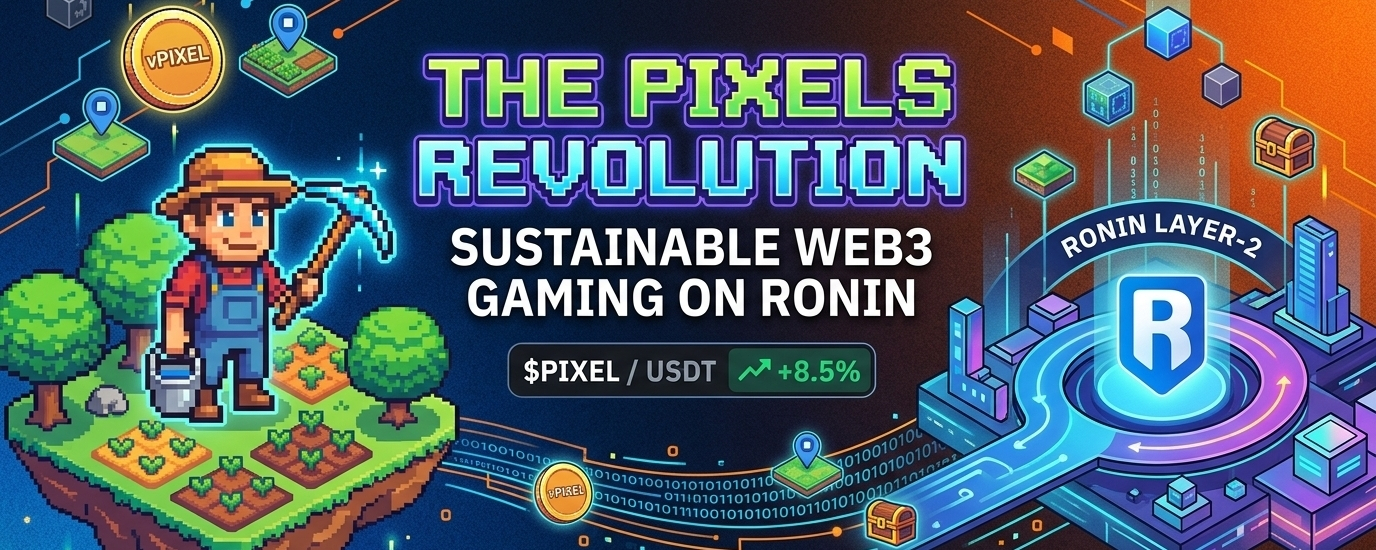
The recent evolution of the @Pixels ecosystem highlights a significant shift in how Web3 gaming handles economic sustainability. With the introduction of "Chapter 2" and the refined focus on resource tiers, the project is moving away from the inflationary "click-to-earn" models of the past toward a more complex, player-driven economy.
A key talking point for many traders monitoring $PIXEL is the integration of the "Stacked" ecosystem. By creating a layered approach to gameplay and rewards, the developers are effectively incentivizing long-term participation rather than short-term extraction. The transition toward $vPIXEL and the strategic use of land as a primary utility asset demonstrate a commitment to deep-rooted gameplay loops.
From a technical perspective, the Ronin Network’s performance remains a backbone for this growth. The low-cost, high-speed environment allows for the frequent micro-transactions necessary for a social farming simulation to thrive at scale. As the game continues to integrate more "Play-to-Airdrop" mechanics and guild-based competitions, we are seeing a stabilization in token utility that distinguishes it from many of its peers in the GameFi sector.
Whether you are a land owner or a free-to-play adventurer, the current trajectory suggests that the ecosystem is maturing into a resilient hub for digital interaction. The upcoming milestones in the roadmap will be critical in proving that Web3 games can maintain a vibrant player base through engaging content and balanced tokenomics.
#pixel #gaming #Web3GamingFuture #RONIN @Pixels $PIXEL
