
I checked PIXEL today and what stood out wasn’t really the price move. It was how small everything still feels compared to what the project is trying to build. That gap is usually where I slow down a bit, because charts can look alive for a moment, but they don’t tell you if people are actually staying.
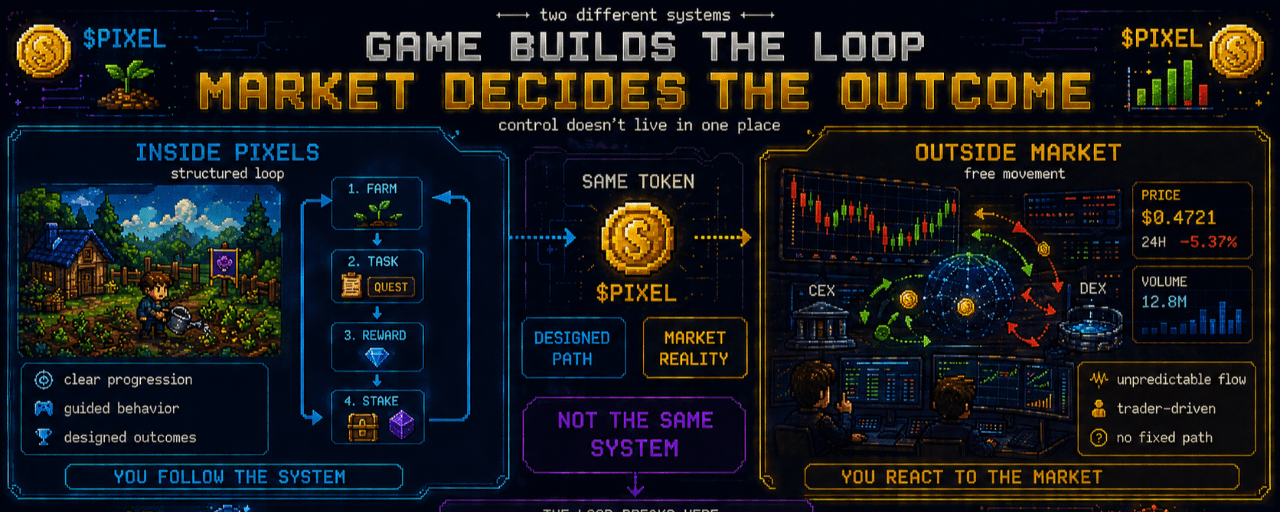
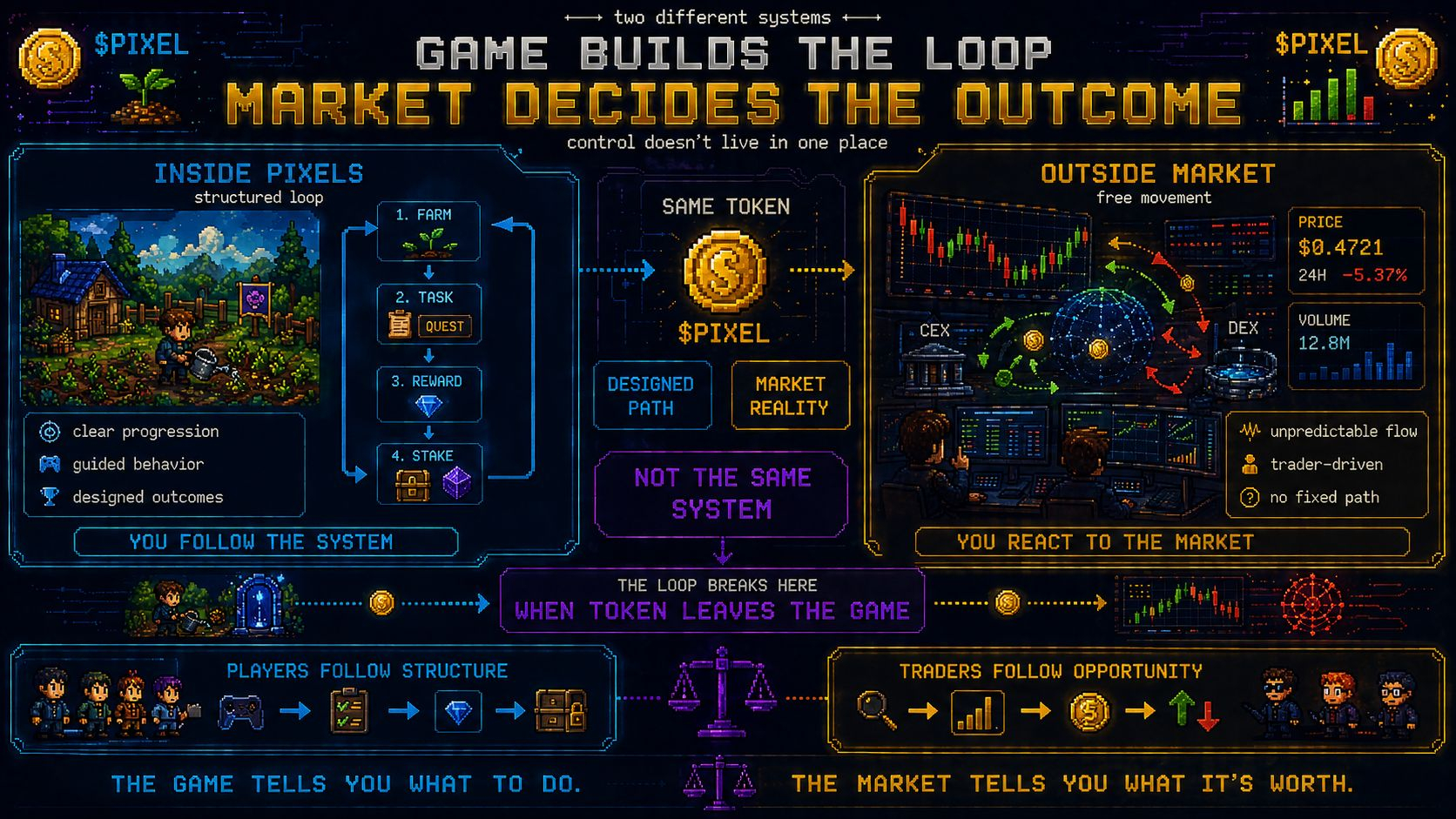
Inside Pixels, the path feels pretty controlled. You farm, complete tasks, maybe stake, move through events, and the system keeps guiding you toward the next step. It’s structured. You always kind of know what to do next.
But once the token trades freely, that structure stops being complete.
At that point, the path gets finished outside the game. Liquidity, sentiment, unlocks, all the usual market forces start shaping what happens next. And that’s where things feel less predictable. A player might follow the in-game loop, but a trader is reacting to something completely different.
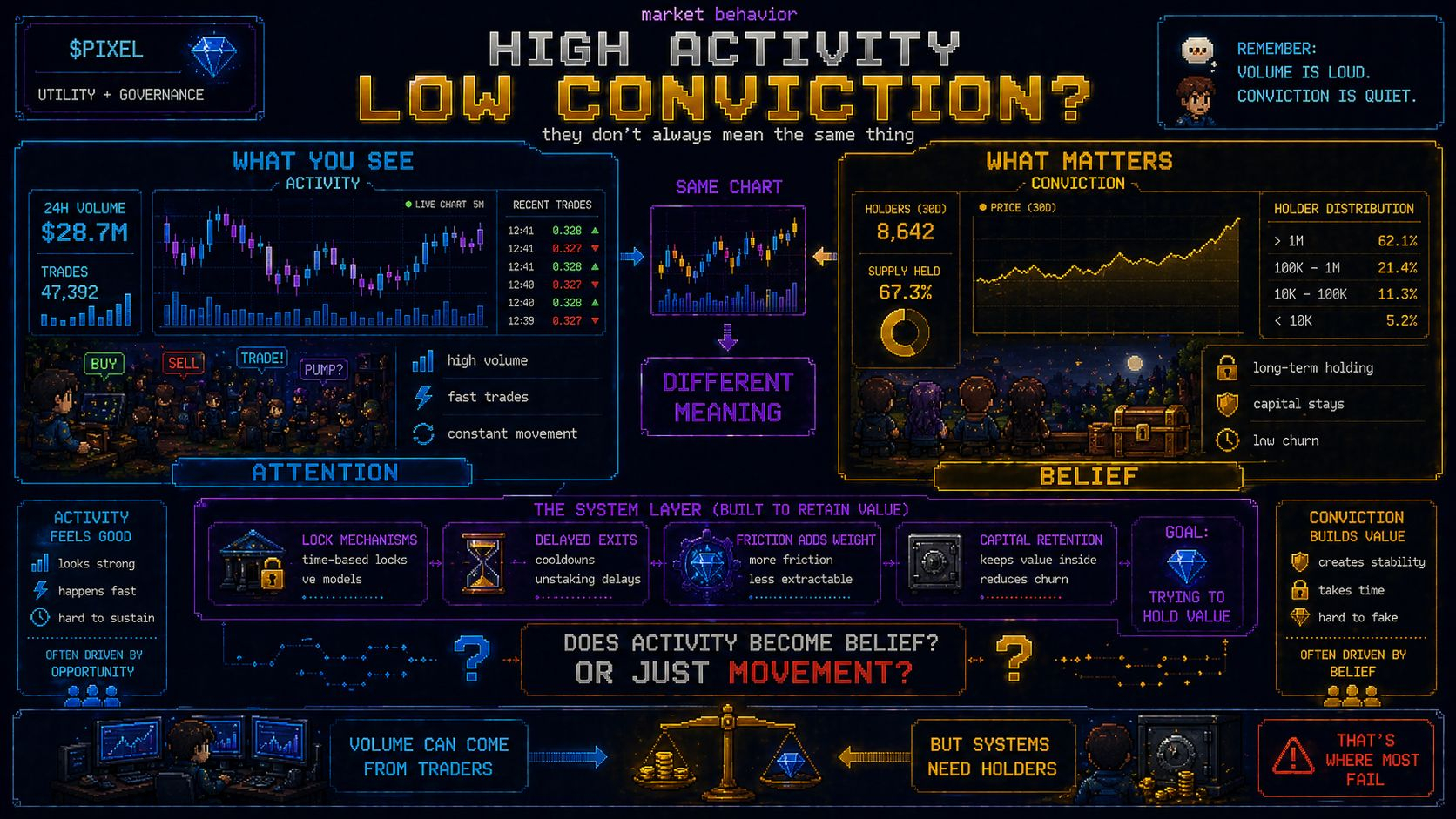
Right now, the token still looks very active. There’s decent volume relative to market cap, which usually means people are paying attention. But that kind of activity doesn’t always mean long-term belief. Sometimes it’s just fast movement because the price is low and easy to trade.
That’s why I don’t really see PIXEL just a game token anymore.
It feels more like a test. Can activity inside the game actually turn into something the market wants to hold, not just trade?
The design is trying to support that. Staking isn’t just passive, it ties into supporting different parts of the ecosystem, and even has small frictions like unlock delays. That suggests they want capital to stay connected to the system, not just flow in and out.
But that leads back to the same issue most GameFi projects run into.
Rewards can bring people in, but they don’t guarantee people will stay. If the incentives become less obvious or less generous, the system has to rely on something else to hold attention. And that’s where a lot of projects start to struggle.
Pixels feels like it’s aware of that. It’s trying to be more selective, more structured, less reliant on constant emissions. But the market doesn’t immediately reward that kind of design. It usually waits for proof.
There’s also the supply side sitting in the background. Even if the product improves, the token still has to deal with how much exists and how fast it enters circulation. That pressure doesn’t go away just because the system gets better.
So for me, it’s not a clear bullish or bearish read.
It’s more like a watchlist situation. The structure looks more serious than the price suggests, but the market hasn’t fully bought into it yet. And until users keep showing up even when rewards feel less obvious, that hesitation probably stays.
I’d keep an eye on whether activity inside the ecosystem starts translating into something stickier. Not just volume, but behavior that actually holds.
Because right now, it still feels like the game builds the path, but the market decides where it ends.