
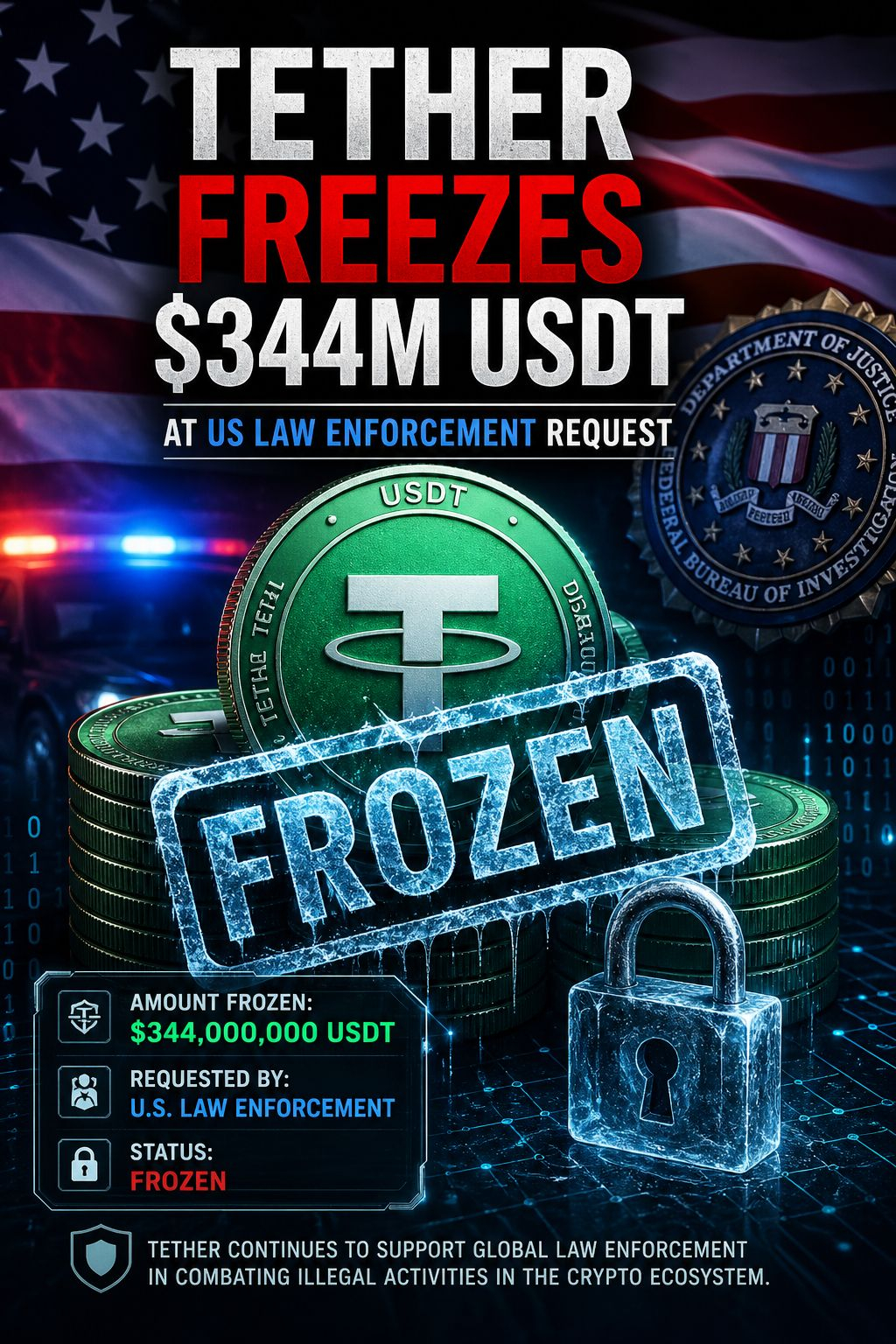
 In a major development that highlights the tightening relationship between cryptocurrency firms and global regulators, Tether has frozen approximately $344 million worth of USDT at the request of U.S. law enforcement authorities.
The move reflects a broader shift in the digital asset landscape, where compliance and oversight are becoming increasingly important. While cryptocurrencies were originally designed to operate outside traditional financial systems, large stablecoin issuers like Tether continue to demonstrate that they are willing—and able—to intervene when required.
A Sign of Increasing Oversight
Although specific details about the case remain undisclosed, such freezes are typically linked to ongoing investigations involving financial crimes such as fraud, money laundering, or violations of international sanctions. By taking swift action, Tether reinforces its role as a cooperative partner to authorities seeking to combat illicit activity within the crypto space.
Centralization vs. Decentralization
This incident once again brings attention to a key debate in the crypto world: how decentralized are stablecoins, really? Unlike fully decentralized cryptocurrencies, USDT is issued and managed by a centralized entity. This means that Tether retains the power to freeze or restrict funds tied to suspicious or unlawful activity.
For some users, this level of control provides a sense of security. For others, it raises concerns about censorship and the potential misuse of authority.
Implications for the Crypto Market
The freezing of such a large amount of USDT sends a strong signal to both investors and bad actors:
Regulatory oversight in crypto is expanding
Blockchain transactions are more traceable than often assumed
Cooperation between crypto companies and governments is intensifying
These developments could strengthen trust among institutions and regulators, potentially accelerating broader adoption of digital assets.
Tether’s Evolving Role
Over the years, Tether has increasingly positioned itself as a compliant and responsible player in the financial ecosystem. By assisting law enforcement and taking proactive measures, the company aims to bridge the gap between decentralized technology and traditional regulation.
Conclusion
The freezing of $344 million USDT is more than just a single enforcement action—it is a reflection of the changing dynamics of the cryptocurrency industry. As regulation continues to evolve, the balance between freedom and control in digital finance will remain a central issue shaping its future.