

Do you know why some investors stay profitable even during the most brutal crises?
The secret isn’t timing, luck, or insider information.
The secret is knowing which “season” the economy is in and positioning capital before everyone else moves.
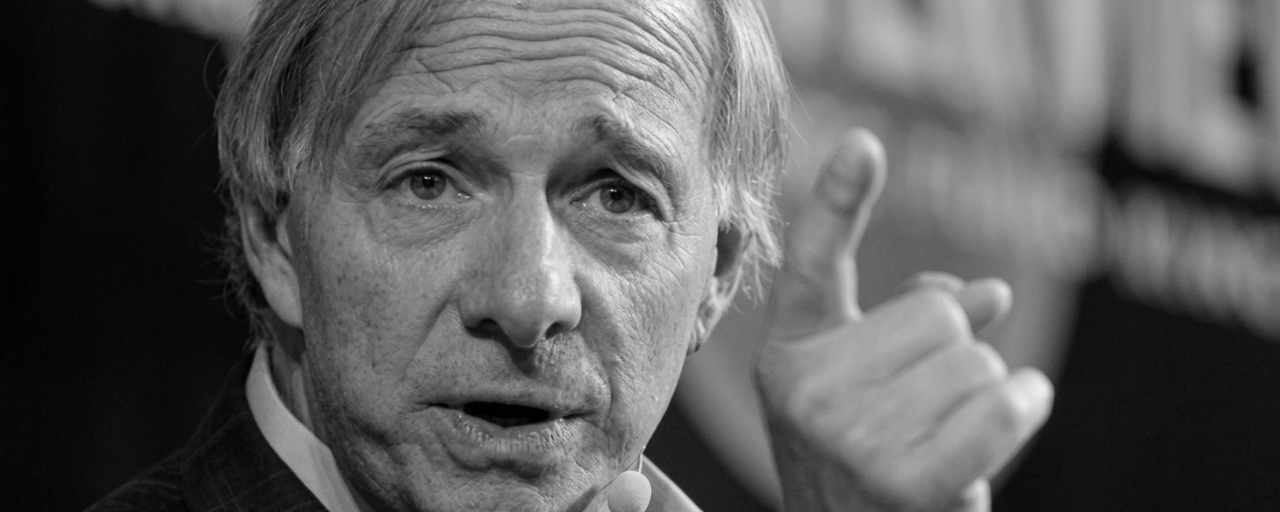
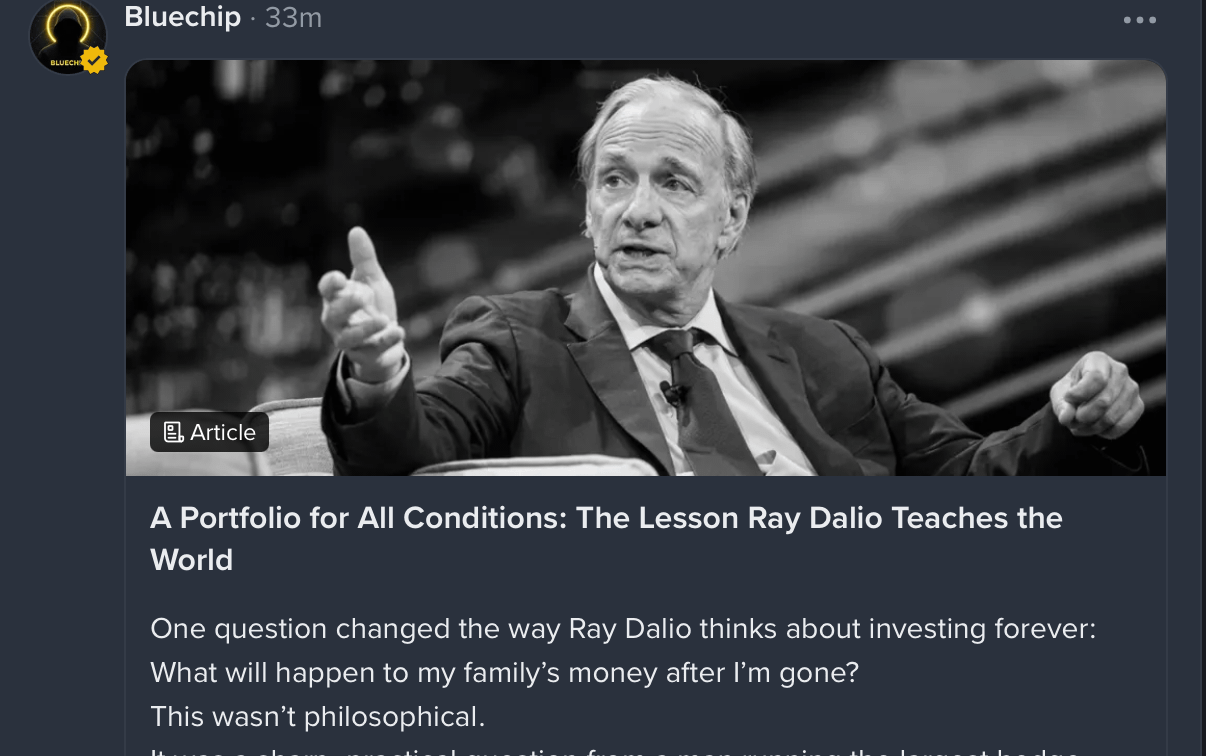
That’s exactly what Ray Dalio, founder of Bridgewater Associates (the world’s largest hedge fund), built with what’s known as the All-Weather Portfolio.
At its core, the idea is simple yet profound:
Every asset class has a natural environment where it thrives.
Your job is to always own something that works no matter the season.
The Economy Has Only Two Drivers
The global economy moves along two axes:
Growth (rising or falling)
Inflation (rising or falling)
From their interaction, four economic “seasons” emerge each with a completely different investment map.
Let’s break them down.
☀️ Season 1 Boom (Growth ↑ / Inflation ↑)
This is the intoxicating phase.
The economy expands, credit flows, prices rise, profits surge everything seems to work. People forget other seasons even exist.
But smart investors don’t.
In this environment:
Cyclical stocks (energy, materials, industrials) dominate
Commodities (oil, copper, wheat) benefit directly from inflation
Gold acts as a hedge against purchasing power erosion
Real estate & REITs combine hard assets with rising rents
Inflation-linked bonds (TIPS) adjust with inflation
Emerging markets also perform well when risk appetite is high and commodities are strong.
🚫 What to avoid:
Long-term bonds (inflation quietly destroys their real value)
 BTCUSDTPerp78,033+0.70%
🌤️ Season 2 Goldilocks (Growth ↑ / Inflation ↓)
This is where great bull markets are born.
Strong growth + low inflation = central banks stay relaxed.
This environment defined:
The 1990s
The post-2010 bull run through 2021
In this phase:
Equities thrive, especially growth & tech stocks
Lower interest rates → higher valuations
Corporate bonds perform well (tight credit spreads)
Long-term Treasuries remain stable
REITs benefit from cheap financing + growth
This is also the best environment for:
Crypto (Bitcoin, etc.)
Private equity
Why?
Liquidity is abundant, risk appetite is high, and investors chase outsized returns.

⛈️ Season 3 Stagflation (Growth ↓ / Inflation ↑)
This is the most dangerous and destructive environment.
Imagine:
Stocks fall → profits shrink
Bonds fall → inflation erodes value
Cash loses purchasing power
Losses… everywhere.
But a few assets shine:
Gold → the undisputed king
Commodities → benefit from supply shocks
Energy stocks → surge with oil prices
Agriculture → pricing power in food inflation
Hard assets (land, infrastructure) → retain real value
TIPS → adjust with inflation
🚫 Avoid completely:
Long-term bonds
Growth/tech stocks
Highly leveraged companies
Historical proof:
During the 1970s stagflation:
Gold rose over 20x
Oil surged massively
The S&P 500 delivered near zero real returns for a decade
 ETHUSDTPerp2,329.84+0.57%
❄️ Season 4 Deflation / Recession (Growth ↓ / Inflation ↓)
The economy contracts. Prices fall. Risk appetite collapses.
Capital flees to safety.
Central banks cut rates aggressively and that drives everything.
Winners:
Long-term government bonds → biggest winners
Investment-grade bonds → benefit from falling rates
Gold → still holds value as a safe haven
Cash → gains purchasing power
Defensive stocks (utilities, healthcare, staples)
Dividend stocks → stable income in weak growth
🚫 Avoid:
Commodities
Cyclical stocks
High-yield bonds
Real estate (credit tightens, demand falls)
 BNBUSDTPerp630.57-1.13%
Dalio’s Real Allocation The Hidden Insight
Here’s where most people misunderstand the strategy.
It’s not about splitting money equally.
It’s about balancing risk, not capital.
Because:
Stocks are volatile
Bonds are more stable
So you need more bonds to balance risk.
Typical All-Weather structure:
40% long-term bonds
30% diversified stocks
15% intermediate bonds
7.5% gold
7.5% commodities
The Most Important (and Uncomfortable) Truth
The hardest environment to survive is stagflation.
Why?
Because:
Stocks fall
Bonds fall
That’s why gold and commodities are not optional they’re essential.
Final Thought You Don’t Predict, You Prepare
The biggest mistake investors make:
Thinking their job is to predict the next economic phase.
Even the best can’t do that consistently.
What you can do:
Build a portfolio that survives all four seasons.
Because:
The 2008 crisis surprised everyone
The 2020 pandemic wasn’t forecasted
The 1970s stagflation came out of nowhere
Markets don’t give you the exam after the lesson.
They give you the exam first.
The Real Lesson
Money isn’t just made by buying bottoms and selling tops.
It’s:
Protected first
Then grown
By understanding the full map before the journey begins.
This is the map.