
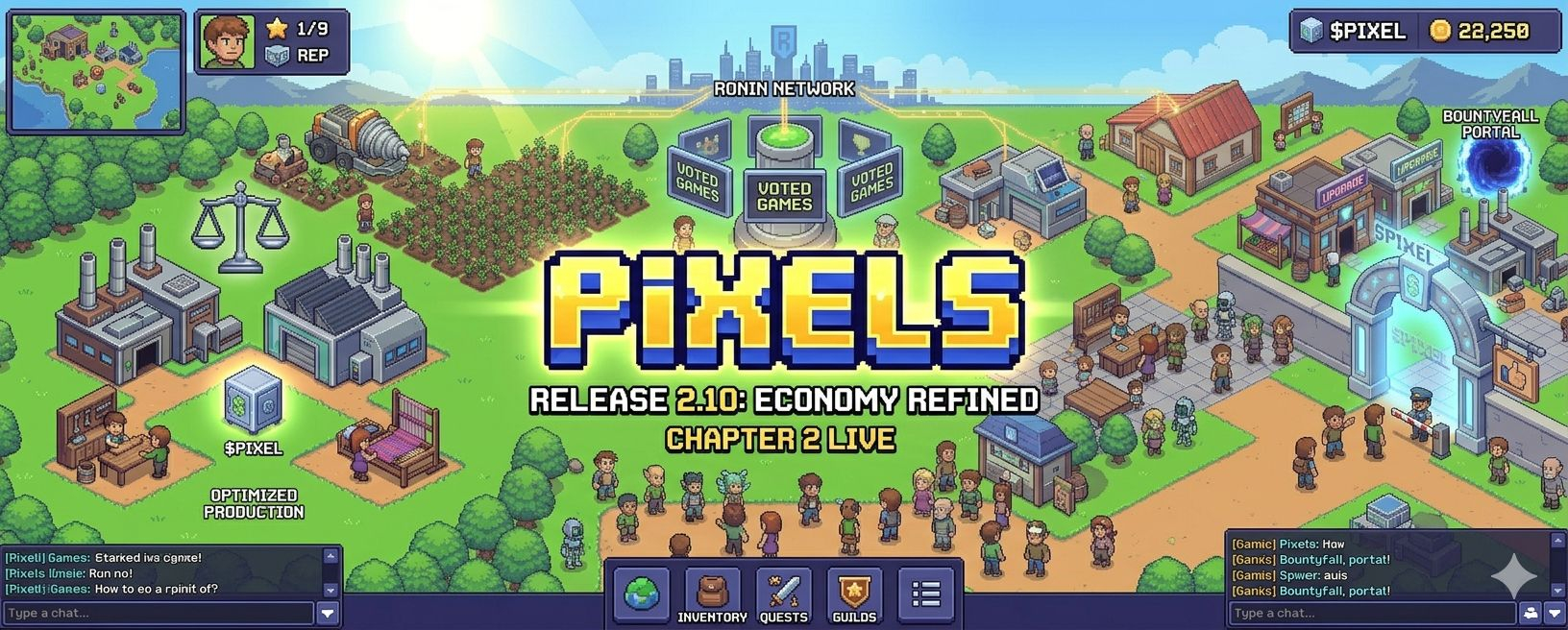
 In the Web3 gaming space, (Pixels) has always been one of the most resilient projects. The latest Release 2.10 isn't just a routine patch; it's a major upgrade since the launch of Chapter 2.@Pixels It's crucial to capture the economic closed loop, resource management, and ecological synergy (Stacked) across these three dimensions.
1. Core Update: Establishing stricter 'productivity thresholds'.
According to Release 2.10 and the recent patch notes, the core changes focus on fine-tuning resource output efficiency.
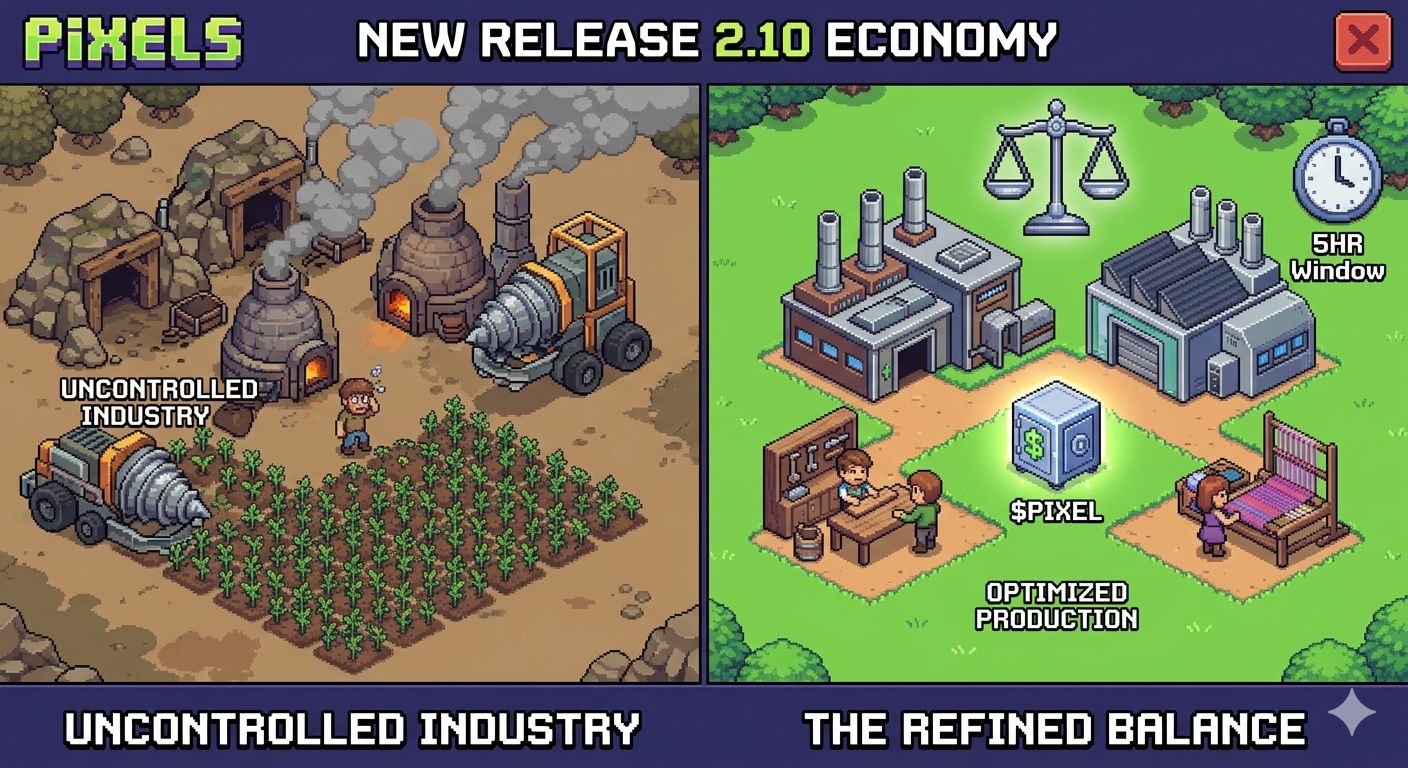
Industrial Capacity Limits:
Update details: Industrial facilities on land (like mines, distilleries, apiaries, woodworking tables, etc.) now have strict quantity limits.
In-depth analysis: In the past, players with a large amount of Land could industrialize their harvests by stacking facilities. The cap mechanism introduced in 2.10 essentially limits 'overproduction at single points,' forcing landowners to make decisions across different industries. This aligns closely with the concept mentioned in the whitepaper that 'decision-making yields better results than simply clicking.'
Synchronization of crop death cycles:
Update details: Core crops like Astracactus and Watermint now have a unified death timer (about 5 hours).
In-depth analysis: This adjustment increases time management pressure on players. Only land Owners or players with Builder status can extend the lifespan of crops through watering. This means that the arbitrage space for renting (Scholar) and casual players (F2P) is further compressed, with resources leaning towards deep builders.
Precise grading of trading thresholds:
Update details: Adjusted the reputation/level thresholds for Coin trading, withdrawals, and guild creation.
In-depth analysis: This is a continuing battle against bots. By raising the threshold, the project ensures that the flow of $PIXEL goes to those deep players who truly invest time.
2. Forward-looking analysis of Binance Square: The role shift of $pixel
In Binance Square, mainstream analysts (like @0xxinxinn, @ADITYA-56) have reached several key consensus regarding the latest trends:
Shifting from 'speculative airdrops' to 'long-term gameplay': Sentiment in the square shows that the early P2A (Play-to-Airdrop) bonus period has ended. Release 2.10, along with discussions around vPixel (locked/non-tradable rights to PIXEL), indicates that the future value of $pixel will no longer be just rewards, but rather a 'pass' and 'vote' to enter the system.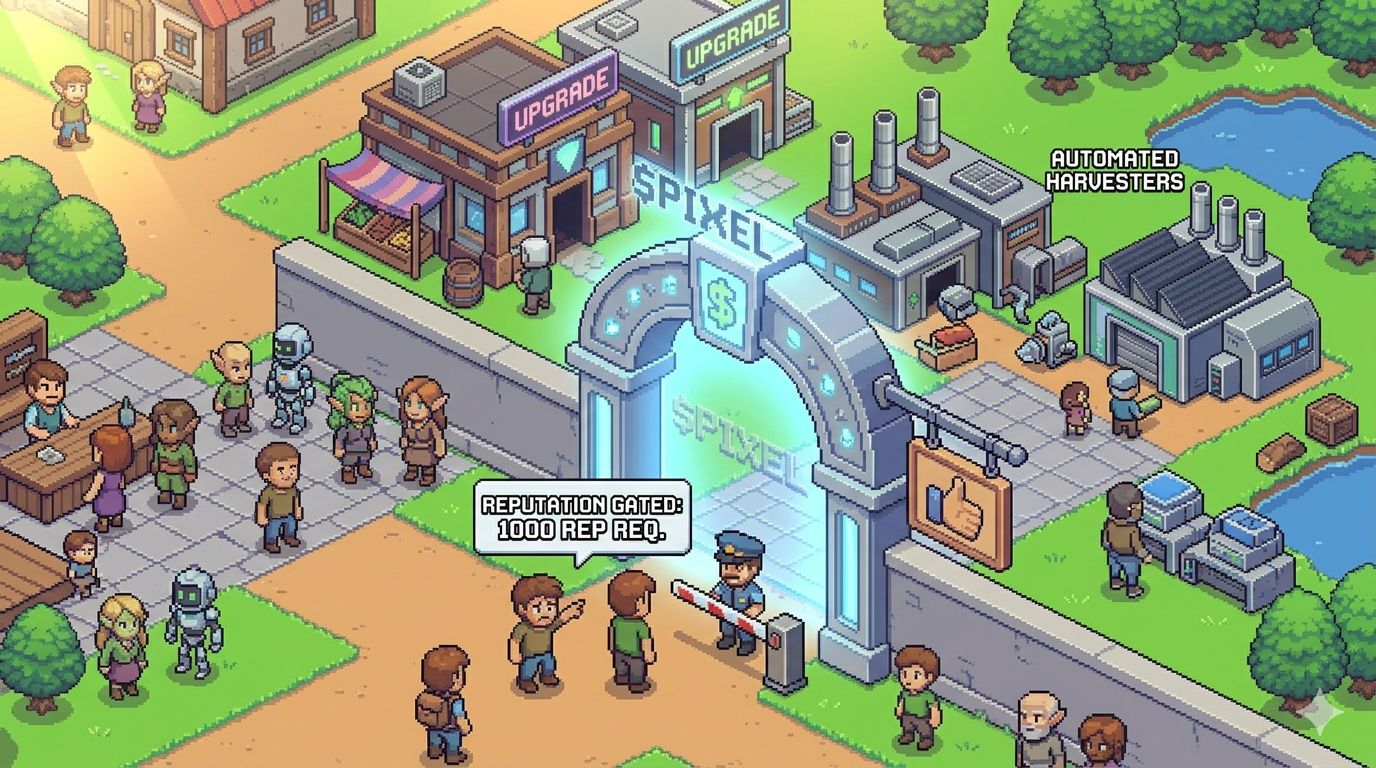
'Validators are the game': Analysts point out that Pixels is trying to transform $pixel holders into 'judges' of the ecosystem. Through a Staking mechanism, players can decide which sub-games or projects can receive UA (User Acquisition) budget support from the ecosystem. This means Pixels is evolving from a single gaming platform into a traffic engine called 'Stacked.'
3. Whitepaper and Future Blueprint: The shadow of Chapter 3
Combining the descriptions of Chapter 2 and Chapter 3 from the whitepaper, the subtle changes in Release 2.10 are actually paving the way for Bountyfall (the Bounty War):
The separation of the monetary system:
2.10 continues to deepen the logic of 'Coins for daily use, PIXEL for core value additions.'
Analysis: The whitepaper emphasizes reducing the 'inflation cycle.' By linking crops and industrial outputs to coins while tying pets, guild privileges, and land bonuses to $pixel, the officials have successfully isolated the tokens from daily selling pressure.
The ambition of the Stacked ecosystem:
The recently frequently mentioned Stacked (the rewards engine developed by the core team of Pixels) is reflected in the API update of 2.10.
Analysis: Pixels are no longer satisfied with being just a 'farming game.' They are leveraging the accumulated data of over 10 million users to build a profiling system for Web3 players. The behavioral data collection in Release 2.10 (such as industrial production efficiency and trade preferences) will become a core asset of the Stacked system, helping other developers quickly launch new games on the Pixels framework.$CHIP 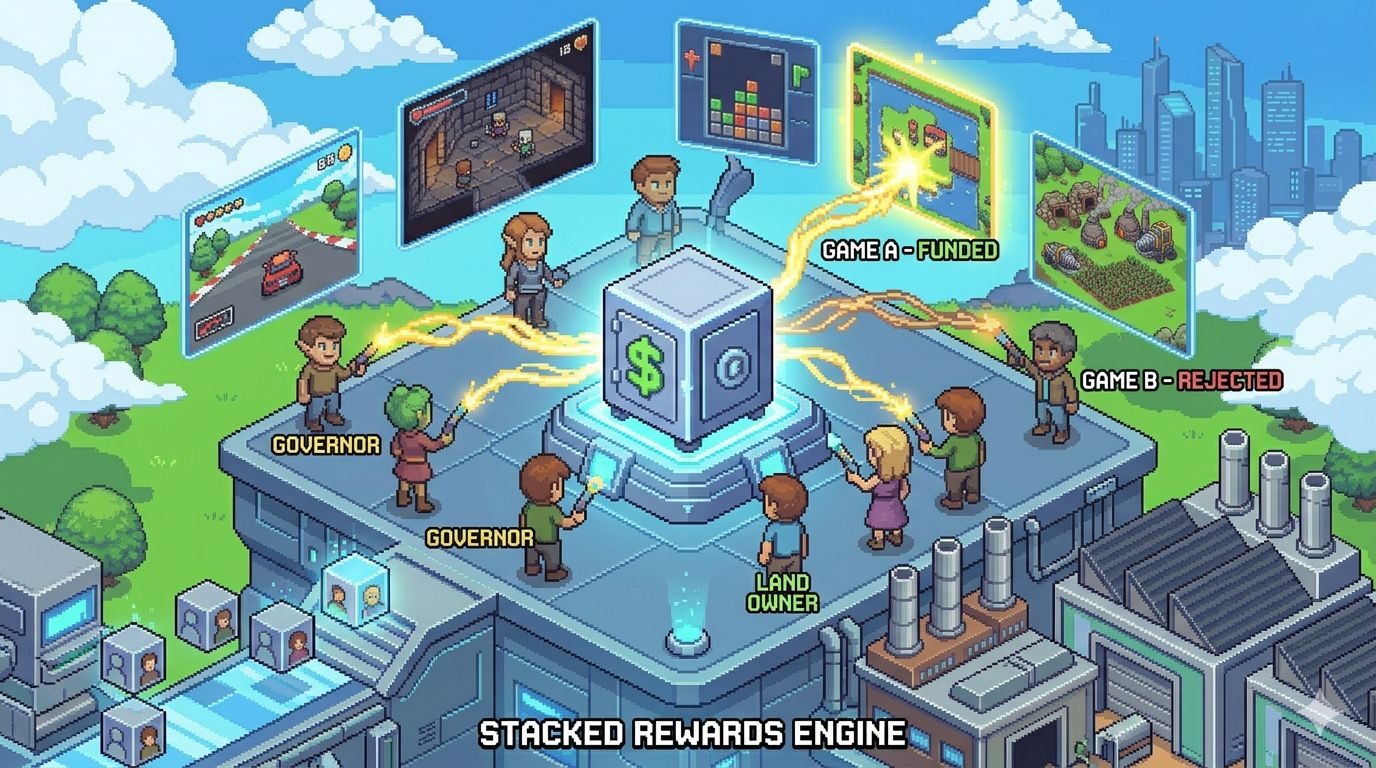
4. Summary: Strategies for players and investors
For players: Release 2.10 marks the complete end of 'fool-proof automation.' You need deeper involvement in guilds, manage land permissions, and pay attention to the 5-hour crop window. Identity and Reputation are now more valuable than mere stamina.
For investors: The circulating supply of $pixel is nearing 66%, and the most aggressive unlocking period has passed. With the migration of the Ronin network to Ethereum L2 (based on OP Stack) by the end of May 2026, the underlying security and scalability of Pixels will leap again.$币安人生
Conclusion: Release 2.10 is a successful 'cooling down' update. It shifts the economic model from 'infinite expansion' to 'stock optimization' through refined industrial restrictions and resource balancing. If you find the gameplay becoming 'harder,' it's precisely the system weeding out speculators to make room for true value holders.
Note: This article is based on the latest public information and on-chain data analysis from April 2026 and does not constitute investment advice.#pixel #Balancer黑客大规模跨链换币 #Tether配合美国制裁冻结3.44亿涉案USDT