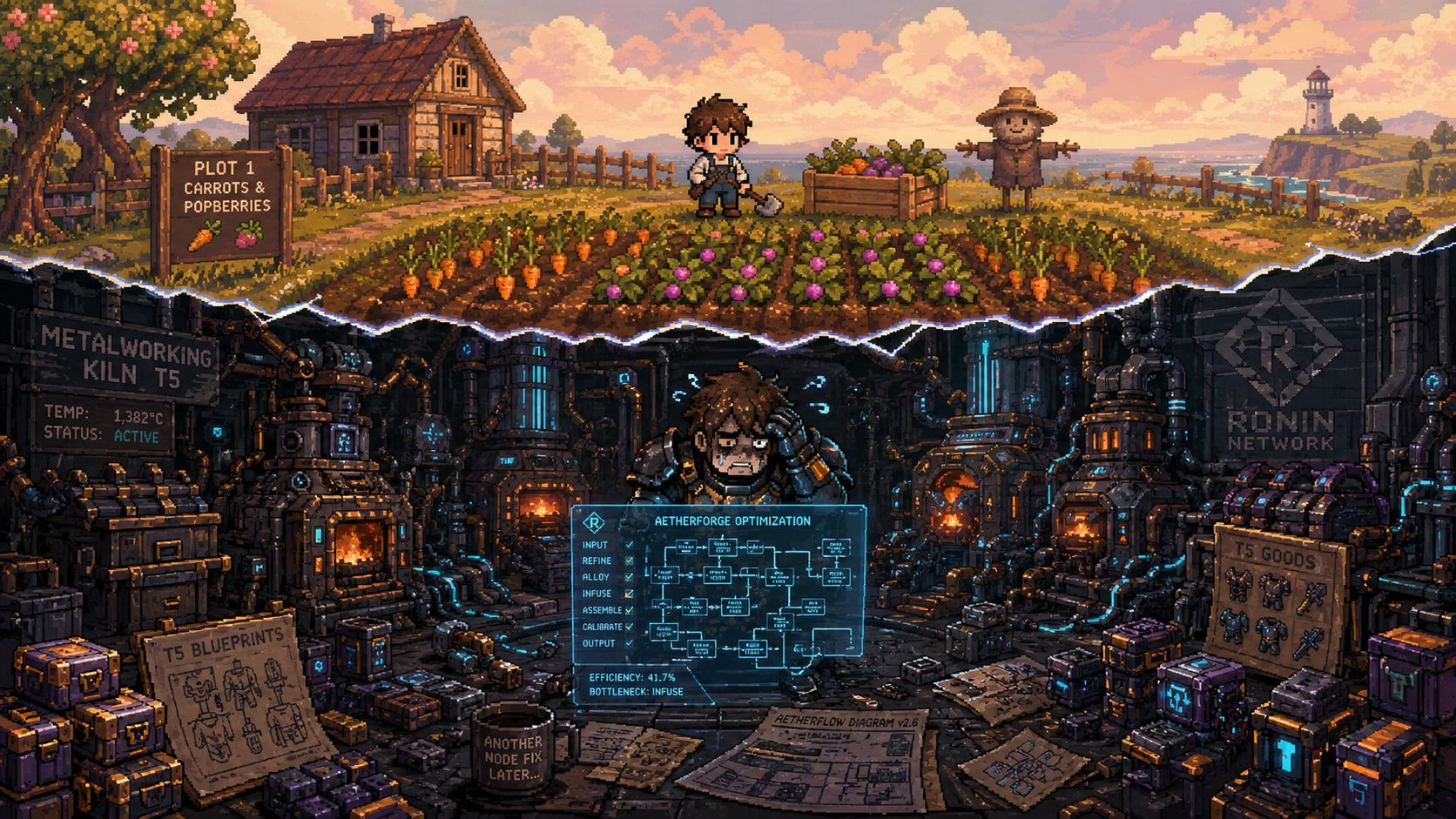
I’ve spent the last few days mapping my new Ronin era T5 Energy Loop in Python..... and something terrifying hit me.
We used to joke that Web3 games were just elaborate Excel sheets, but @Pixels Chapter 2 has actually done it. It’s no longer a farming game; it’s a living simulation of Algorithmic Resource Scarcity.
Think back to the old cozy Polygon days. You planted, you harvested, you clicked a button to cook. It was simple. It was, frankly, kind of boring. Chapter 2 didn't just add content; it introduced High-Friction Logic.
Now, every interaction feels like a resource management crisis. If you want Aetherforge Ore, you don't just "go mining." You have to optimize the opportunity cost of running your Kilns versus running your Stoneshaping bench, all while factoring in the new guild-level production latency.
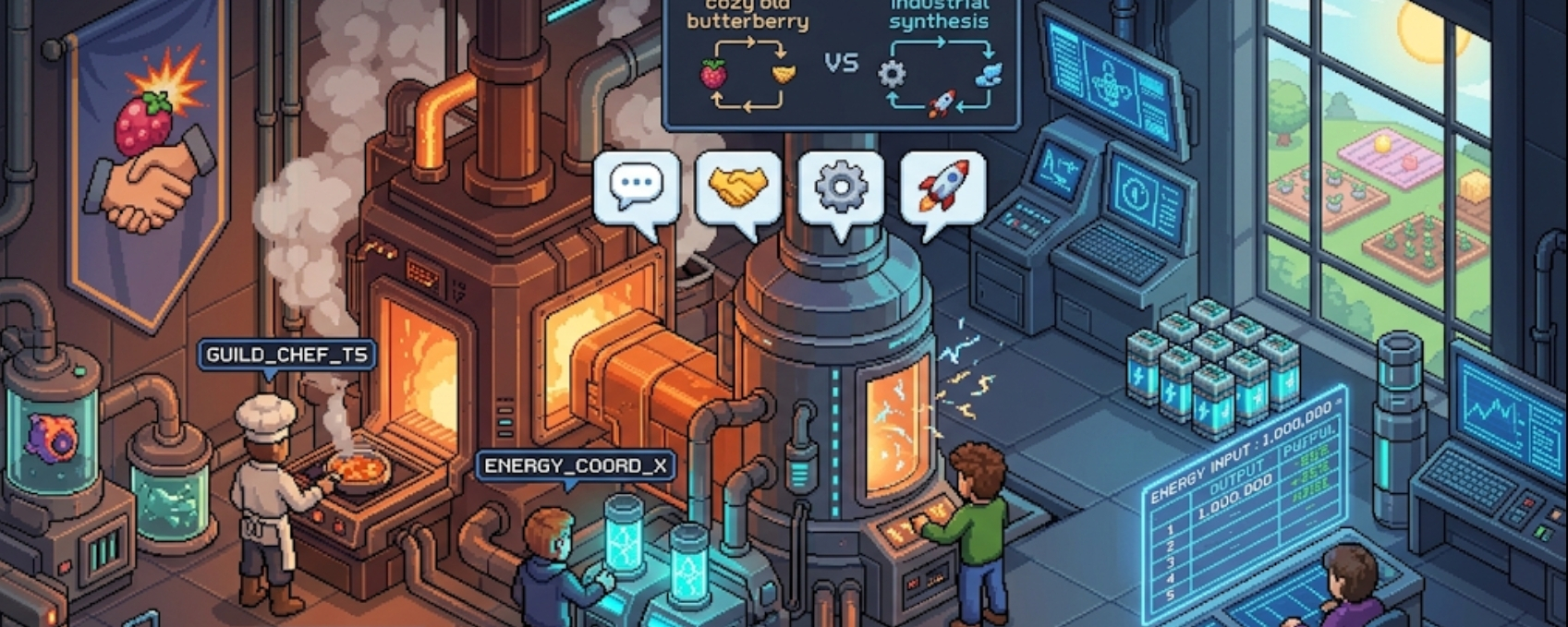
As someone who looks at data for a living, I find the design fascinating..... but brutal. The Stacked integration isn't just about cross-chain gaming; it's the data layer that proves you are an efficient operator. If your input (Time + Energy) doesn't yield the optimal output (T5 resources + Guild Coordination XP), you are literally lagging behind the ecosystem’s growth curve.
It feels heavy. You can't be a "lone wolf" anymore. The game has forced a level of social coordination that effectively filters out bot behavior and rewards human intuition..... and I’m still not sure if I love it or if I’m just trapped by the complexity lol.
Is this the future of Web3? To replace "Play-to-Earn" with "Optimize-to-Survive"? Maybe. But for now, I guess I’ll go back to chasing those rare Aether Twigs and watching the Whales on the market charts to see who is winning the scarcity war.