

Most studios don’t fail at building games.
They fail at keeping players after the first few days.
You see the same pattern every time. Strong launch, good numbers, then the curve bends. Players stop returning, rewards lose meaning, and the team starts manually patching things—tweaking drop rates, forcing events, trying to guess what might work next.
I didn’t fully understand what Pixels was doing with Stacked until I looked at it from that angle.
This isn’t a feature.
It’s a replacement for how LiveOps is usually run.
Inside Pixels, Stacked doesn’t sit on top of the game. It sits between player behavior and reward distribution.
Once a studio integrates the SDK, actions stop being just gameplay.
They become structured signals.
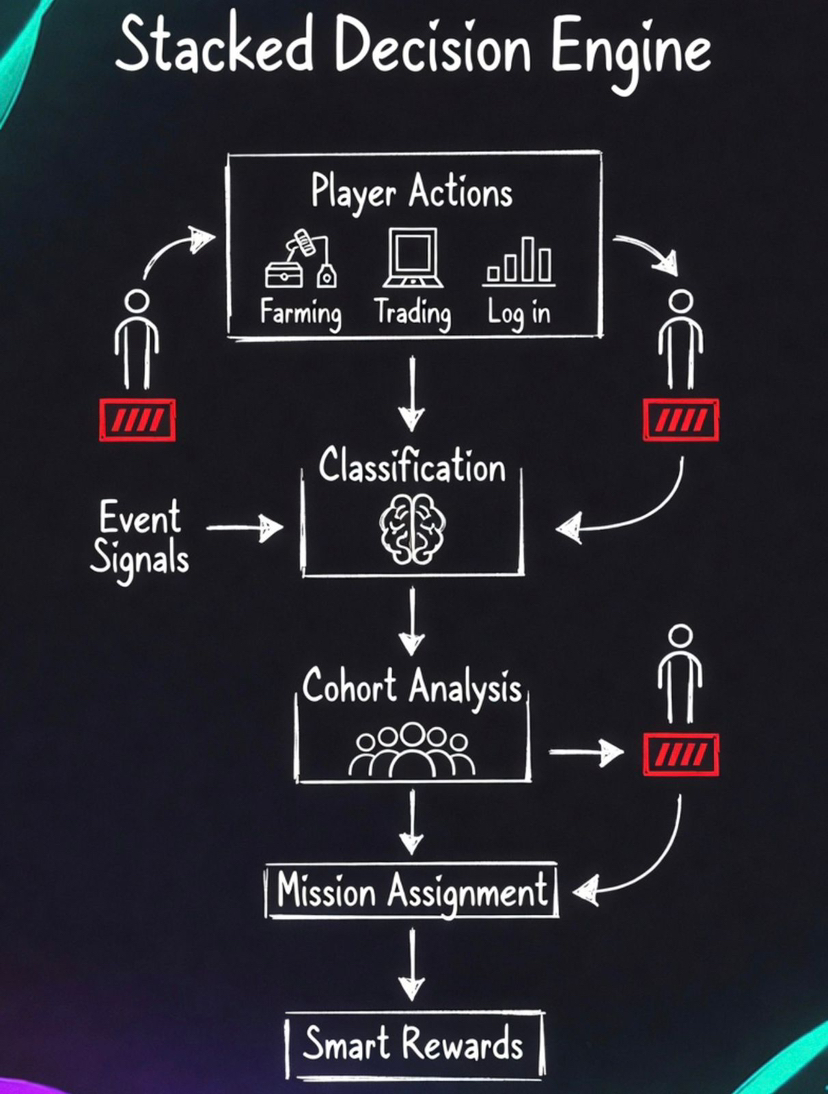
A player farms, trades, logs in, leaves, comes back.
Each action enters a pipeline:
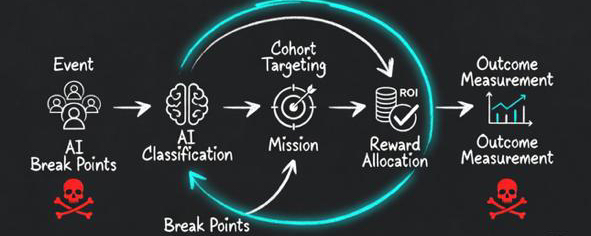
event → classification → cohort → mission → reward
That loop is the core.
And what matters is not that it exists—but that it decides what moves forward.
Most systems reward whatever happens.
Stacked doesn’t.
It filters.
Two players can complete the same task.
One gets a follow-up mission. The other gets nothing.
Not randomly.
Because Pixels isn’t rewarding activity. It’s allocating behavior.
That’s the shift.
When a studio launches with Stacked, they’re not deploying a fixed reward system.
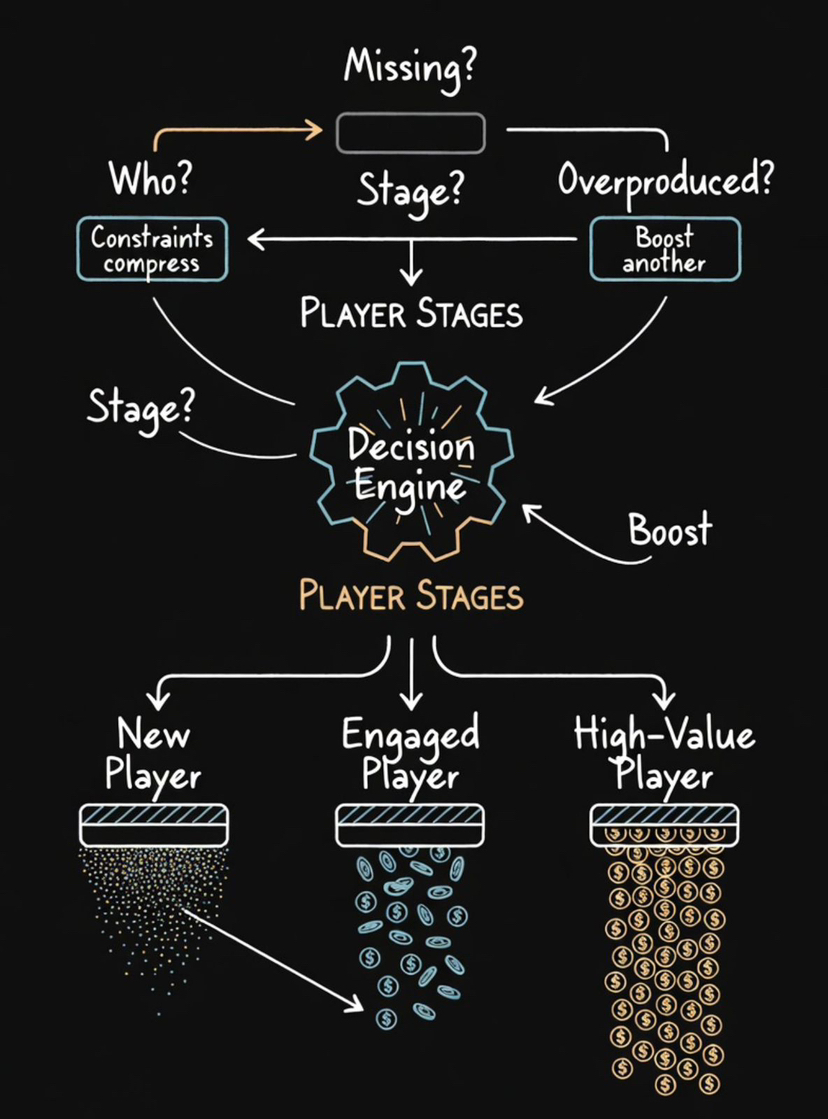
They’re deploying a decision engine.
Instead of “do X, get Y,” the system starts asking:
Who is this player? What stage are they in? What behavior is missing? What behavior is already overproduced?
And that last part is where most economies break.
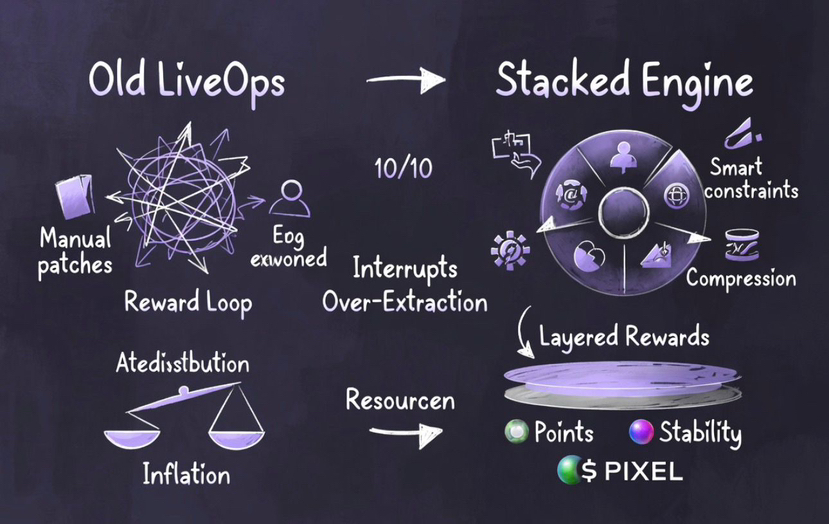
In typical GameFi, if a loop works, it scales uncontrollably.
More players find it → more extraction → rewards inflate → pressure builds.
I didn’t catch this at first inside Pixels, but Stacked interrupts that cycle quietly.
When a loop becomes too efficient, it doesn’t get amplified.
It gets compressed.
Reward weight drops. Mission frequency shifts. Incentives move somewhere else.
So instead of one loop dominating, the system redistributes attention.
Not by forcing players.
By changing where value is accessible.
That’s also why the multi-reward structure matters more than it looks.
Studios using Stacked inside Pixels aren’t locked into one token.
They have:
• points (to test behavior safely)
• stable rewards (for direct value)
• ecosystem tokens like $PIXEL (for alignment)
Each one serves a different role.
And the system decides which to deploy based on context.
A new player might only see points. An engaged player starts seeing token rewards. A high-value cohort gets payouts tied to deeper actions.
That’s not random design.
That’s precision.
Before this, LiveOps meant manual control.
Plan event → launch → wait → adjust later.
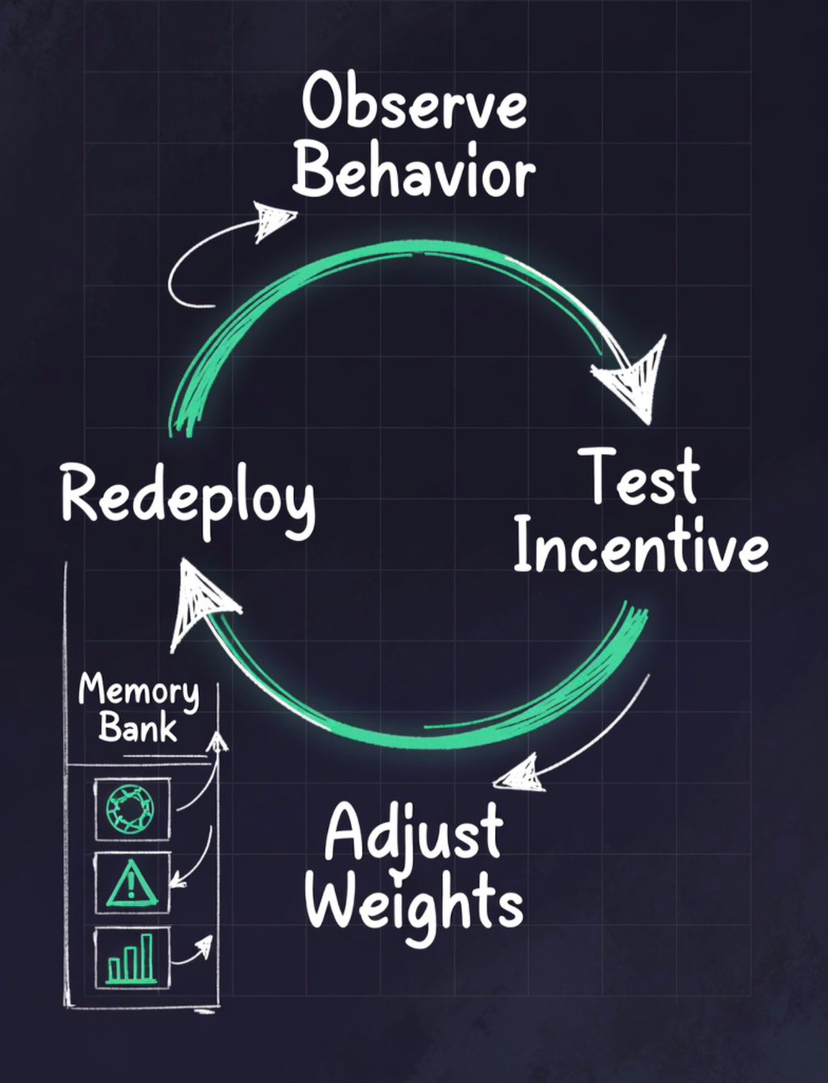
Stacked compresses that into a continuous loop:
observe → test → adjust → redeploy
And it doesn’t stop.
Inside Pixels, this loop keeps running whether the studio intervenes or not.
That’s where the system starts building something most games never reach.
Memory.
Not just stored data.
Recognized patterns.
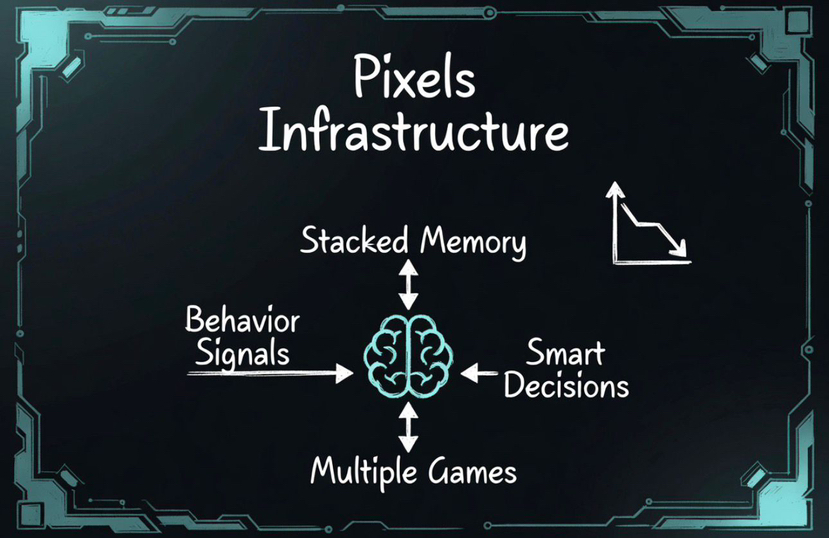
Which players churn after specific actions. Which rewards actually bring them back. Which loops collapse when scaled. Which ones sustain.
That memory feeds back into decisions automatically.
So the system improves without needing constant redesign.
At that point, Stacked stops feeling like a tool.
It becomes infrastructure.
Something that sits under multiple games, carrying learnings across them.
What works in one title inside Pixels doesn’t get copied blindly.
It gets translated into new incentive logic elsewhere.
That’s why the rollout is controlled.
You can’t scale something like this on noise.
If the system doesn’t understand the loops, the signals become useless.
So Pixels starts where it has clarity.
Its own games.
Known behavior.
Predictable patterns.
That way, every adjustment actually teaches the system something real.
And that brings it back to the bigger shift.
Studios stop asking:
“What content should we add?”
They start asking:
Where is engagement dropping? Which cohort is close to leaving? Which behavior is under-incentivized? Which loop is extracting too much?
And instead of rewriting the game, they adjust the incentive layer around it.
So when people look at Stacked and think “better rewards,” they’re missing it.
What Pixels is actually building is a system that decides:
Which behaviors are worth amplifying Which ones need to slow down And where value should exist at all
That’s not something you notice in one session.
But over time, it changes how the entire economy behaves.
And that’s the difference between a game that spikes…
and one that actually holds.
