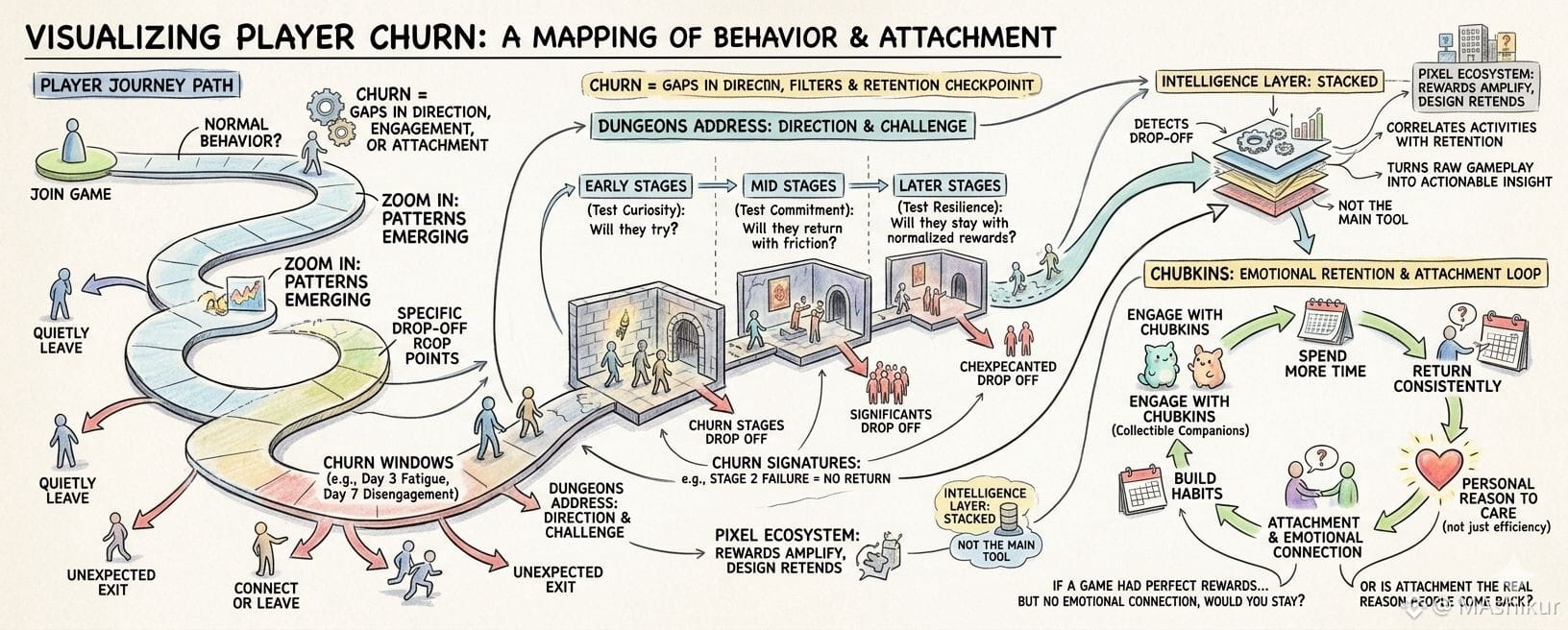
I didn't really get churn… until I saw it happening live inside @Pixels
At first it just looks like normal player behavior. People join, play a bit, disappear. But when you zoom in, it's not random at all. There are patterns. Specific drop-off points. Moments where players either connect… or quietly leave.
And weirdly, a lot of that becomes visible through two systems: Dungeons and Chubkins.
━━━━━━━━━━━━━━━━
DUNGEONS: NOT GAMEPLAY. BEHAVIORAL FILTERS.
On the surface, Dungeons feel like progression content. You enter, complete tasks, move forward. But underneath, they act like behavioral filters.
Early stages test CURIOSITY → Will the player even try this?
Mid stages test COMMITMENT → Will they return after friction increases?
Later stages test RESILIENCE → Will they stay when rewards normalize and effort rises?
When players drop between these stages, it exposes very specific churn windows — like Day 3 fatigue or Day 7 disengagement.
Instead of guessing why users leave, the system can see exactly where it happens. That's powerful.
Because once you know the exact point of churn, you can start fixing it — not with random incentives, but with targeted changes.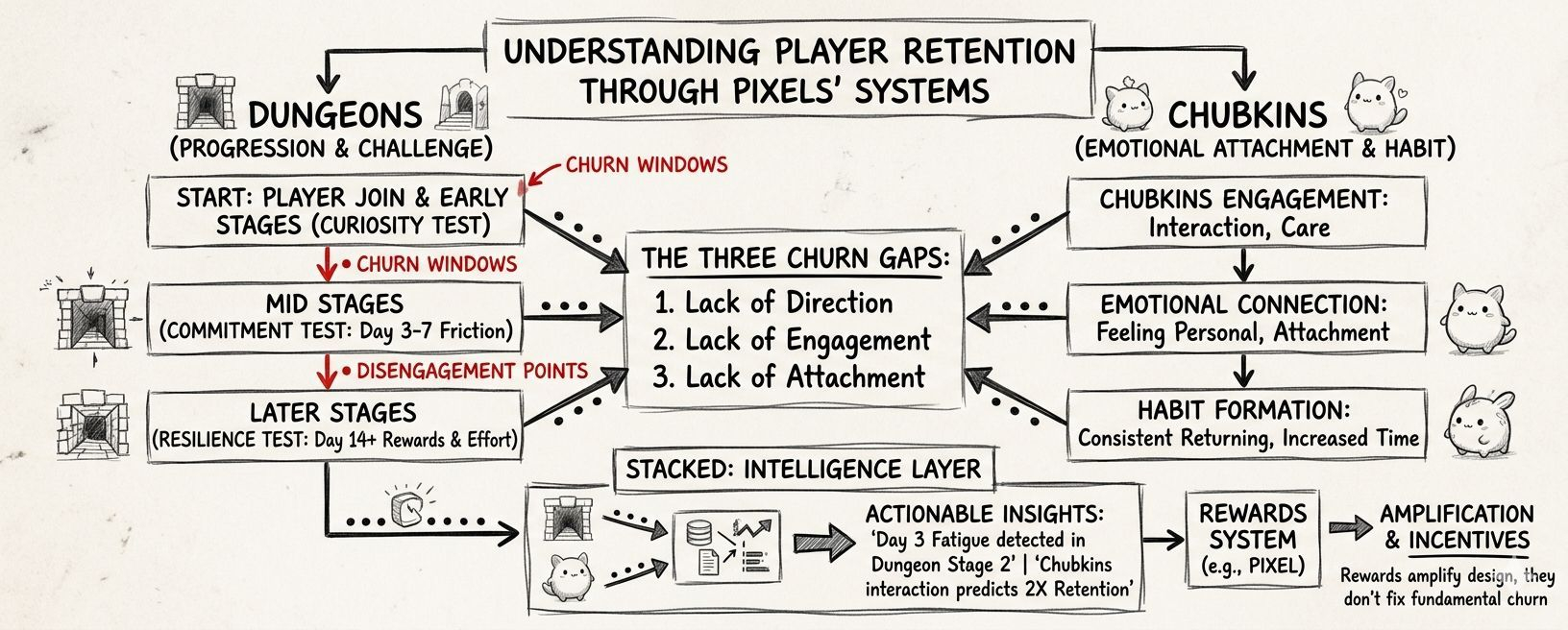
━━━━━━━━━━━━━━━━
CHUBKINS: SOLVING EMOTIONAL RETENTION.
If Dungeons track what players do, Chubkins reveal how players feel.
At first glance they seem like light, collectible companions. But their real impact shows over time. Players who engage with Chubkins tend to:
→ Spend more time in-game
→ Return more consistently
→ Build habits around interaction
Why? Because they introduce attachment. Not efficiency. Not progression. Something personal — something to check on, something to maintain, something that feels like yours.
Instead of logging in for rewards, players log in because they want to.
That's a completely different retention driver.
━━━━━━━━━━━━━━━━
CHURN HAS THREE GAPS. MOST SYSTEMS FIX ONE.
Most systems think churn is about rewards. But in reality, churn usually comes from one of three gaps:
Lack of direction → no clear progression → Dungeons fix this
Lack of engagement → nothing interesting to do → Dungeons fix this
Lack of attachment → no reason to care → Chubkins fix this
When both systems work together, you start covering multiple layers of player motivation — not just one.
━━━━━━━━━━━━━━━━
STACKED: THE INTELLIGENCE LAYER.
This is where systems like Stacked come in quietly. Not as a feature players see directly — but as an intelligence layer behind everything.
Instead of saying "retention is low," it becomes:
→ "Players who fail Dungeon Stage 2 don't return the next day."
→ "Players who interact with Chubkins within the first 48 hours are significantly more likely to stay."
That level of clarity changes how systems evolve. Raw gameplay becomes actionable insight.
━━━━━━━━━━━━━━━━
PIXEL : TOKENS AMPLIFY. THEY DON'T RETAIN.
Even $PIXEL fits differently into this picture now. It's still part of the ecosystem. But it's no longer the main tool for retention.
Because if the underlying experience isn't working, no reward system can fix churn long-term.
Retention has to come from design first.
Rewards only amplify what already works.
Dungeons show you progression friction.
Chubkins show you emotional connection.
Together, they don't just build a game — they map human behavior in real time.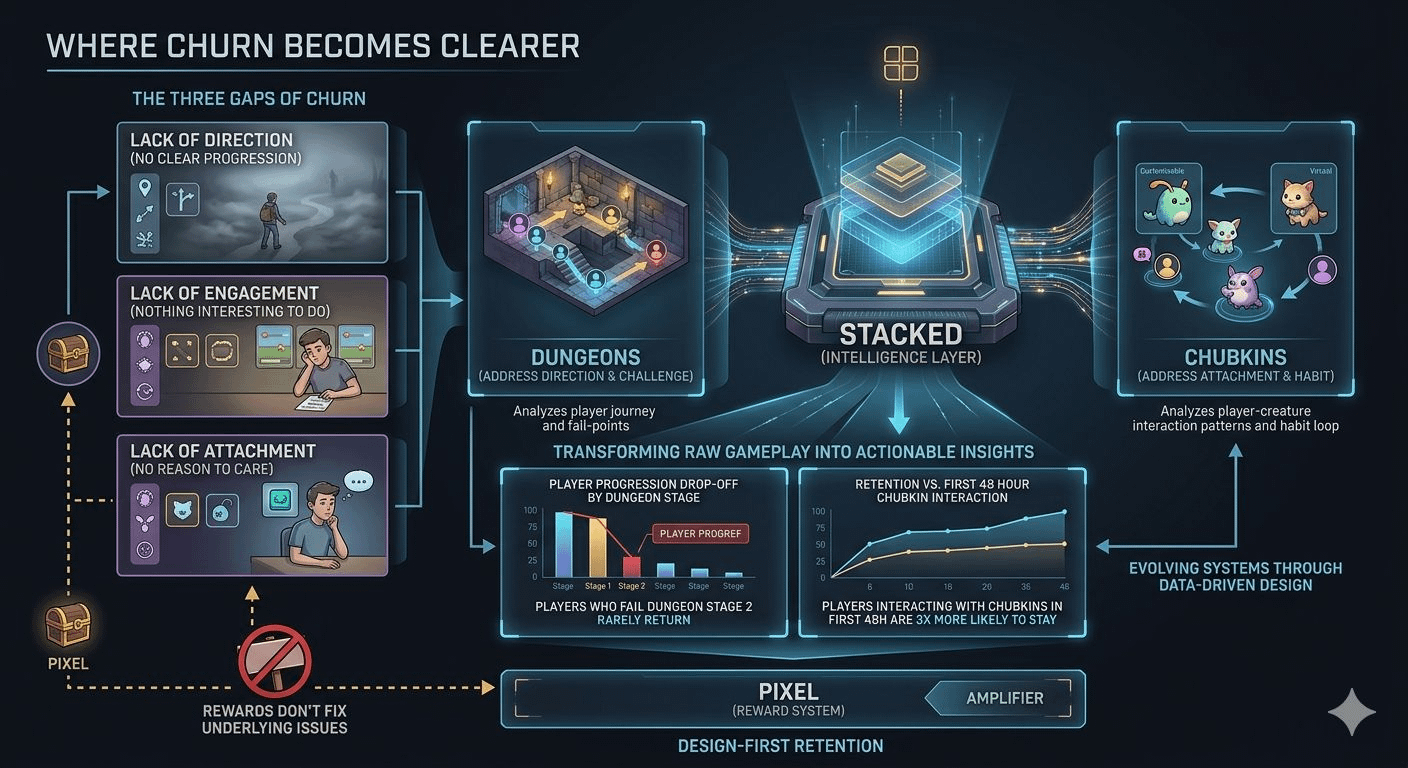
━━━━━━━━━━━━━━━━
So now I'm curious…
If a game had perfect rewards… but no emotional connection, would you still stay?
Or is attachment the real reason people come back?
Not financial advice. Educational purposes only. 🙏
#pixel #Pixels #PIXEL #Binance #GameFi #CryptoGaming #Retention #TRADOOR