
Let’s be real for a second—it’s actually kind of wild how quickly we just nod along to the word "decentralized" without digging into what’s holding it all up.
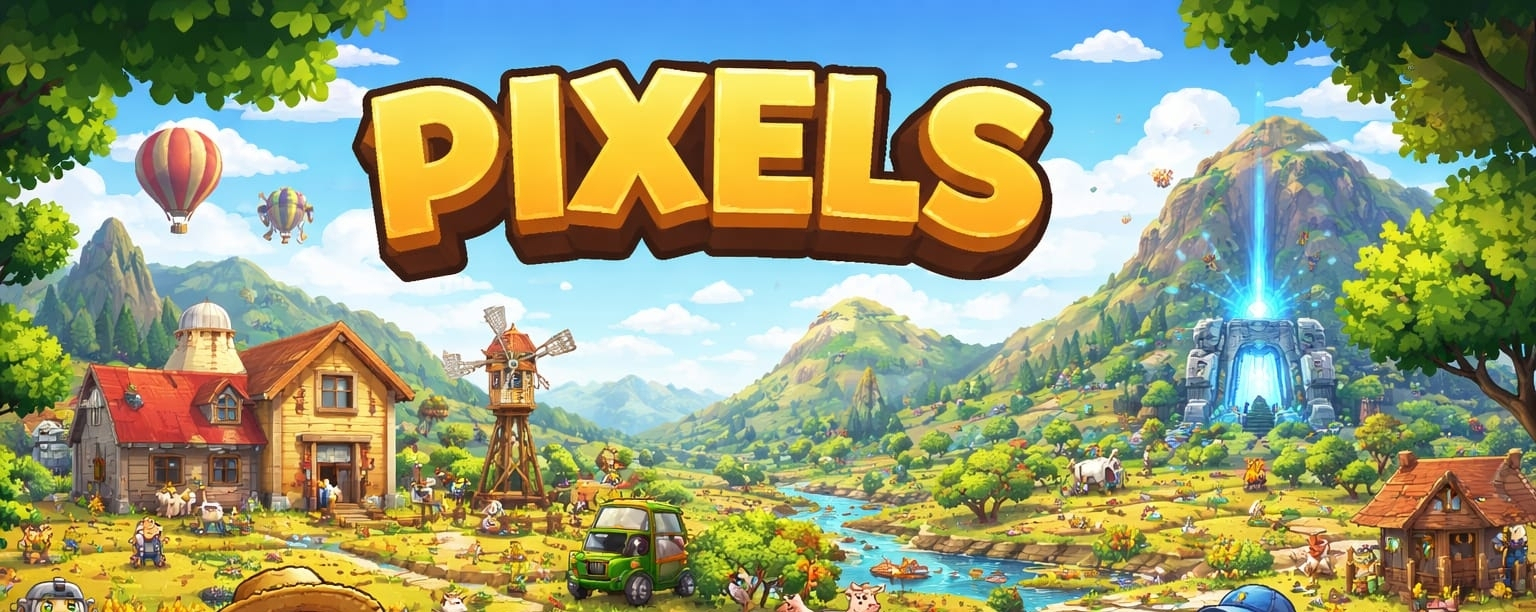
Take Pixels, for example. On the surface, it feels like this vibrant, breathing open world. You’re farming, exploring, building, and feeling like you genuinely own a piece of the pie. But if you peek behind the curtain, there’s a quieter reality at play: the entire game is deeply tethered to the Ronin Network, and that relationship dictates a lot more than most players realize.
It’s not just about where your digital assets sit or how your trades are processed. Ronin is essentially the backbone of Pixels. It handles the heavy lifting—your identity, your ownership, and how value flows through the ecosystem. That kind of integration is great for smooth gameplay, but it also means Pixels doesn't stand totally on its own two feet. It leans. And when you lean on something, you inherit both its stability and its vulnerabilities.
Don't get me wrong, Sky Mavis built Ronin to solve real problems. Fast transactions, dirt-cheap fees, and easy onboarding are massive wins. But it also creates an invisible fence. The big calls—like validator choices, network upgrades, and underlying rules—aren't happening inside Pixels. They happen a layer down. For the developers, this means creativity has strict boundaries. If Ronin pivots, Pixels has to adapt. If Ronin stalls, Pixels is stuck waiting. It looks like a partnership, but it’s definitely not a 50/50 split.
We’ve all seen the fallout when these base layers crack. The Ronin hack wasn't just a technical glitch; it was a brutal wake-up call that when control is centralized at the infrastructure level, the shockwaves hit everyone. It doesn't matter how flawless a game's design is—if the network beneath it gets compromised, everything built on top feels the earthquake. We’ve seen the exact same story play out with Solana’s network outages. It’s a weird spot to be in: building an "independent" ecosystem that can be frozen by flaws entirely out of your hands.
To its credit, Pixels does try to feel open. The $PIXEL token gives us a voice and a sense of participation. There is a genuine spirit of letting the community shape the vibe of the game. But let's not confuse holding tokens with holding the steering wheel. The core mechanics—the stuff that actually dictates how the system evolves—are controlled much closer to the infrastructure layer than the player base.
And what if the community suddenly decided they wanted out? What if we wanted to migrate off Ronin? Good luck. The cost isn't just technical; it’s structural lock-in. Rebuilding the identity systems, economies, and integrations from scratch is a massive anchor holding the game in place.
So, where does that leave us? Pixels isn't totally centralized in the traditional Web2 sense, but calling it fully decentralized is a stretch. It exists in this gray area where players can shape the surface, but a select few shape the bedrock.
It leads to a tough question: When you're planting crops, trading assets, or building your empire in Pixels, who are you really trusting? The devs? The community? Or the network silently setting the boundaries of what’s possible?
Maybe the hardest pill to swallow in Web3 gaming is that true decentralization isn't just about who holds the assets—it's about who has the power to change the rules. And until that power is distributed all the way down to the foundation, the dream of a world entirely owned by its players will always feel just a little out of reach.
