

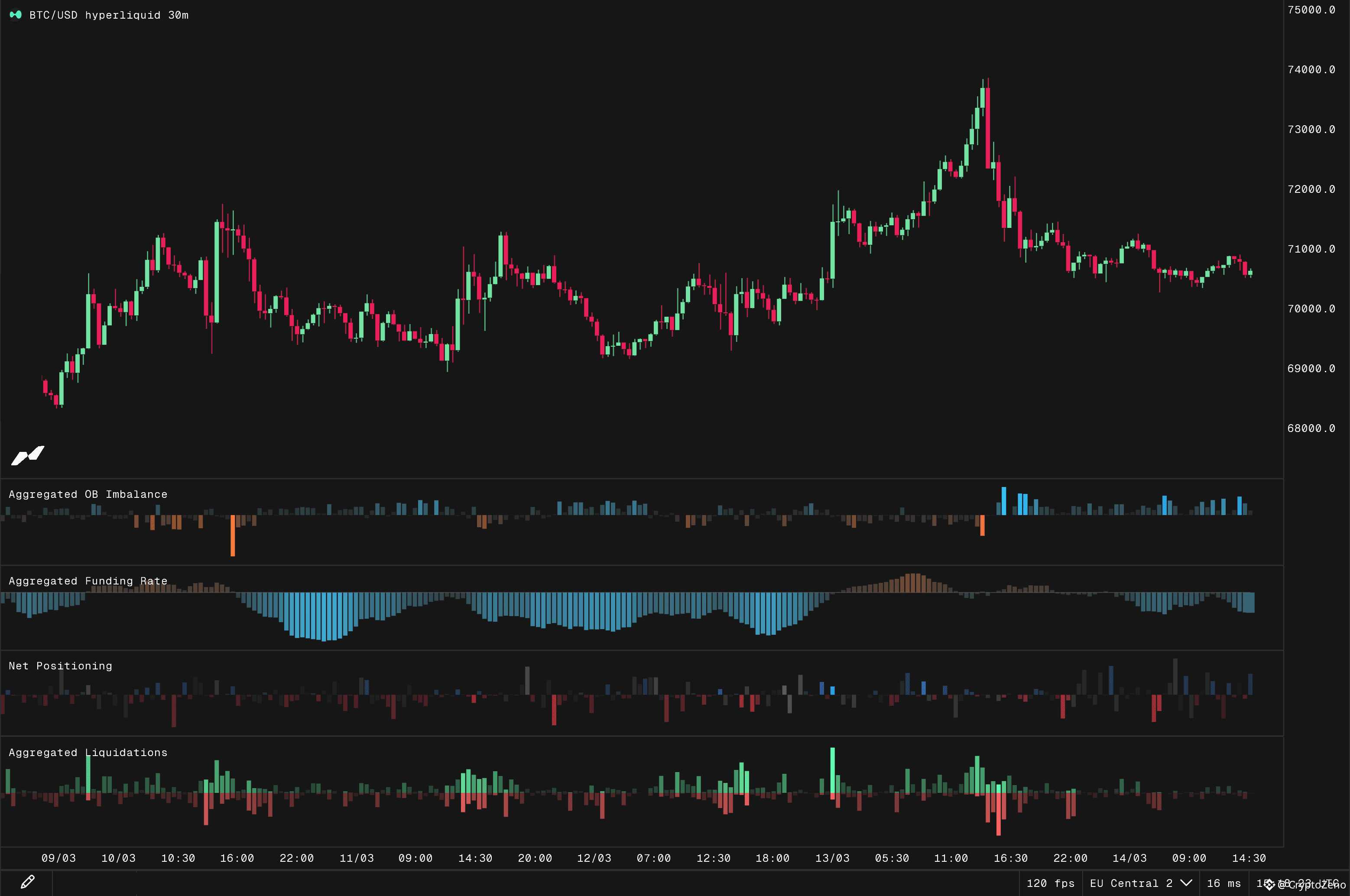
My job everyday is to come to the table, look around and decide where could certain hands move price or force itself into the books in order to move price.
At least on the lower time frames I do this through tools like open interest, funding rates, live liquidations, delta, plus some intuition from repeatedly seeing the same patterns of liquidity repeated after years of watching the same market. These are the tools which give me the ability across a fragmented BTC market to identify where people are positioning, which side they are on, and which moves could force their hand.
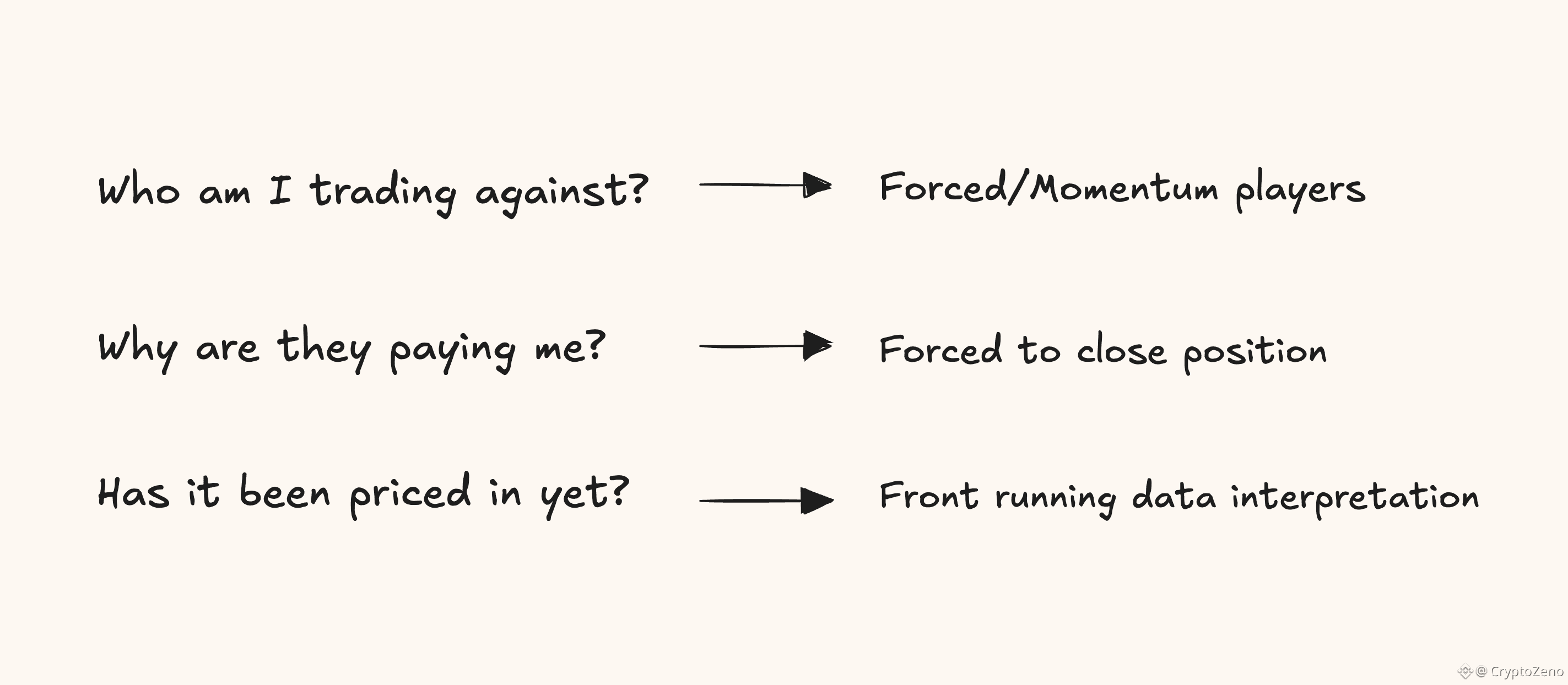
I like to frame my thinking around a single quesiton before getting into a position:
Has the market priced this in yet?
If it hasn't been priced in then there's edge in what i'm trying to execute from. If I see the market has priced it in already then the edge has diminished and the trade is no longer there.
A good example of this is when looking for trapped traders, specifically looking at whether open interest has decreased or not to spot whether those "trapped positions" have forced their position back into the market.
The end goal is to position myself into the market early enough to exploit something Ive seen which I believe the market hasn't priced in yet.
Another great example of this, is through understanding liquidity in particular how thin books can allow for exaggerated price movements. If you pair that alongside trapped positioning you will very often get a very nice mean reversion setup.
A common misconception is that "thin books" can only be identified in real time and through looking at the dom. This is not true. Using volume candles or looking at how far price moved in relation to how much volume pushed it can help answer this question too. Alongside identifying surges in open interest to help identify trapped positions.
It's about finding your thesis for why you should get paid from the trade you want to take, then going to the technical board and figuring out which tools will help identify this in real time.
Don't pick random tools and use them because they look fancy, think about where your edge comes from (at route level) then decide which tools allow you to spot that mispriced event faster and in a more reliable manner than anyone else could.
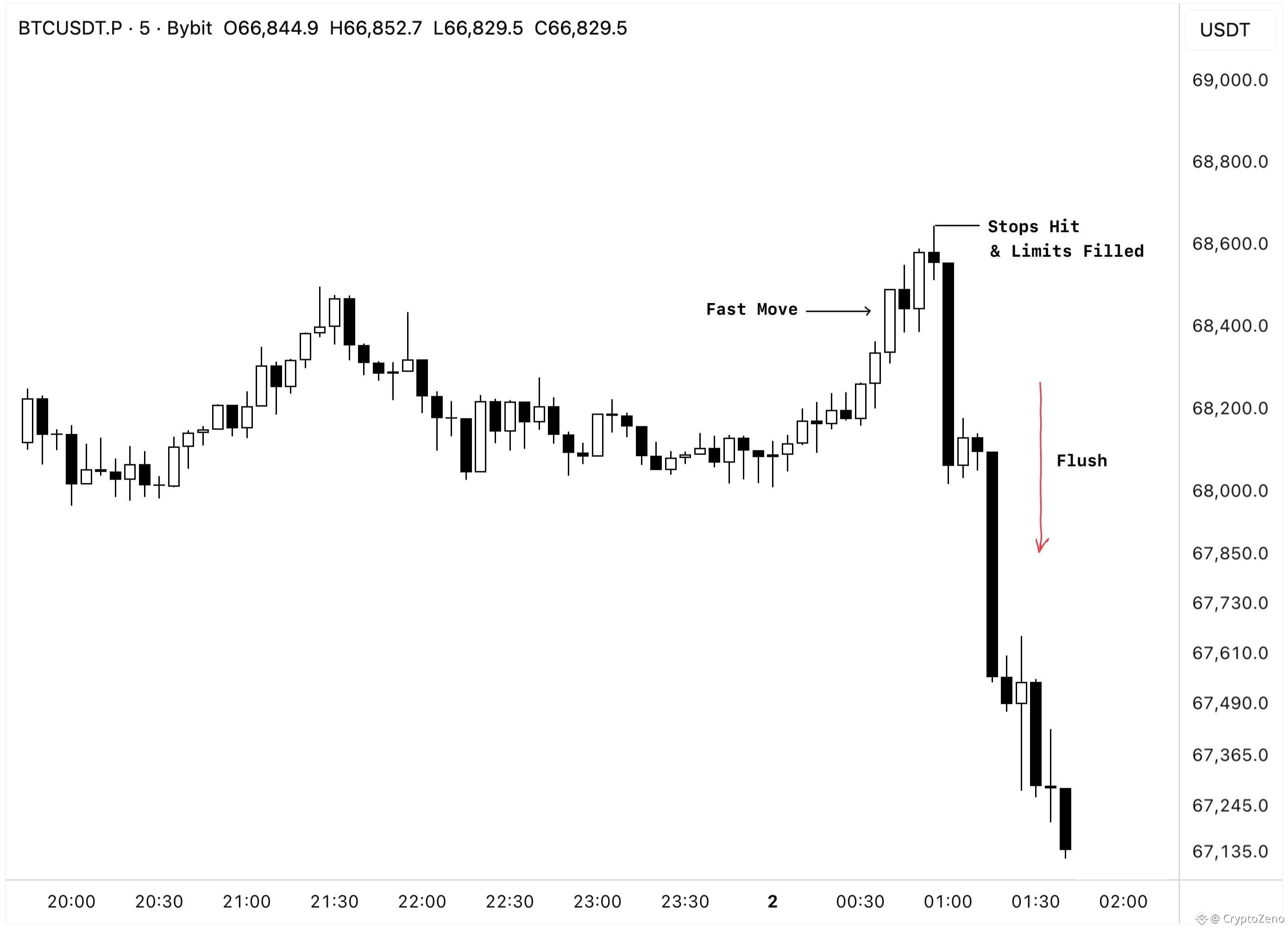
A fast move into a predictable stop/tp zone that happens unusually fast relative to local regime is one thing I commonly look for. These moves are often engineered, meaning someone/group of people have forced price to a certain local level for liquidity purposes.
> Force price up
> Stops/liquidations triggered
> Limit sell orders filled
> No real conviction
> Price reverses
This requires some level of intuition to reliably identify, but in essence upon a break of a level I want to see excessive buying in the form of aggressive stops being hit or liquidations being forced into the book. Both offer up opportunity for opposing side limits to be filled, and if the move was manufactured or deliberately pushed up in this manner, theres no real conviction behind it, allows for a easy reversal.
It all comes down the fact that if I know why i'm looking for something at a certain location, that can be transferred over much easier than just punting random levels without reasoning.
Think about who you are trading against and how you can profit off that info before it is priced in, you are in the research business.
#CryptoZeno #TetherFreezes$344MUSDTatUSLawEnforcementRequest