
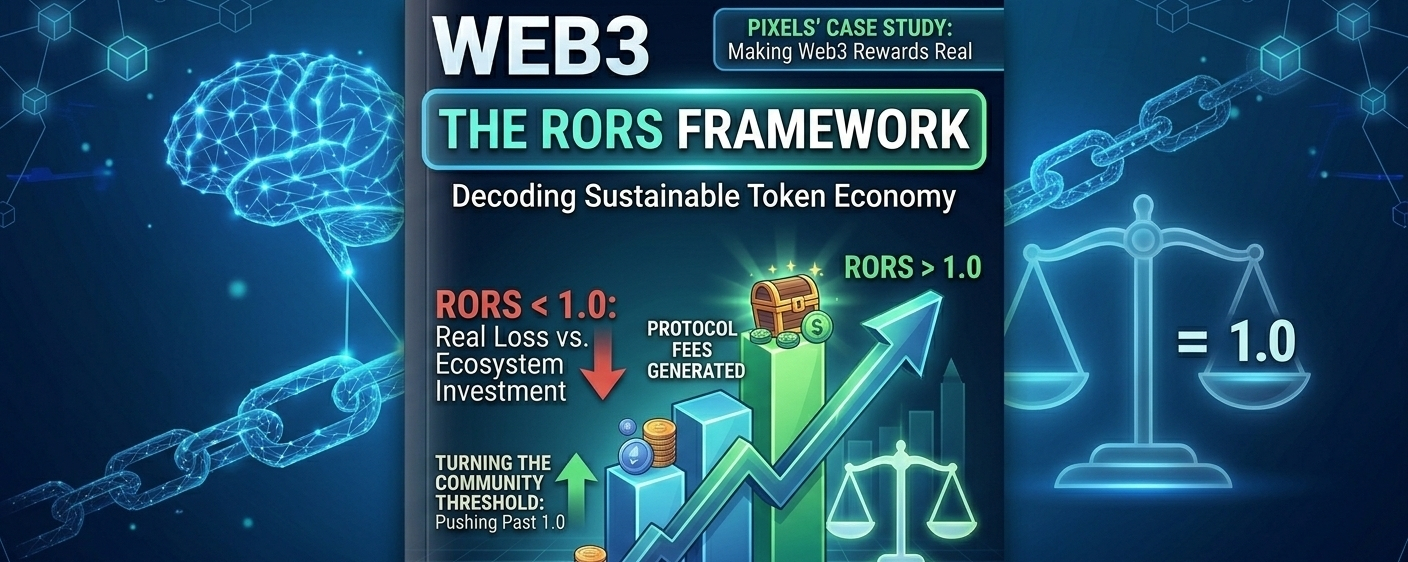
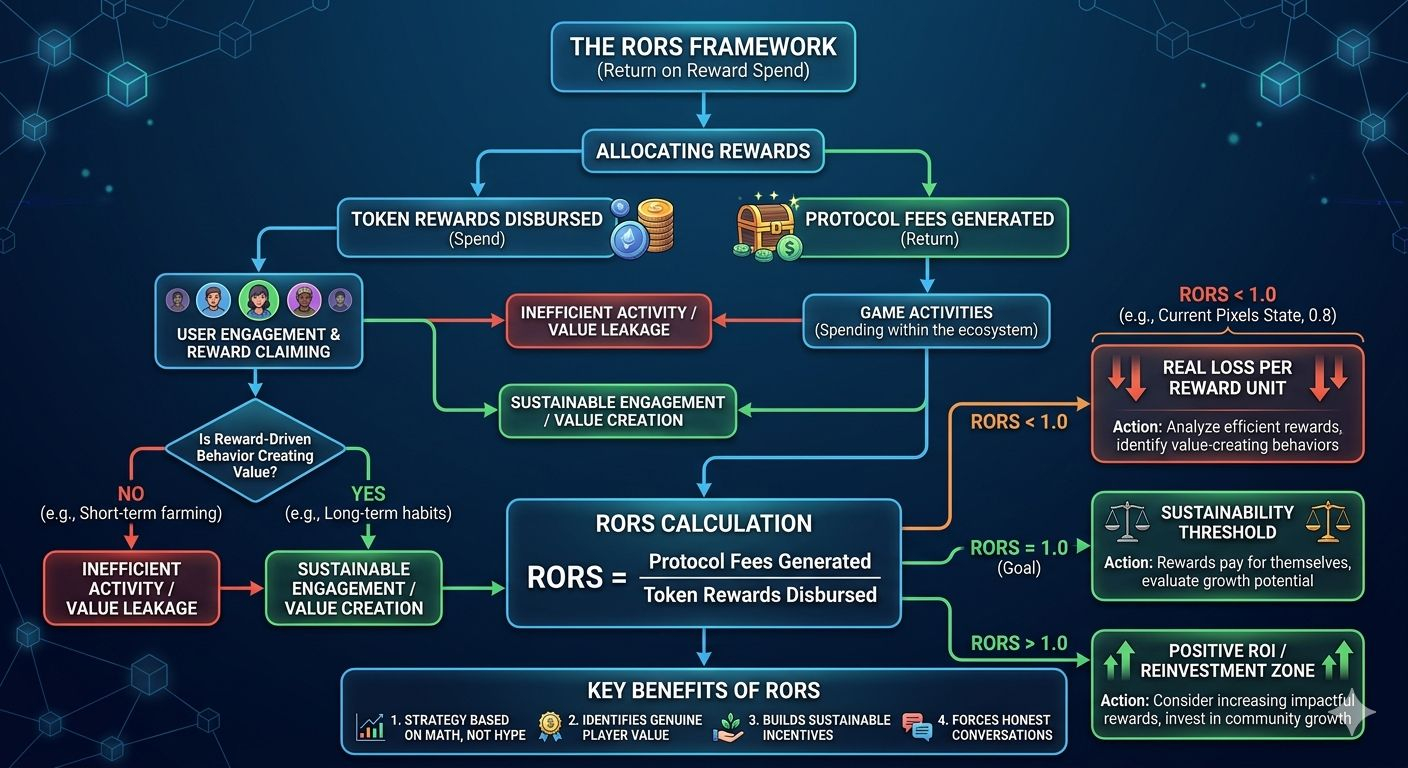
 I’ve been turning this over in my head for a bit now—Pixels and their whole RORS thing—and man, it just feels different. Like someone finally decided to stop with the hype slides and actually say what’s really going on with player rewards. It’s not complicated or fancy; that’s what I like about it. RORS is just Return on Reward Spend. Basically, for every token they give out to players, how much money comes back to the protocol through fees? They even liken it to ROAS from regular advertising, which makes total sense. Right now it’s sitting around 0.8, and they’re straight-up aiming to push it past 1.0 so the rewards start paying for themselves instead of just… costing.
I don’t know, something about that honesty hits me. For the longest time in play-to-earn, it felt like everyone was pretending rewards were this magical growth potion. More tokens out, more players in, bigger numbers everywhere, happy days. Nobody wanted to look too closely at the other side—that those tokens are actual money walking out the door. RORS doesn’t let you pretend. If you hand out a buck in rewards and only get eighty cents back, that twenty-cent hole? It’s not “ecosystem investment.” It’s a real loss. Maybe it’s worth it while you’re still growing, sure, but it’s still a loss. Setting 1.0 as the goal feels like they’re finally admitting rewards have to earn their keep eventually.
What gets me the most is how it makes you think about whether those rewards are actually buying the right stuff. Not just more logins or quest completions that look pretty on a dashboard. But real behavior that makes the game better and stronger over time. When it’s under 1, it’s like a quiet nudge saying, “Hey, some of this activity might just be expensive motion.” I’ve watched too many old play-to-earn games train players to become full-time farmers—people who show up for the payout and bounce the second the numbers stop looking juicy. Once that habit sets in, everything gets more expensive because nobody’s there for the game anymore. They’re there for the extraction. RORS makes that misstep impossible to gloss over.
Don’t get me wrong, it’s not the full picture. Rewards can build community feel, get creators excited, plant seeds that bloom way later in spending or loyalty—stuff that doesn’t show up neatly in this month’s fee numbers. But as a gut check? It’s gold. It turns the whole “let’s reward the community” conversation from a warm fuzzy ritual into something you actually have to defend with math.
I love that they’re open about being at 0.8 right now. Most teams would bury that and just blast out user-growth tweets. Admitting it feels brave, because now everyone knows exactly where the pressure is. It forces better questions: Which players are actually sticking around and adding value? Which incentives create real habits instead of temporary grinds?
Yeah, there’s a flip side too—get too obsessed with this number and you might get scared of any reward that doesn’t pay back fast. You could miss the slower, smarter bets that build something lasting. But even with that risk, it still feels like a mature step. Pixels seems to understand the real puzzle here: of course players love getting paid. The hard part is building a system that can tell the difference between creating actual value and just throwing money at short-term buzz. RORS doesn’t magically solve it all, but it does one thing most projects never dared—it shows you the bill, plain and simple. And in this space, that kind of straight talk feels pretty damn rare.@Pixels #pixel $PIXEL
