
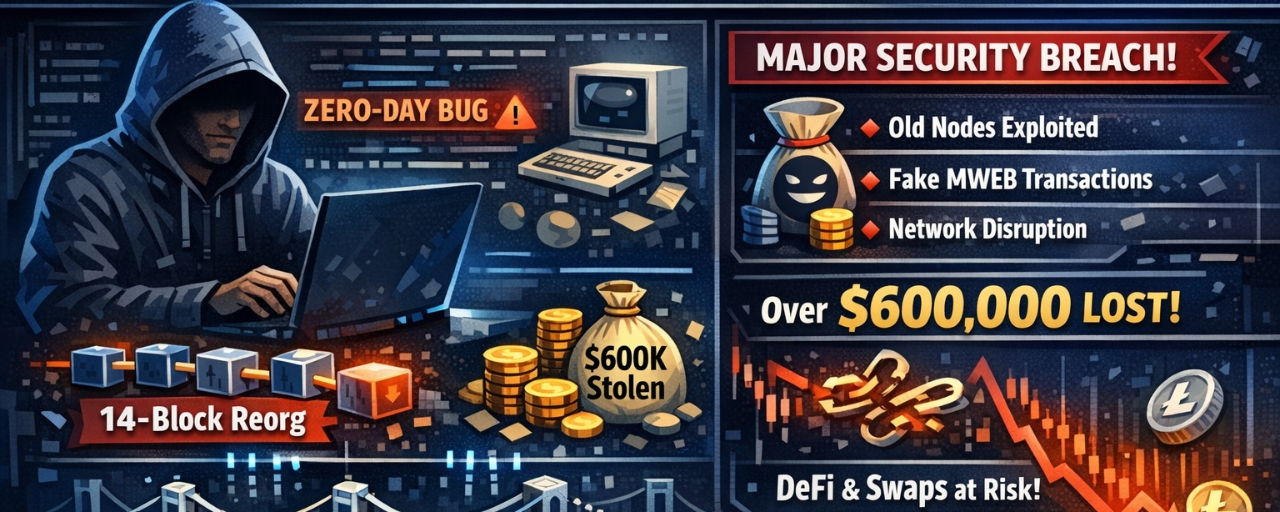

So, Litecoin had a pretty wild week. The MWEB (Mimblewimble Extension Blocks) exploit? Yeah, that’s not something you see every other Tuesday. We’re talking a 14-block reorg (for non-geeks, that’s like rewriting the last chapter of a book—after you already printed it).
This whole mess kicked off because someone found a zero-day bug hiding in the MWEB code—a corner of privacy magic on LTC. Turns out, some miners were still running old software, so they weren’t actually double-checking all the new transaction rules. Result: bad actors snuck through bogus transactions and, you guessed it, made off with a sizable stack—estimated at $600k.
Why does this matter beyond Litecoin? Lots of DeFi and cross-chain stuff relies on LTC’s network to behave. One hiccup there, and you get a ripple effect through a pile of swaps and bridges.
Fast and Dirty Stats
Reorg length: 14 blocks (blocks 3,095,930 to 3,095,943)
Cash on the line: Around $600,000 (via NEAR-connected stuff)
How’d they do it? Exploited outdated node logic. Classic.
Hit hardest: Cross-chain swaps, peg-outs, DeFi deals with LTC as a bridge
Just for context, Litecoin rarely gets mixed up in these reorg shenanigans. Typical blips are 1-2 blocks, and usually just random network lag—not this kind of surgical strike.
How Bad Was It?
Reorgs are usually short and sweet. A 14-block reversal is, uh, NOT normal. That’s a 600–1300% spike from the usual. Financial loss also spiked—$600k instead of the typical $0–$50k loss window, and actual transaction consistency went down the drain for a minute.
Peeling Back the Layers
Here’s the real kicker: The exploit showed what happens when not everyone updates their software. Attackers spotted the gap, plopped in fake MWEB transactions, and the old nodes just ate them up. Those were accepted into the block history, creating a “shadow reality” for a hot second—enough time for double spending and raiding some cross-chain pools.
So, apart from straight-up loss, this is a poster child for “modular blockchain headaches.” If your base chain and upgrades get out of sync, you basically invite this sort of chaos.
How Does This Compare?
Bitcoin and Ethereum have had baby reorgs—almost always due to networking delays or two miners getting lucky at once. With Litecoin’s ordeal, you’re staring right at an exploit, not old-fashioned fluke.
In short: This wasn’t an accident. Somebody knew exactly what wires to cut.
- 14 block reorg—giant, by Litecoin standards.
- A zero-day MWEB flaw let bad data in on older nodes.
- Double-spending and cross-chain trouble followed.
- $600k got pinched, a lot of it from connected DeFi.
- This blows open all sorts of “privacy extension meets real world” risk.
The good news? The LTC devs were on it—vulnerability got patched up, and the bad blocks are history.
Why The Experts Care
This isn’t just “oh, bummer.” It’s a reality check for any blockchain pushing privacy add-ons or sidechains. If all parts of the network aren’t synced and playing by the same rules, attackers don’t have to break cryptography—they just have to find the cracks. In this space, consensus drift isn’t just academic; it means money walks out the door.
So yeah, the MWEB exploit and ensuing chain reorg is a big red flag about how tricky “upgrading” blockchain consensus actually is—especially when you’re trying not to leave the old guard behind. Patching the code is only step one. Expect LTC and its DeFi friends to get a lot more strict about forcing node upgrades and keeping an eye on how cross-chain stuff depends on a healthy chain. Litecoin just got nailed by a 14-block chain reorg after an MWEB exploit—$600K lost, validation bug exposed. Here’s what went down.