

Honestly, when I first came across Stacked, my initial reaction was: can this really take off? I've seen way too many so-called "game reward platforms" out there, and they all follow the same playbook—set up a task board, let players watch ads, grind for hours, and cash in on rewards, only for the project's metrics to look good for a bit, then the rewards tank, users bounce, and you're left with a mess. So when I heard the Pixels team was rolling out something new called Stacked, I was pretty indifferent. But with several friends hyping it up, I thought: alright, let's dive in and see what kind of tricks this has up its sleeve.
So, I actually ran into something strange.
About three days in, after wrapping up my daily tasks, I was feeling a bit burned out, thinking, 'That's enough for today, I'll pick it up tomorrow.' Suddenly, the system popped up with a reward—nothing major, just a few cents worth of $PIXEL, but the timing was spot on—like when you're exhausted and there's a bench right next to you, or when you're thirsty and someone hands you warm water. The first thought that popped into my head was: Is there something behind this keeping an eye on me?
Later, I went to check and, sure enough, it was there.
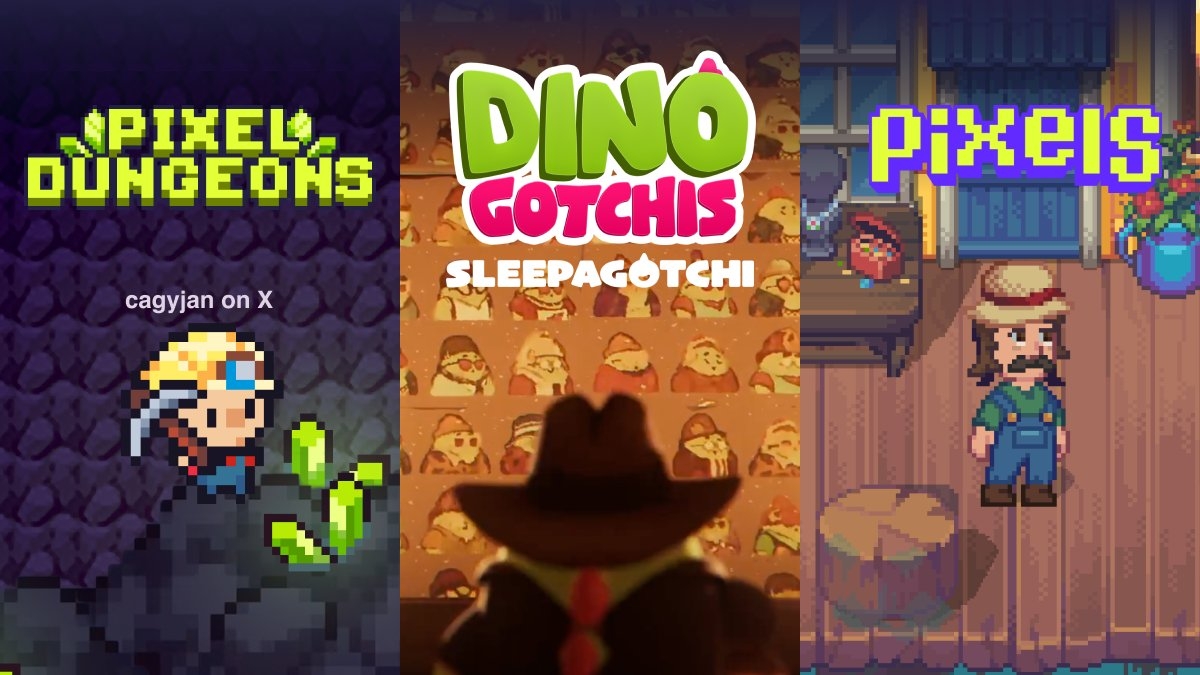
Stacked runs a foundational AI game economist system. In plain terms, it’s like a particularly savvy accountant quietly monitoring the behavior data of millions of players, pondering three main questions every day—who's about to churn? How can we retain them? How much reward is just enough to avoid losses? You might think this is just a common user incentive system, but it’s different. The 'task platforms' I’ve encountered before had a mechanism that basically rewarded those who spent the most time, leading to scripts exploiting the system, studios bulk-registering accounts, and project teams buying false prosperity, ultimately crashing down. The Pixels team has learned from these pitfalls, so they did something particularly practical—they filled in the holes they’ve stepped into and packaged that capability into Stacked. It’s not just a concept on a PPT; it has been running for over a year in Pixels, Pixel Dungeons, and Chubkins, handling over 200 million reward distributions and helping project teams earn an additional $25 million. In short, when they say 'it works,' they actually have receipts.
So, what's so impressive about this AI? It's not the kind of 'one-size-fits-all' stupid incentive system. It asks some pretty tricky questions, like: 'Why do those heavy players suddenly stop playing between day three and day seven?' or 'After new players complete the first three tasks, which action best predicts whether they'll stick around?' These questions seem simple, but most game teams don’t dig deep; they rely on gut feelings and guesswork. Stacked is different; it extracts patterns from massive data sets and hands project teams little notes: 'Heads up, this batch of users has seen a 30% drop in reward sensitivity after their fifth login; it’s recommended to double the reward for the sixth task.' Once the project team gets that note, they just click a couple of times in the backend, and a new event goes live. The speed from identifying issues to implementing solutions is as smooth as a hot knife through butter. Those 'just right' rewards I experienced earlier came from this.
Speaking of which, I have to mention something that gives me a solid feeling: Stacked isn't just blowing smoke. It has generated real revenue, helping Pixels earn $25 million. As an average player, my most direct feeling is that the time I invest and the tasks I complete are backed by a solid system. It’s not like those so-called 'play-to-earn' games where you might earn today and lose tomorrow, leaving you completely uncertain.

Additionally, there's an interesting shift: $PIXEL's 'role' is expanding. Previously, $PIXEL was basically the token for the game Pixels, where you farmed, completed tasks, and sold items—all within the game. But with Stacked launching, $PIXEL will become a cross-game reward currency. To put it simply, it used to be a voucher for the corner store, but now it might turn into a universal card for the entire mall. More games integrating with Stacked means more demand scenarios will consume $PIXEL. With more users and more places using it, the value dynamics will obviously change. Plus, Stacked itself is a B2B infrastructure; its value doesn't rely on the popularity of any single game, making it much more stable than those 'single-project bets.'
Of course, this system isn’t without its issues. The real test will come as it scales up. Right now, Stacked mainly operates within Pixels' ecosystem, but once it opens up to external studios, can it fend off teams that specialize in gaming the rewards? Will the economic model hold up under a heavy influx of external traffic? My personal habit is to not just consider their claims, but to watch how many external games launch over the next three months and how the real paying user data trends. I’ll be keeping an eye on three things—first, the actual number of external studio integrations, not just the collaboration announcements; second, the daily active users for each game, not data generated by bots; and third, the actual consumption rate of $PIXEL within the Stacked ecosystem. If these three metrics continue to trend positively, then it’s truly up and running.

Sometimes when I suddenly receive a reward in Stacked, I can’t help but wonder: is this AI thinking I’m a 'promising talent,' so it quietly slips me a little incentive to keep me around? It’s a pretty fascinating feeling, like a silent friend noticing you're down and quietly handing you a cup of warm water. It doesn’t say any pretty words, but it warms your heart.
Anyway, I log into Pixels every day as usual, farming when I can and completing tasks without expecting to get rich from it. It just feels reassuring to know there's a system understanding my needs, making everything more grounded. Most people in the market are still trying to figure out how to draw players in, but what truly sustains an ecosystem isn’t just the number of new users; it’s whether you can get people to want to stick around.