
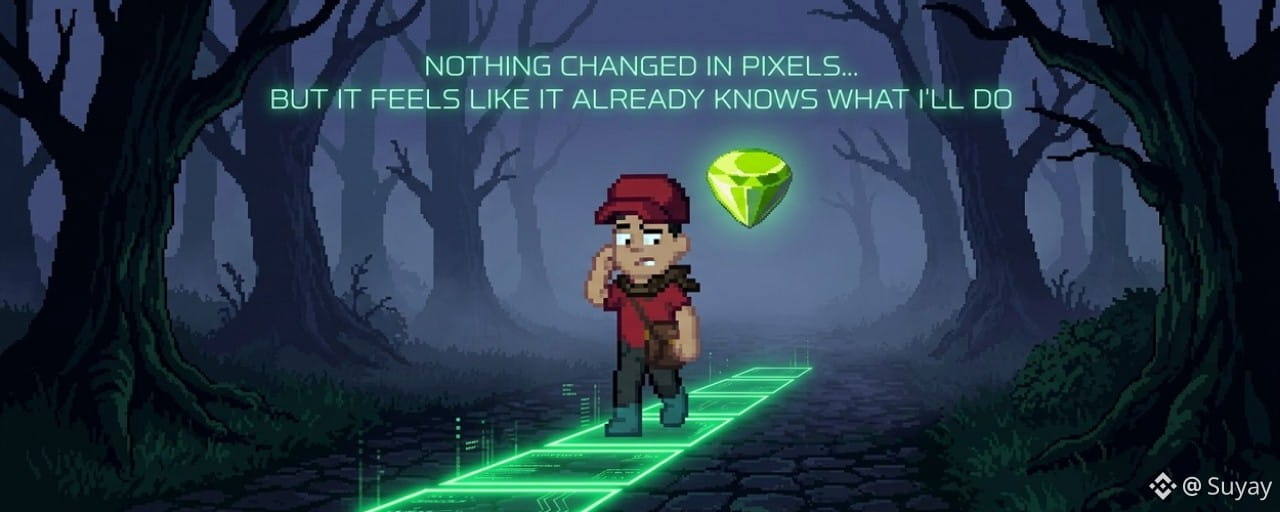

I don’t know if it’s just me, but these last days inside Pixels feel different in a way that’s harder to explain than before. Not because something big happened, but because nothing really did. No major shifts, no sudden volatility, no obvious changes forcing you to react. Everything just… continued.
And that’s exactly what made me notice it.
A few days ago, it still felt like the system was responding. Price moving, rewards adjusting, behaviors being filtered more aggressively. You could feel that feedback loop, even if you didn’t fully understand it. You did something, and somewhere in that chain, the system answered back.
Now I’m not sure that’s what’s happening anymore.
$PIXEL is holding its range, most of the supply is already circulating, and the environment feels stable in a way that doesn’t demand attention. Nothing is pulling you to react, nothing is forcing urgency. On the surface, that should make everything easier to read.
But it doesn’t.
If anything, it feels like the opposite.
Because when the system stops reacting in visible ways, it also stops showing you where you stand in real time. You keep playing, doing your loops, following the same structure that worked before… but the feedback becomes less obvious, less immediate, more delayed.
And that delay changes how things feel.
It’s subtle, but it builds.
At first, I thought I just wasn’t paying enough attention. That maybe I missed something small, a timing detail, a shift in how rewards were being distributed through Stacked. But after repeating the same routines, the same patterns, I started to feel like the response I expected wasn’t just delayed.
It was already determined somewhere else.
Not in a fixed, predictable way, but in a way that feels like the system already has a model of how I play, and it’s operating within that model rather than reacting fresh every time I log in.
That’s a very different feeling.
Because if the system is reacting, you can still influence it in the moment. You adjust, you test, you push against it a little, and sometimes it responds differently.
But if the system already “knows” how you behave, then what you do starts to feel like confirmation more than exploration.
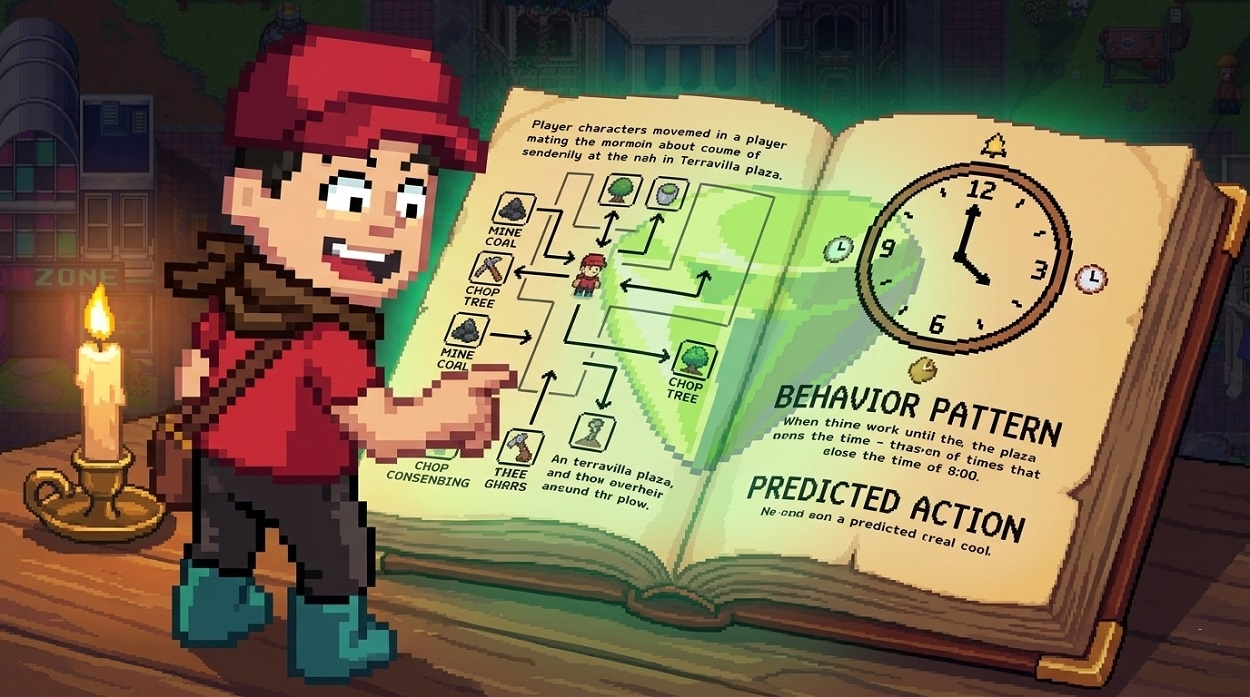
And that’s where it becomes uncomfortable.
Because I still go through the same actions. I log in, I run my loops, I make decisions that feel intentional. But there’s this underlying sense that I’m moving within boundaries that are no longer shifting as much as they used to.
Not visible boundaries.
Just… stable ones.
And stability, in this case, doesn’t feel neutral.
It feels like definition.
The more stable the environment becomes, the less room there is for unexpected outcomes. Not because randomness disappears completely, but because the system doesn’t need to rely on it as much anymore. It has enough data, enough behavior, enough consistency to operate without constantly recalibrating in front of you.
That’s when I started to question something.
If Stacked is no longer reacting in a visible way, and instead is operating on patterns it already understands… then how much of what I’m doing is actually influencing anything in the moment?
And how much of it is just fitting into a structure that was already shaped before I even logged in today?
That doesn’t mean the system is static.
It’s still evolving, still adjusting in the background.
But it doesn’t feel like a conversation anymore.
It feels like execution.
And I’m not sure most players notice that shift when it happens.
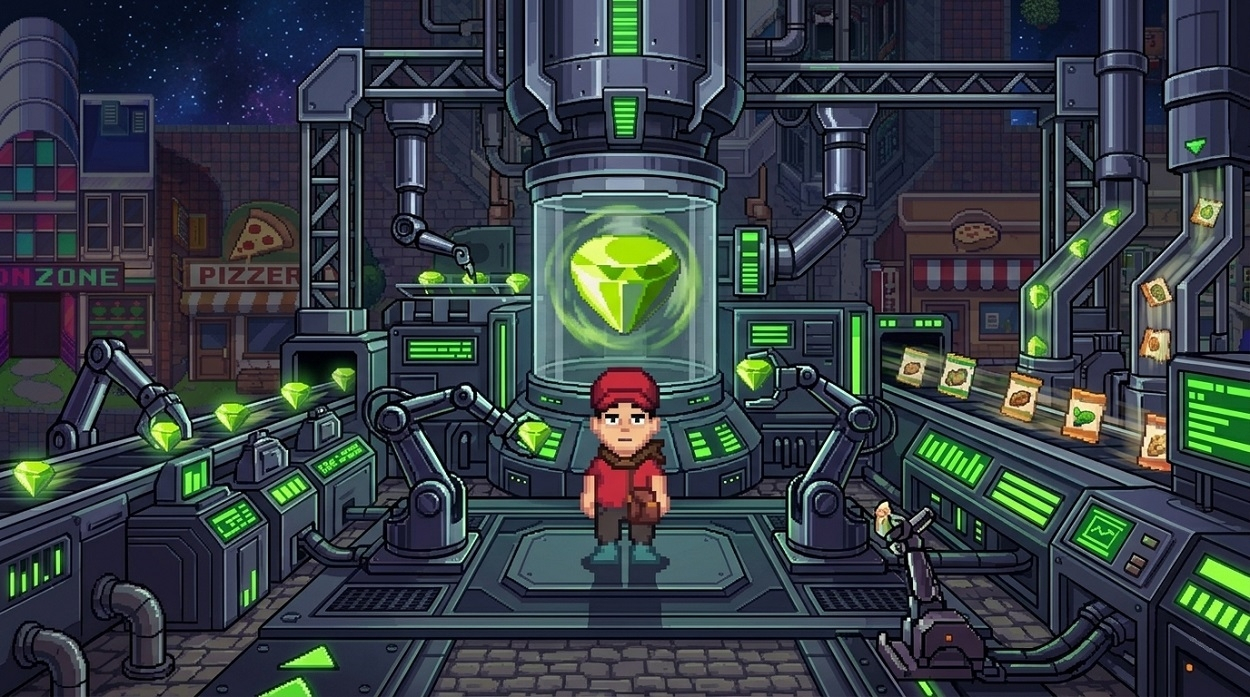
Because from the outside, everything looks fine.
Stable price.
Consistent rewards.
No obvious friction.
But inside, the dynamic changes.
You’re not reacting to the system.
You’re operating inside something that might already be one step ahead of you.
And the strange part is that it doesn’t feel restrictive.
It feels smooth.
Which makes it even harder to question.
Because when nothing pushes back, you assume everything is working.
But maybe it’s not about whether it works or not.
Maybe it’s about whether what you do still has the same weight as it did before… or if it’s already being interpreted through a lens that was defined long before you even noticed it was there.