
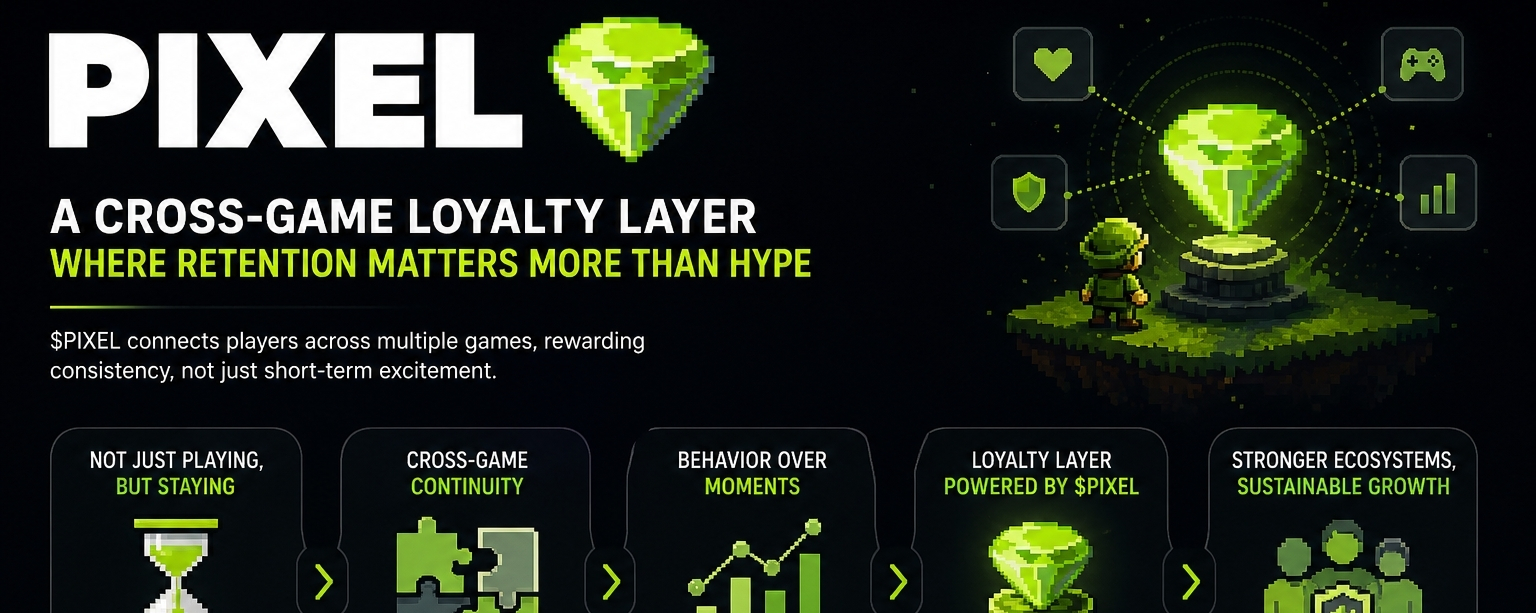
Most people I know don’t really “quit” games anymore. They just fade out. One day they stop logging in, then maybe come back a week later, then disappear again. It’s not a clear exit. More like drifting between things that feel almost the same.
That pattern kept bothering me when I was looking at $PIXEL. At first it looked like a normal game token, nothing unusual. Rewards, progression, some pressure to keep playing. But after watching how players move, it started to feel less about what happens inside a single game and more about what carries over when you leave it.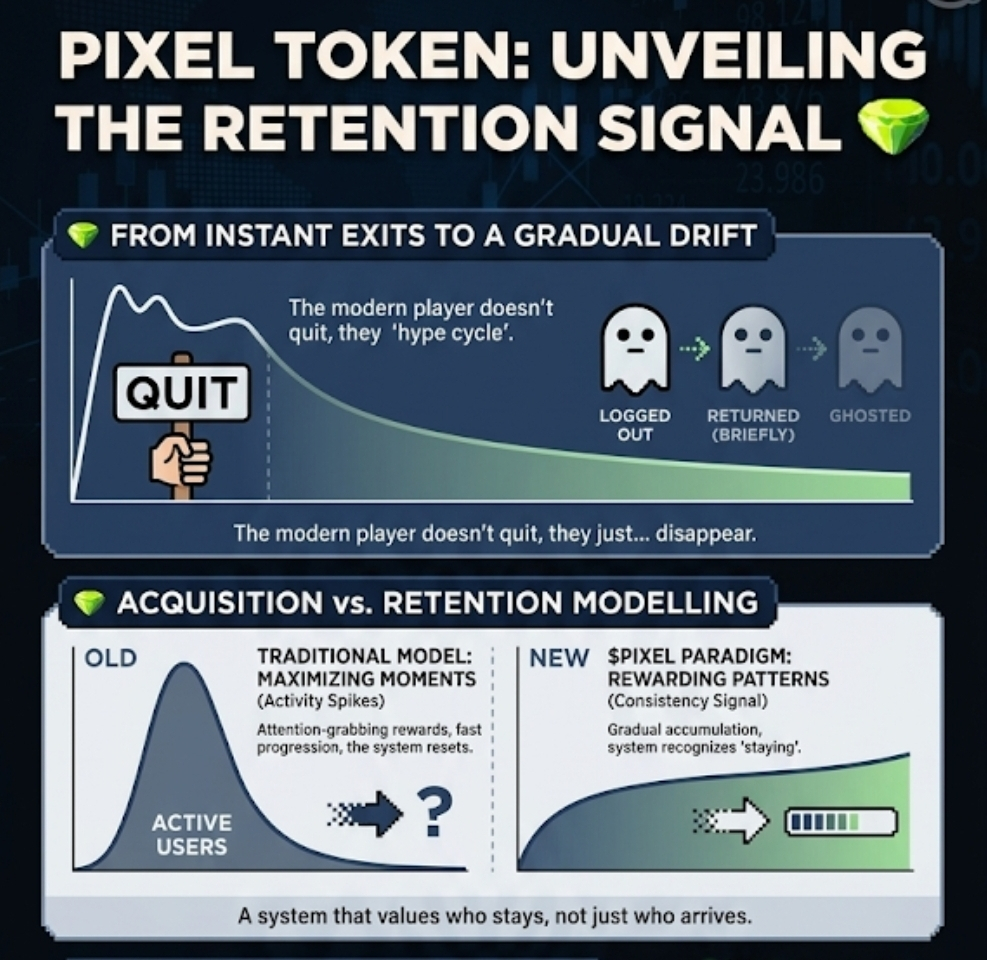
Because honestly, most game economies still behave like they’re competing for a single moment. They want your attention right now. Big rewards early, fast loops, visible progress. It works, but only for a while. Then people get what they came for and move on. The system resets with the next wave of users.
$PIXEL doesn’t fully escape that, but it seems to lean in a different direction. Not aggressively. It’s easy to miss. There’s this quiet sense that the system is paying attention to how long someone sticks around, not just how much they do in one session. That sounds simple, but it changes the shape of things.
Retention, which just means how often someone comes back over time, starts to feel like the real signal. Not activity spikes. Not one lucky grind. Just… staying. Coming back when nothing special is happening. That kind of behavior is usually ignored because it doesn’t look impressive on charts. But it might be the only thing that actually lasts.
And if you stretch that idea across multiple games, things get a bit strange. Imagine leaving one game and trying another, but the system still recognizes you. Not your items, not your level, but your behavior. How consistent you are. Whether you drop off quickly or settle in. That kind of continuity isn’t loud, but it’s powerful.
It reminds me a bit of how content works on Binance Square, even though it’s a completely different surface. One post can do well, sure. But the system doesn’t really trust one post. It watches patterns. Who shows up regularly. Who gets people to return. There are dashboards and ranking systems, probably AI models behind them, trying to score consistency without saying it directly. You don’t see the formula, but you feel it over time.
If $PIXEL moves toward that kind of logic, then it stops being just a reward token. It becomes something closer to a memory layer. Not a visible one, not something players talk about openly, but something that quietly accumulates signals about how they behave.
I’m not fully comfortable with that idea, though. Because once behavior becomes valuable, people start adjusting to it. Not always consciously. Sometimes you just feel that certain actions “work better” and you repeat them. Over time, that can narrow how people interact with the game. Exploration drops a bit. Efficiency takes over.
And then there’s the question of portability. If your behavior in one game influences how you’re treated in another, that sounds efficient. But it also means you carry your past with you. Not just progress, but patterns. That can be helpful, but it can also lock you into a certain profile. Hard to tell where that line sits.
Still, there’s something practical here that’s hard to ignore. Most Web3 games don’t fail because they lack users at the start. They fail because users don’t stay. Everything is built around attracting attention, very little is built around holding it. So the same cycle repeats again and again.
If Pixel starts rewarding retention more than hype, even indirectly, it might change that cycle a bit. Not dramatically. Probably not in a way that shows up in headlines. But in slower ways. Fewer sharp spikes, maybe more steady behavior.
What I keep coming back to is this small shift. Value moving away from moments and toward patterns. It sounds subtle, but it’s not. Moments are easy to create. Patterns are harder. They require time, and patience, and systems that don’t collapse when attention drops.
Right now, Pixel still looks like part of the usual GameFi structure. Rewards, loops, progression. But there’s something underneath that doesn’t fully match that surface. Something that seems more interested in who stays than who arrives.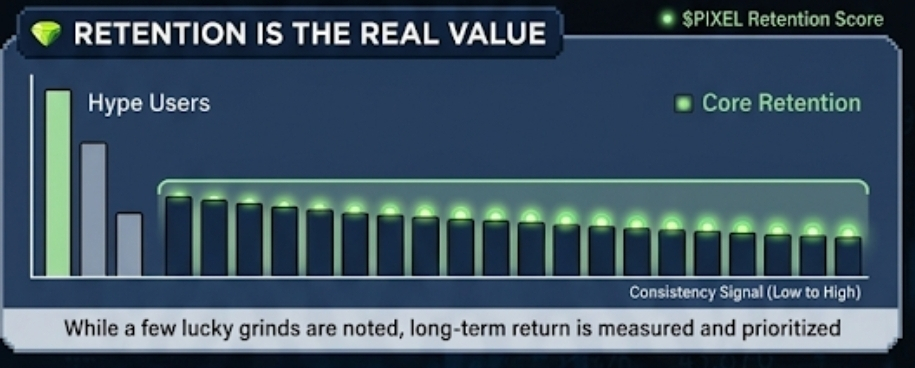
I’m not sure if players will notice it directly. Maybe they won’t need to. These systems tend to work best when they stay in the background.
But if that layer becomes real across multiple games, then loyalty stops being tied to any single place. It becomes something that moves with you. Not flashy, not even clearly defined. Just a quiet record of whether you keep showing up when there’s no obvious reason to.