
The GameFi sector has spent years chasing one core idea: reward players and growth will follow. In theory, it sounds simple. In practice, most projects have struggled to make it work. Rewards get farmed, bots enter the system, token emissions rise, and the economy slowly breaks down. The missing piece has never been attention—it has always been sustainability.
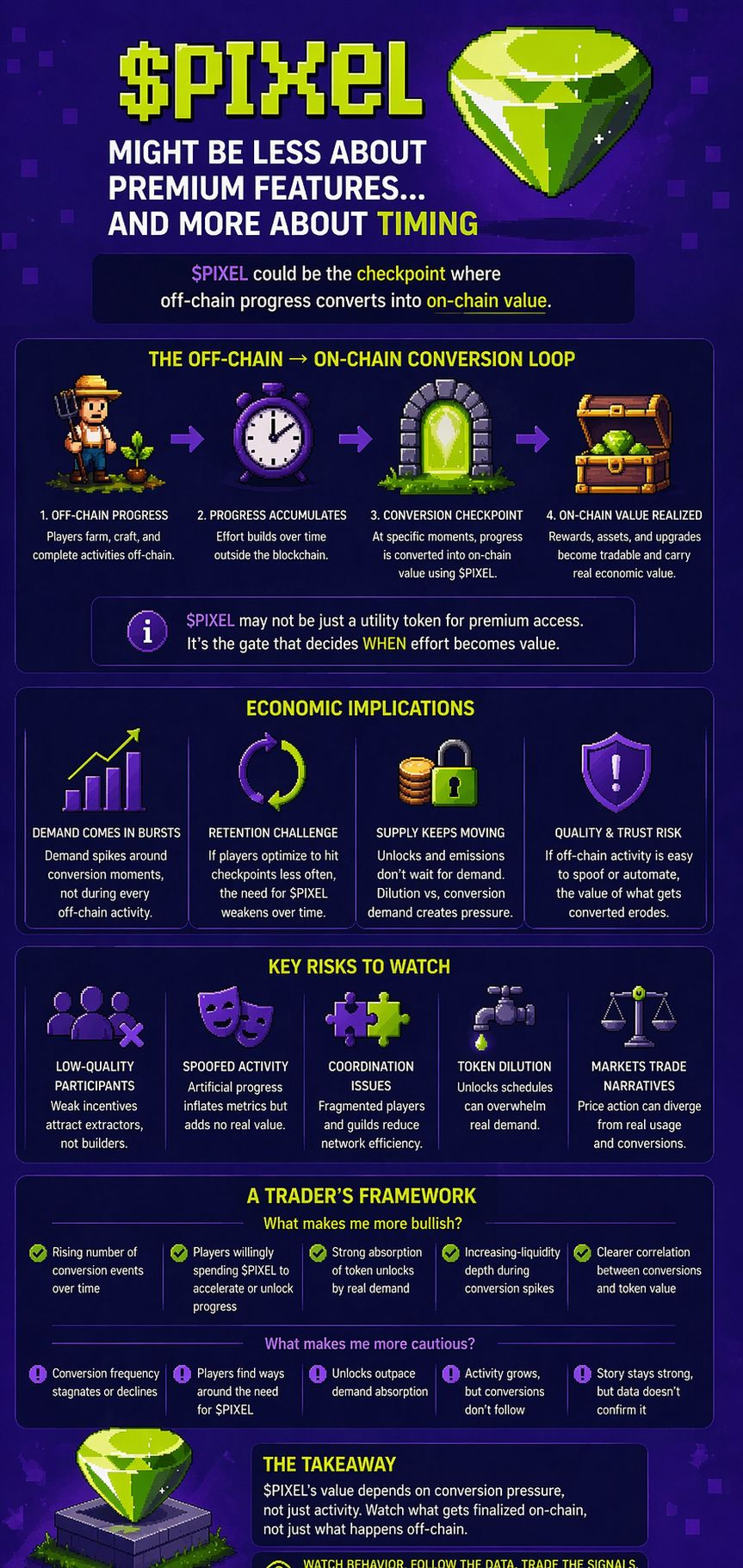
This is exactly where @Pixels is approaching the problem differently. Instead of building another isolated game with a token attached, the team has focused on developing infrastructure that can manage rewards in a smarter and more scalable way. That infrastructure is known as Stacked, and it represents a shift from basic play-to-earn mechanics toward data-driven, adaptive systems.
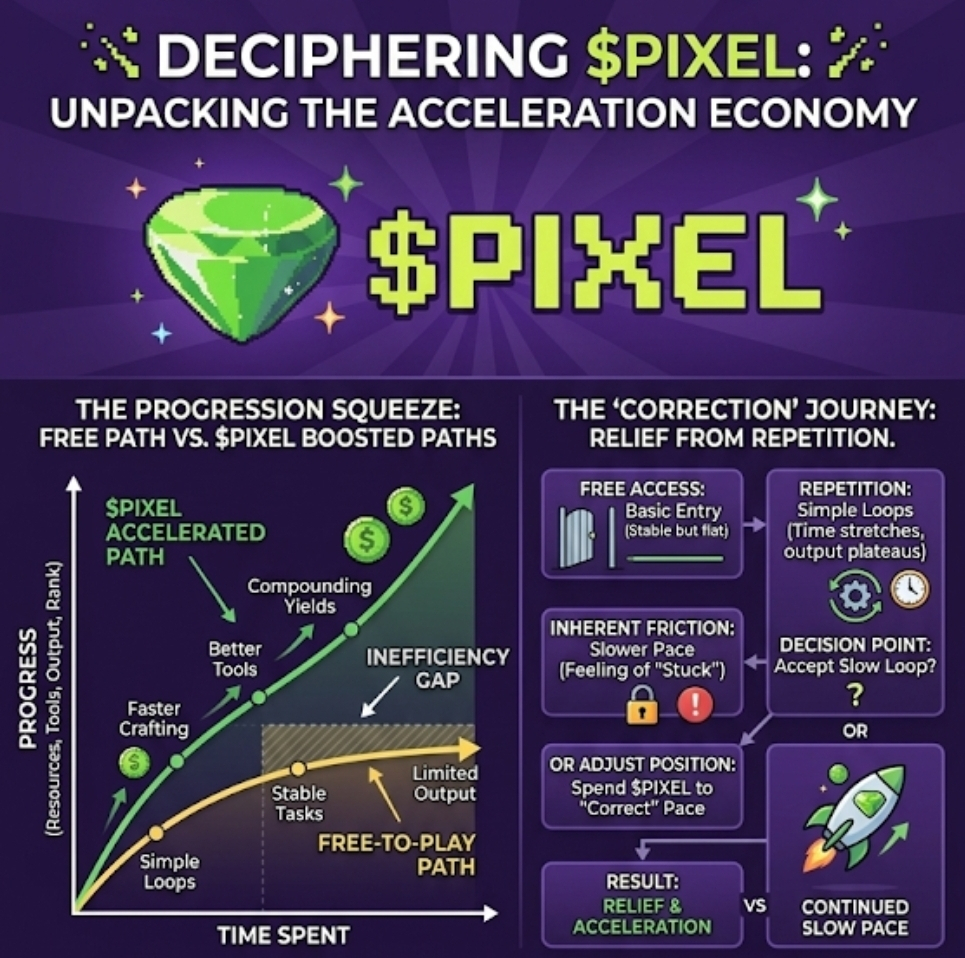
Stacked is best understood as a rewarded LiveOps engine. It allows game studios to deliver incentives based on real player behavior, rather than distributing rewards blindly. On top of this sits an AI-driven game economist, which analyzes user activity, identifies patterns, and helps studios understand what actually drives retention and revenue. This creates a feedback loop where insights can be turned into action almost instantly.
For example, instead of guessing why players drop off after a few days, developers can analyze specific cohorts and identify where engagement declines. They can then test targeted reward strategies to improve retention. The same applies to revenue optimization—studios can see where value is being created or lost and adjust accordingly. This ability to move from insight to execution without delay is a major step forward for how games are managed.
One of the strongest aspects of this system is that it is already proven in real environments. Stacked is not a concept built on speculation—it has been actively used within the Pixels ecosystem. The system has processed hundreds of millions of reward events across a large player base and contributed to over $25M in revenue. That level of real-world validation sets it apart from many projects that are still operating on theoretical models.
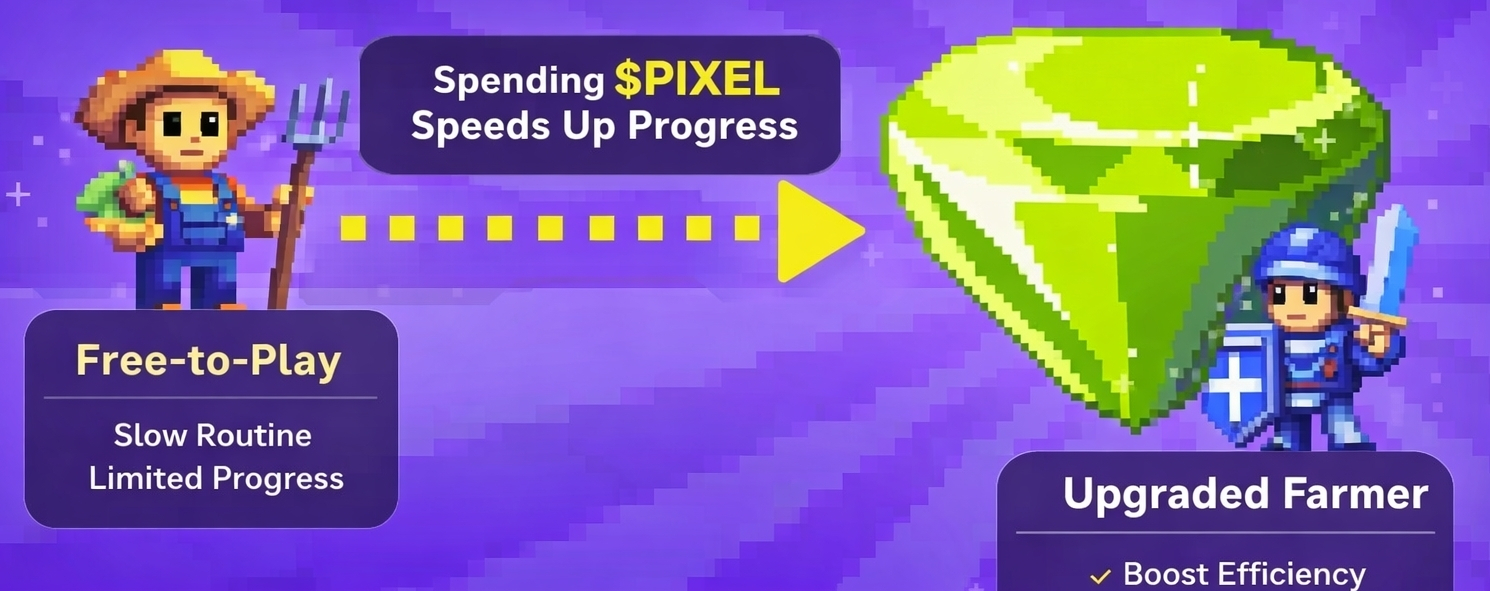
This foundation also expands the role of $PIXEL in a meaningful way. Instead of being limited to a single game loop, the token becomes part of a broader reward infrastructure. As more studios integrate with Stacked, the utility of $PIXEL extends across multiple environments. This increases its demand surface, as it is no longer dependent on the success of just one title.
Another key idea behind Stacked is the concept of redirecting value. Traditionally, game studios spend significant budgets on user acquisition, often paying external platforms to bring in players. With Stacked, a portion of that spending can be redirected directly to users as rewards for meaningful engagement. This creates a more transparent system where value flows to the players who actively contribute to the ecosystem, rather than being absorbed by intermediaries.
From an investment perspective, this also changes how the ecosystem can be evaluated. Stacked is not just a feature within a single game—it is positioned as infrastructure for multiple studios. This means its growth is not tied to one product cycle, but to the broader adoption of the system itself. As more games integrate the engine, the overall network becomes stronger, and the role of $PIXEL continues to expand alongside it.

Another important factor is the defensive layer that has been built over time. Reward systems are highly vulnerable to exploitation, but Stacked incorporates fraud prevention, behavioral tracking, and anti-bot mechanisms developed through real-world usage. These elements create a barrier that is difficult for new competitors to replicate quickly, giving the ecosystem a stronger foundation.
What stands out most is that this entire system has been built in production, not just described in theory. Many projects in the space rely on ideas that sound promising but lack real-world validation. In contrast, Stacked has been tested, refined, and proven through continuous use. This makes it less of an experiment and more of an operational framework.
As Web3 gaming continues to evolve, the focus is gradually shifting toward systems that can sustain long-term engagement rather than short-term hype. Projects that can align incentives, manage economies effectively, and adapt to user behavior are more likely to succeed over time.
@Pixels is moving in that direction by combining gameplay, data, and infrastructure into a unified ecosystem. With Stacked acting as the core engine and $PIXEL expanding its role across multiple environments, the model reflects a more mature approach to GameFi. Instead of relying on speculation, it focuses on building systems that work under real conditions.
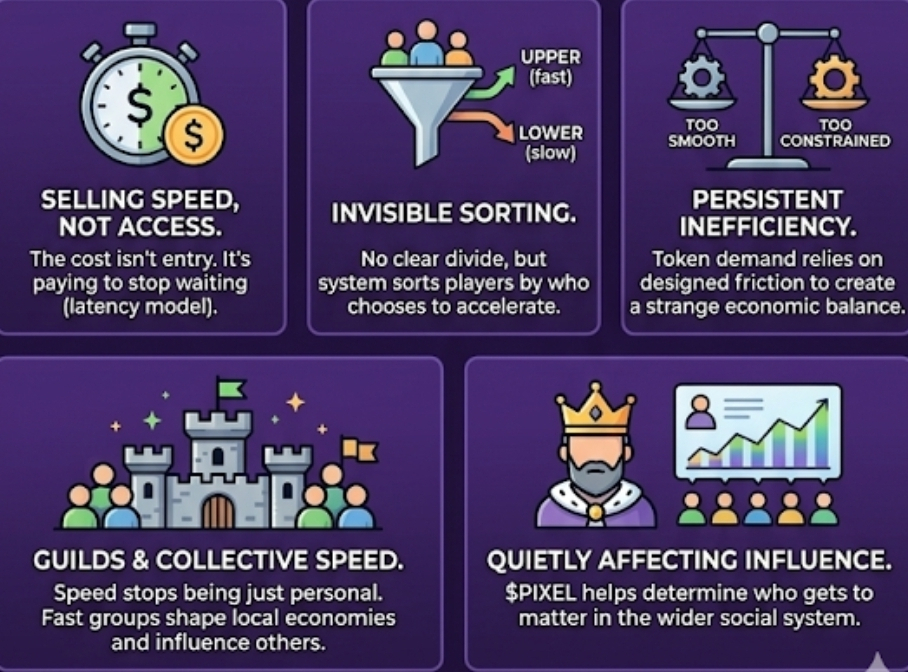
For anyone observing the space, this represents more than just another rewards model. It is an example of how Web3 gaming can evolve into something more sustainable, where incentives are carefully managed, value flows are measurable, and long-term engagement becomes the priority. 🚀 #pixel