


There’s a strange thing about systems that feel “open.” You don’t notice the limits at first. Everything works, you can move, you can participate, nothing is stopping you. Then after a while, something feels off. Not blocked… just slowed. Like you’re always one step behind some invisible pace you didn’t agree to.
I’ve felt that before in markets. Not in charts, but in how quickly you can react to them. Two traders can see the same setup, but one gets filled, the other watches it move away. Same access, different outcome. The difference is rarely skill in that moment. It’s positioning. Or more quietly, permission to act faster.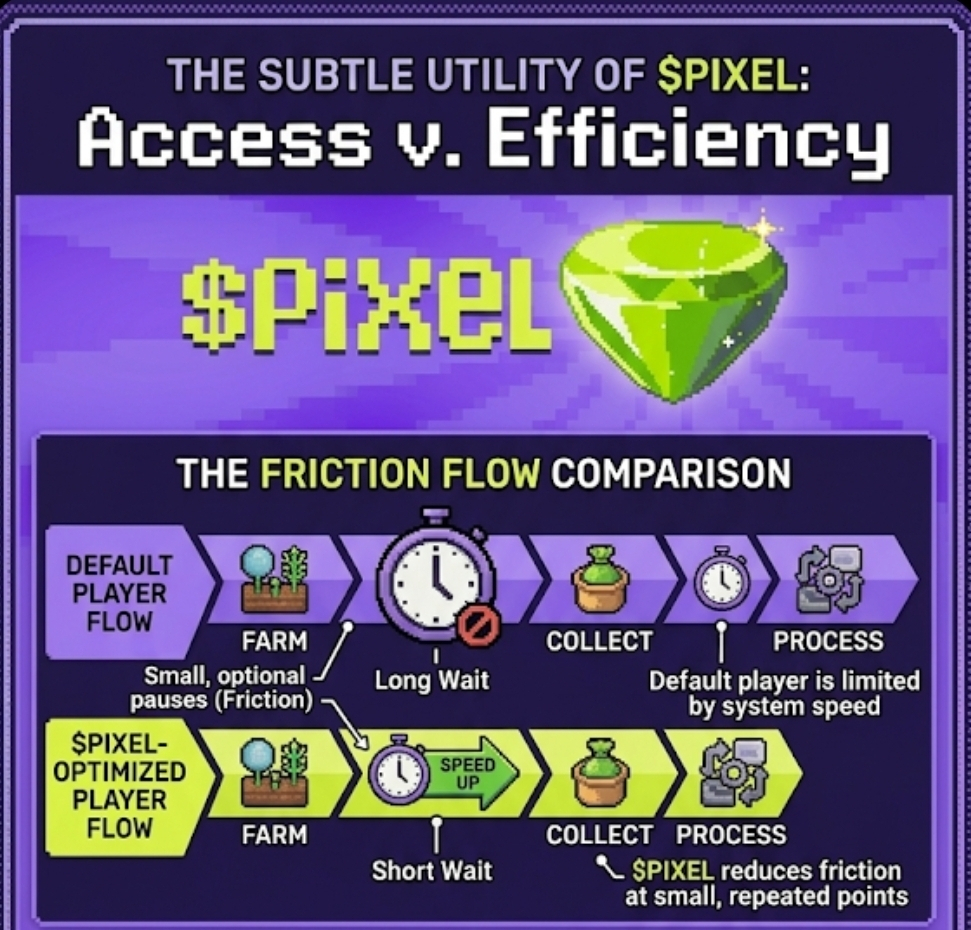
Pixels gave me a similar feeling, but I didn’t catch it immediately. At first it just looked like another soft GameFi loop. Farm, collect, wait, repeat. Clean, simple, almost too relaxed. You can play without thinking too much. And honestly, that’s probably the point.
But after spending time inside it, watching how people actually behave, I started noticing something small. Players aren’t really chasing rewards. They’re chasing smoothness. Less waiting, fewer interruptions, fewer points where the system slows them down.
That’s where $PIXEL starts to feel different.
It doesn’t jump out as a reward token. It’s not aggressively pushing you to earn more. Instead, it sits somewhere in the background, shaping how friction behaves. You can ignore it, technically. But ignoring it means you experience the system at its default speed. And default speed is… fine. Just not optimal.
I think that’s the part most people miss. This isn’t about earning more tokens. It’s about avoiding inefficiency.
And inefficiency is a strange thing to price. In most systems, it’s just accepted. Waiting is normal. Delays are normal. But in Pixels, those delays start to feel optional. Not removed, just adjustable. Some players move through loops cleanly, almost continuously. Others keep hitting small pauses. Nothing dramatic, just enough to break flow.
Over time, that difference compounds.
I’ve seen something similar in infrastructure layers before. Blockchains don’t block transactions, but they definitely don’t treat all of them equally when things get busy. Higher fees get priority. Better positioning gets speed. The system stays open, but performance becomes selective.
$PIXEL feels like that, just translated into a game environment.
What’s interesting is how quiet it is. There’s no obvious moment where the game tells you, “now you need this token.” Instead, you feel it indirectly. You start optimizing your own behavior. You begin to notice where time is being wasted. And then you look for ways to remove that waste.
That’s where demand comes from, I think. Not from big decisions, but from small repeated ones. A player choosing to skip a delay here, speed up a process there. Individually, those choices don’t look like much. But they stack.
And stacking behavior is where systems usually reveal their real design.
I remember thinking early on that Pixels was just another play-to-earn variation, just cleaner. But that assumption doesn’t hold up well if you watch long enough. The system doesn’t really reward output in a direct way. It seems to reward how efficiently you can cycle through output.
That’s a different axis.
Two players can produce similar results, but one does it with less friction. Less idle time. Less interruption. That player starts to pull ahead, not because they’re doing more, but because they’re losing less time.
Time becomes the real resource. Pixel just sits next to it.
There’s also something slightly uncomfortable about this. Not in a dramatic way, just… subtle. The system doesn’t feel unfair. Anyone can play. Anyone can progress. But not everyone progresses under the same conditions. And the difference isn’t obvious unless you’re paying attention.
It reminds me of systems where access is technically equal, but efficiency isn’t. Over time, those systems create quiet layers. Not visible hierarchies, but functional ones. Some participants operate closer to the system’s “ideal state,” while others stay in the default loop.
Maybe that’s intentional. Maybe it’s necessary. Purely equal systems tend to stall. Purely pay-driven systems tend to break. This sits somewhere in between.
Still, it raises questions.
If Pixel is effectively controlling how friction gets reduced, then it’s also shaping who gets to operate efficiently at scale. That’s not the same as selling rewards. It’s closer to selling positioning inside the system.
And positioning is what markets usually care about the most, even if they don’t say it directly.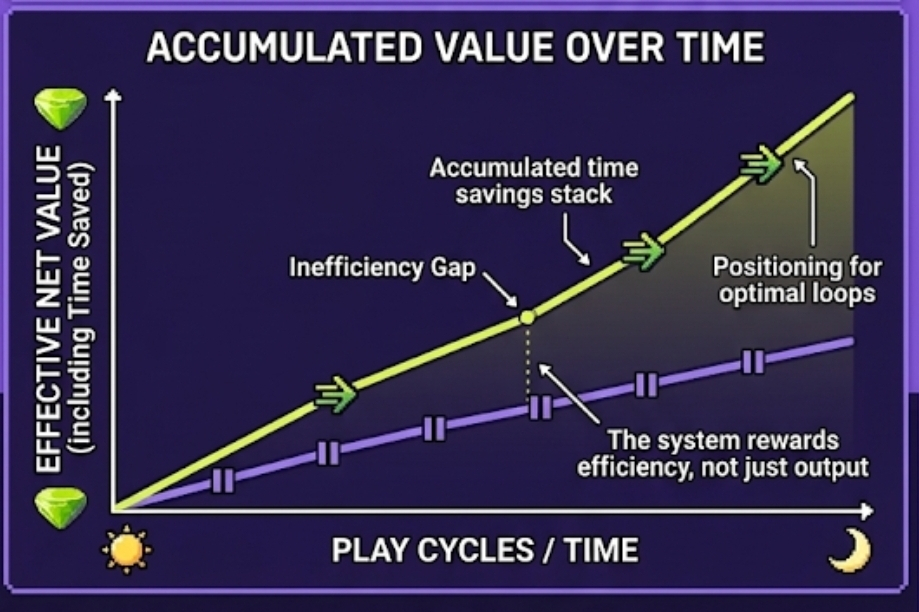
I’m not sure how this plays out long term. It probably depends on how sensitive players are to these differences. If the gap becomes too visible, it might push people away. If it stays subtle, it might keep working without much resistance.
Right now, it sits in that in-between space. Easy to overlook. Hard to fully ignore once you see it.
And that’s probably the most interesting part. Not what Pixel gives you, but what it quietly lets you avoid.